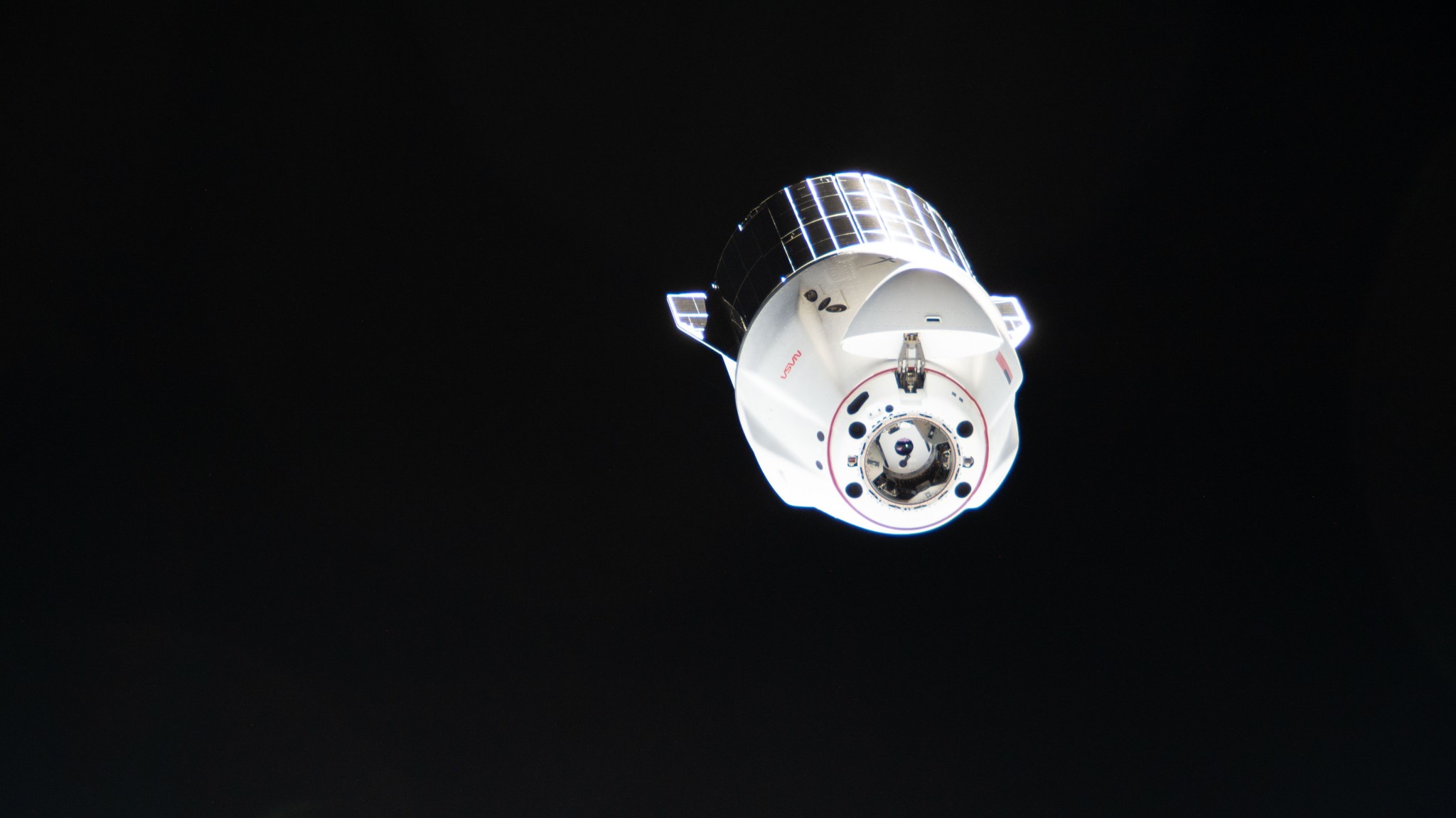
NASA and SpaceX are set to launch a Dragon cargo mission to the ISS carrying over 6,300 pounds of supplies and experiments, including the final roll-out solar arrays.
NASA and SpaceX are preparing for the next cargo run to the International Space Station, aiming for liftoff at 6:33 a.m. EDT on Tuesday, Oct. 13. The flight will mark SpaceX’s 35th Commercial Resupply Services mission for the agency and will carry a mix of research payloads, station hardware, and routine provisions—most notably the final set of International Space Station Roll-Out Solar Arrays.
The mission will launch a SpaceX Dragon spacecraft atop a Falcon 9 rocket from Space Launch Complex 40 at Cape Canaveral Space Force Station in Florida. If the launch proceeds on schedule, Dragon is expected to rendezvous with the orbiting laboratory and dock automatically at about 11 a.m. EDT on Thursday, Oct. 15. The spacecraft will attach to the space-facing port of the station’s Harmony module.
NASA said Dragon will be packed with more than 6,300 pounds of cargo. Alongside the solar array hardware, the shipment includes investigations designed to take advantage of microgravity for advances that could translate back to Earth and support future exploration. Among the research items: equipment aimed at producing artificial retinas in space, work that could contribute to treatments intended to restore vision. Another payload focuses on creating 3D heart tissue models, a step toward more robust drug testing approaches that could be used on later missions as well as in terrestrial biomedical research.
Dragon will also transport materials for studying how a new type of glass forms in microgravity, where the absence of sedimentation and reduced convection can change how structures develop. In addition, the cargo manifest includes brain organoids—miniaturized, simplified models of brain tissue—intended to help scientists identify potential treatment targets for neurodegenerative conditions. NASA specifically highlighted diseases such as Alzheimer’s, Parkinson’s, and multiple sclerosis as areas where insights from the experiments could prove valuable.
After delivering its cargo, Dragon is slated to remain berthed at the station until mid-November. It will then depart the complex carrying time-sensitive research samples and other items back to Earth, with a planned splashdown in the Pacific Ocean off the coast of California.
NASA will provide live coverage of key mission events, including launch and docking, through its online platforms. On launch morning, the agency plans to begin streaming and rolling blog updates no earlier than 6 a.m. EDT as countdown activities get underway; on-demand video on NASA+ and launch photography are expected to follow shortly after liftoff. The public can also sign up for NASA’s virtual guest program for curated resources, alerts about schedule changes, and a commemorative “stamp” for the virtual guest passport after launch.
Ahead of the flight, NASA will hold a media teleconference at 1:15 p.m. EDT on Thursday, Oct. 8. The briefing will preview the resupply mission and also provide an update following the splashdown of the agency’s SpaceX Crew-12 mission, which is set to return to Earth Thursday morning. Reporters seeking to join the call must request dial-in information from NASA’s Johnson Space Center newsroom by noon on Oct. 8 and are required to dial in at least 10 minutes before the event.
Why it matters
Cargo flights like this keep the space station operating while also delivering research that can’t be done the same way on Earth. The arrival of the final roll-out solar arrays is a major milestone for ISS power upgrades, supporting more science and commercial activity in orbit. With Dragon returning to Earth in mid-November, researchers will be watching for rapid turnaround of biological and materials samples that depend on tight timelines.