The WTO’s Aid for Trade has helped boost developing countries’ share of global exports, but a shifting trade environment is testing its model and demands modernization.
Over the past two decades, the World Trade Organization’s Aid for Trade initiative has played a measurable role in helping developing economies connect to global commerce. By financing and coordinating support to strengthen trade-related capacity—everything from infrastructure to institutional know-how—the program has been linked to a notable rise in the share of world exports accounted for by developing countries.
That record, however, is now being tested by a rapidly shifting trade environment. The global system that shaped Aid for Trade at its launch is not the same one countries face today, and the initiative will need to evolve if it is to keep delivering results.
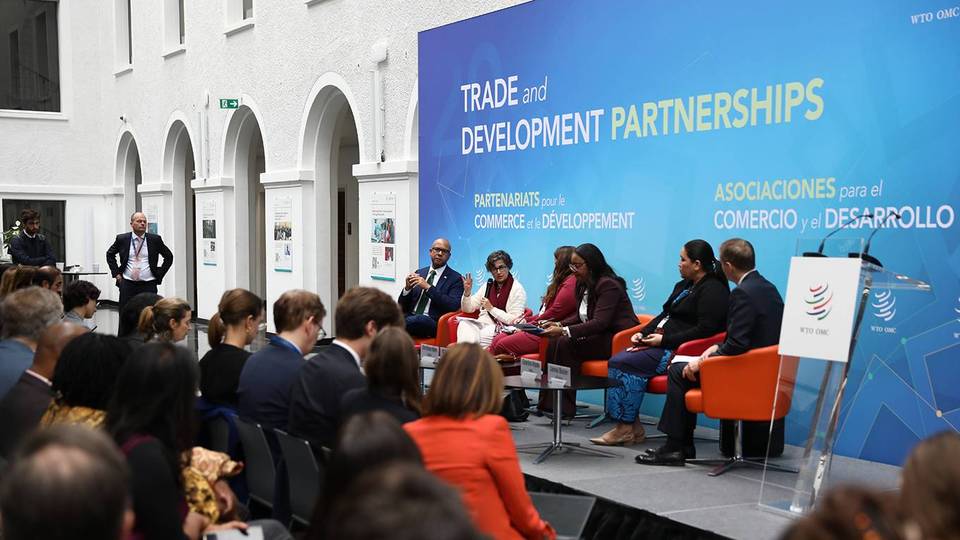
In Paris, a long-time architect of the program described returning last month to the WTO’s headquarters in Geneva for the tenth Global Review of Aid for Trade. The review, a major stocktaking meeting for governments and partners involved in the initiative, brought together stakeholders to assess progress and discuss what comes next. For the author—who helped establish Aid for Trade more than twenty years ago while working at the WTO—the visit served as a reality check on two fronts: first, that the approach has produced tangible gains; and second, that the challenges ahead are changing in ways that demand an update in strategy.
The original logic behind Aid for Trade was straightforward: lower trade barriers alone do not guarantee that poorer countries can compete. Without reliable transport links, ports, customs systems, standards agencies, and the skilled workforce required to meet foreign market requirements, market access remains theoretical. Aid for Trade was designed to close that gap by mobilizing development cooperation specifically targeted at the practical constraints that prevent countries from exporting more—and from diversifying what they sell.
At the Geneva gathering, the author said, the discussions underscored the continuing relevance of that mission. Even as the international climate becomes more complex, the fundamentals of trade-led development still depend on concrete investments and sustained technical support. The author left with renewed confidence that collaboration across borders is still achievable—an argument that runs counter to the growing sense of fragmentation that has come to characterize debates about globalization and trade policy.
Yet the message was not celebratory. The author emphasized that the trade landscape is changing quickly, implying that yesterday’s priorities will not automatically map onto today’s needs. For Aid for Trade to remain effective, it must adapt to new realities in how goods and services move, how supply chains are organized, and what capabilities firms and governments require to participate in international markets.
The underlying conclusion from the tenth review was clear: development cooperation in trade has not disappeared. But preserving its impact will require modernization—ensuring that Aid for Trade continues to build the capacity and infrastructure that make trade possible, while staying aligned with the accelerating transformations reshaping the global economy.
Why it matters
Aid for Trade affects developing countries seeking to expand exports, create jobs, and secure more stable growth by integrating into global markets. If the initiative fails to adjust to a changing trade environment, gains in export participation could stall or reverse. The next phase will hinge on whether donors and the WTO can update priorities while keeping cooperation focused on practical barriers to trade.