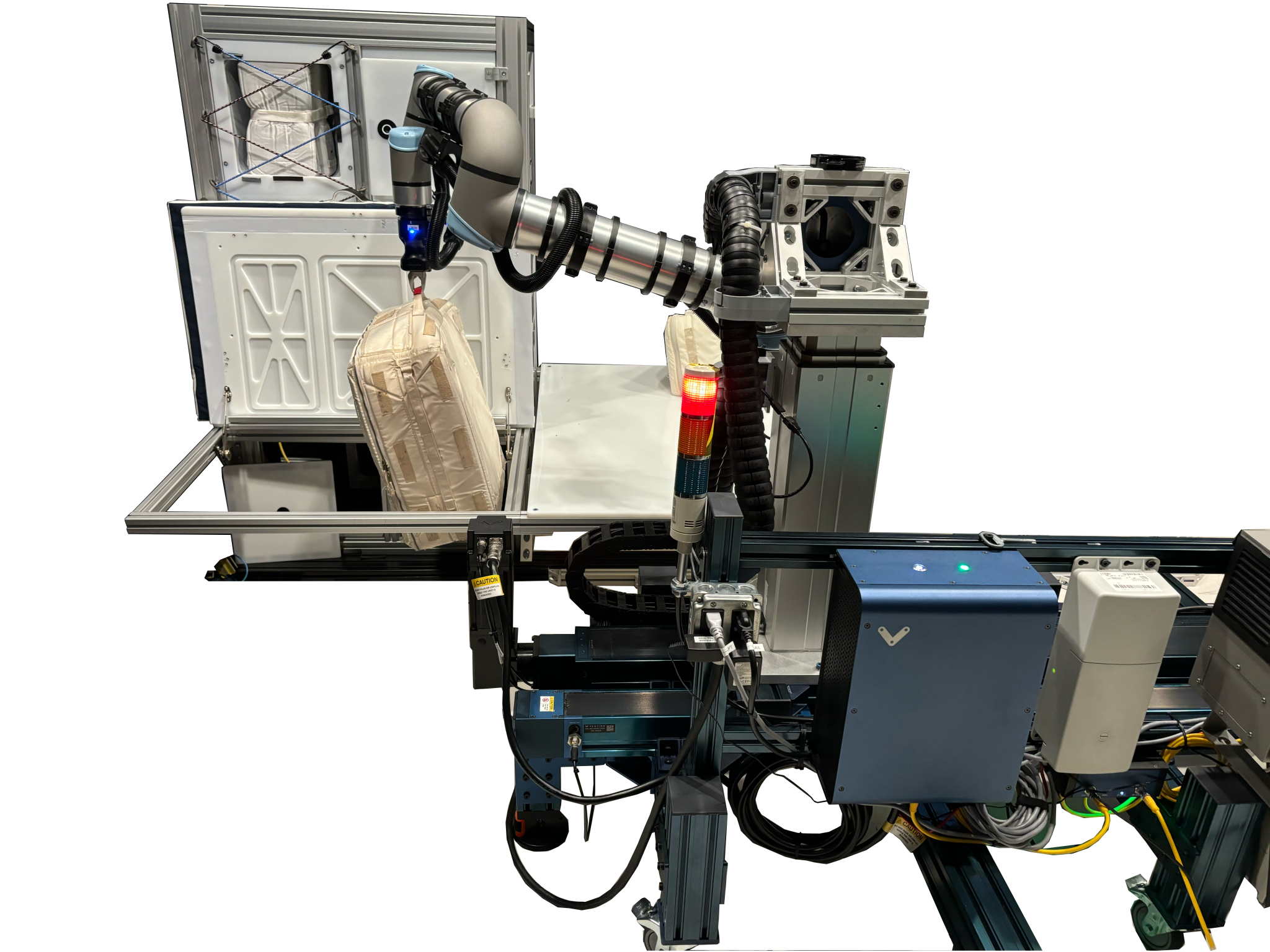
As NASA maps out extended stays on the Moon, the agency is looking to robots to take on the kinds of repetitive, time-consuming chores that can distract astronauts from science and exploration.
As NASA maps out extended stays on the Moon, the agency is looking to robots to take on the kinds of repetitive, time-consuming chores that can distract astronauts from science and exploration. But turning that vision into reality depends on sophisticated motion control and smarter autonomy—machines that can perceive their surroundings, make decisions, and manipulate objects reliably in an environment where mistakes can be costly.
To push those capabilities forward, NASA has partnered with PickNik Inc., a robotics software company based in Boulder, Colorado. Working alongside Shaun Azimi—leader of the Dexterous Robotics team at NASA’s Johnson Space Center in Houston—and other NASA robotics specialists, PickNik helped test software designed to give robotic arms more humanlike dexterity.
In a recent demonstration, the team evaluated tools that allowed a robotic arm to identify a spacecraft hatch and complete a multi-step sequence of actions: rotate the latch, grip the handle, open the door, and then move cargo bags between the hatch area and a storage bin. The work took place at Johnson Space Center’s new Integrated Mobile Evaluation Testbed for Robotics Operations, a facility intended to accelerate development and evaluation of robotic systems for spaceflight. Funding for the effort came through NASA’s Small Business Innovation Research (SBIR) program, which supports early-stage technologies with potential mission value and commercial promise.
At the center of PickNik’s contribution is its software suite MoveIt Pro, which the company developed and iterated with the help of early public investment. The product reached the commercial market in 2023 and has since gained traction across multiple industries.
Among its adopters is BMW, which is using MoveIt Pro to run robotic systems on automotive assembly lines. Lightspeed is applying the software to program large robotic arms that fabricate modular building panels aimed at lowering the cost of housing construction. Hivebotics has also used MoveIt Pro to automate its flagship cleaning robot, expanding the software’s reach beyond factories and into service robotics.
PickNik principal software engineer Ezra Brooks credits NASA’s early backing as pivotal for the company’s trajectory. With about 35 employees, he said, PickNik may not have been able to bring a product to market without that initial support—particularly given the long timelines required to develop and validate robotic algorithms, then translate them into reliable commercial software.
For NASA, the payoff is twofold: maturing the robotics needed for future missions on the Moon and beyond, while seeding technologies that can strengthen industries on Earth. The agency has tracked such downstream impacts for decades through its Spinoff publication, which has chronicled everyday benefits arising from NASA-developed innovations for roughly 50 years. More information on the project is available at https://go.nasa.gov/49CNSi7.