NASA-backed researchers and engineers have unveiled a compact particle detector designed to bring high-quality radiation-belt measurements to small, inexpensive spacecraft.
NASA-backed researchers and engineers have unveiled a compact particle detector designed to bring high-quality radiation-belt measurements to small, inexpensive spacecraft. The new instrument, developed for NASA’s Relativistic Electron Atmospheric Loss (REAL) CubeSat mission and also known as REAL, packages multiple miniaturized sensors into a tight, multi-angle system that can track how energetic particles move through—and escape from—Earth’s radiation environment. By making these observations possible on a CubeSat platform, the team aims to sharpen forecasts of space-weather impacts in low Earth orbit and to provide a blueprint for similar measurements on future small satellites.
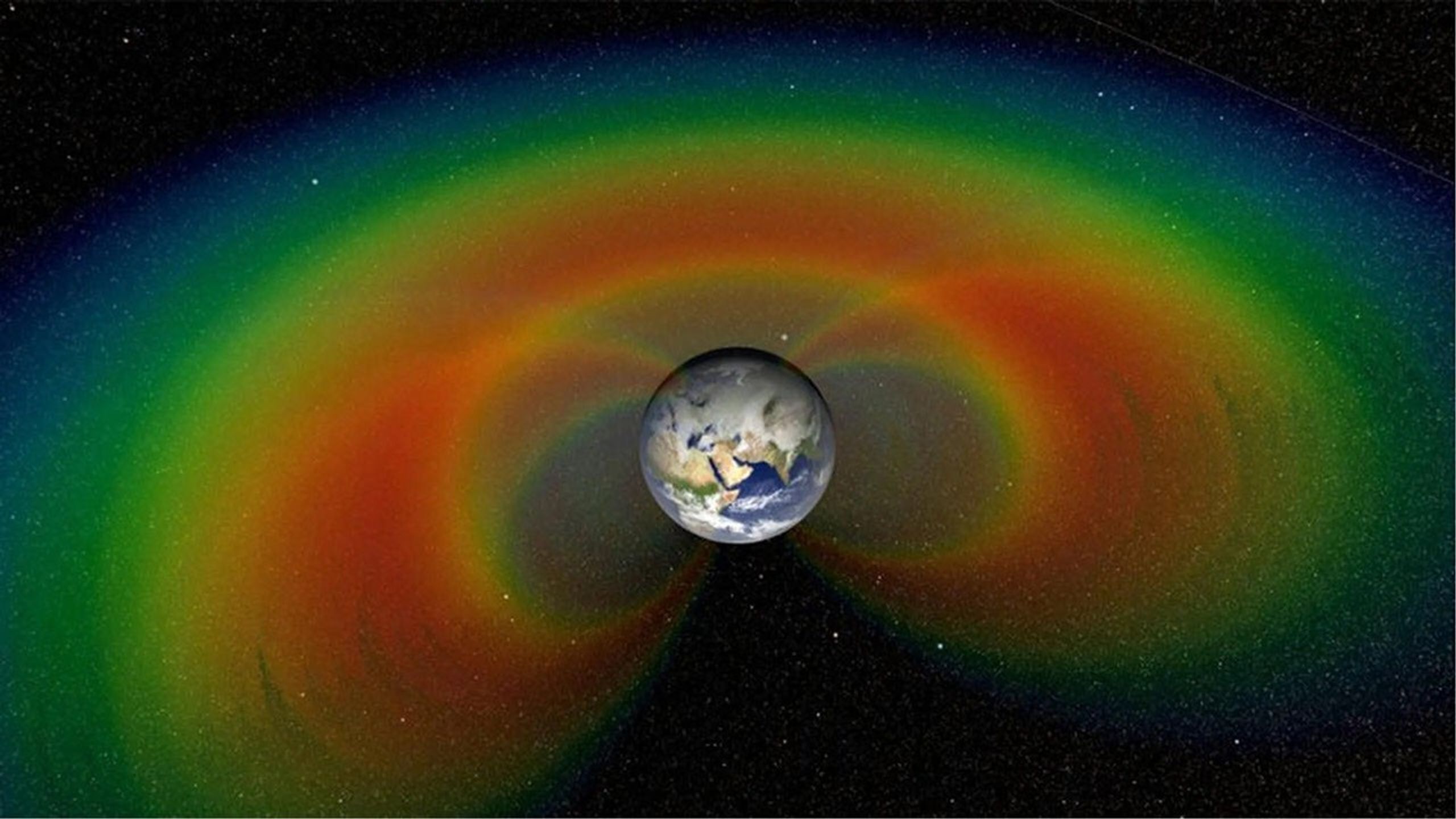
Earth is encircled by vast rings of charged particles held in place by the planet’s magnetic field. These doughnut-shaped regions, the Van Allen radiation belts, generally appear as two zones: an inner belt where high-energy protons dominate, and an outer belt made mainly of energetic electrons. Together they represent a continuing threat to satellites across Earth orbit, including navigation spacecraft such as GPS and the systems that support telephone and internet connectivity.
The outer belt is especially notorious because it contains “killer electrons”—electrons energetic enough to slip through shielding and spark electrical discharges or other disruptions that can damage spacecraft hardware or degrade performance. Scientists have worked for decades to understand and predict how these belts evolve, but the outer belt in particular can change abruptly. Electron populations can surge and then fall away quickly, with some electrons leaving the belts by plunging into the atmosphere.
Those atmospheric loss events can occur as brief, intense bursts lasting around 100 milliseconds—so-called microbursts—or as longer episodes that unfold over minutes to hours. “Radiation particles can be trapped in the Van Allen belts for long periods, going back and forth along magnetic field lines, but if some interaction directs them more closely along Earth’s magnetic field lines, they plunge into the atmosphere,” said Thomas Sotirelis, a physicist at the Johns Hopkins Applied Physics Laboratory (APL), where the REAL instrument was developed. Sotirelis originated the sensor concept and serves as the mission’s instrument scientist.
These losses, called energetic electron precipitation (EEP), are a major pathway by which electrons are removed from the radiation belts and are central to the belts’ overall behavior. Researchers suspect that plasma waves help trigger EEP, but key physics questions remain unresolved—particularly whether electrons are scattered into the atmosphere slowly through diffusive processes or dumped rapidly through nonlinear interactions.
REAL is built to tell those possibilities apart. The instrument launched successfully on July 23, 2025, and is designed to capture electron precipitation with the timing and directional coverage needed to distinguish competing mechanisms and to evaluate which plasma waves, if any, are driving the fallout.
Recent advances in miniaturization made the design possible. REAL combines three sensor heads tuned for low, medium, and high energies, paired with four electronic boards. The heads provide multiple simultaneous viewing directions—two for the low-energy unit, five for the medium-energy unit, and four for the high-energy unit—while taking up only about half the volume of the REAL 3U CubeSat. With time resolution fast enough to resolve microbursts, the detector measures electrons from about 40 keV up to 2 MeV.
As the CubeSat travels through low Earth orbit, REAL points along Earth’s magnetic field to measure, at the same time, how many particles are arriving, what energies they carry, and the angles at which they are streaming into the atmosphere—an ability described as unprecedented for a CubeSat-scale mission. Space physicist Robyn Millan of Dartmouth College noted that most CubeSats view particles from only one direction and must rotate to build a fuller picture, a process that takes seconds—too slow to capture fleeting microbursts.