A megawatt-class hybrid-electric propulsion system created through a partnership between NASA and GE Aerospace has taken a major step from the laboratory to the runway,…
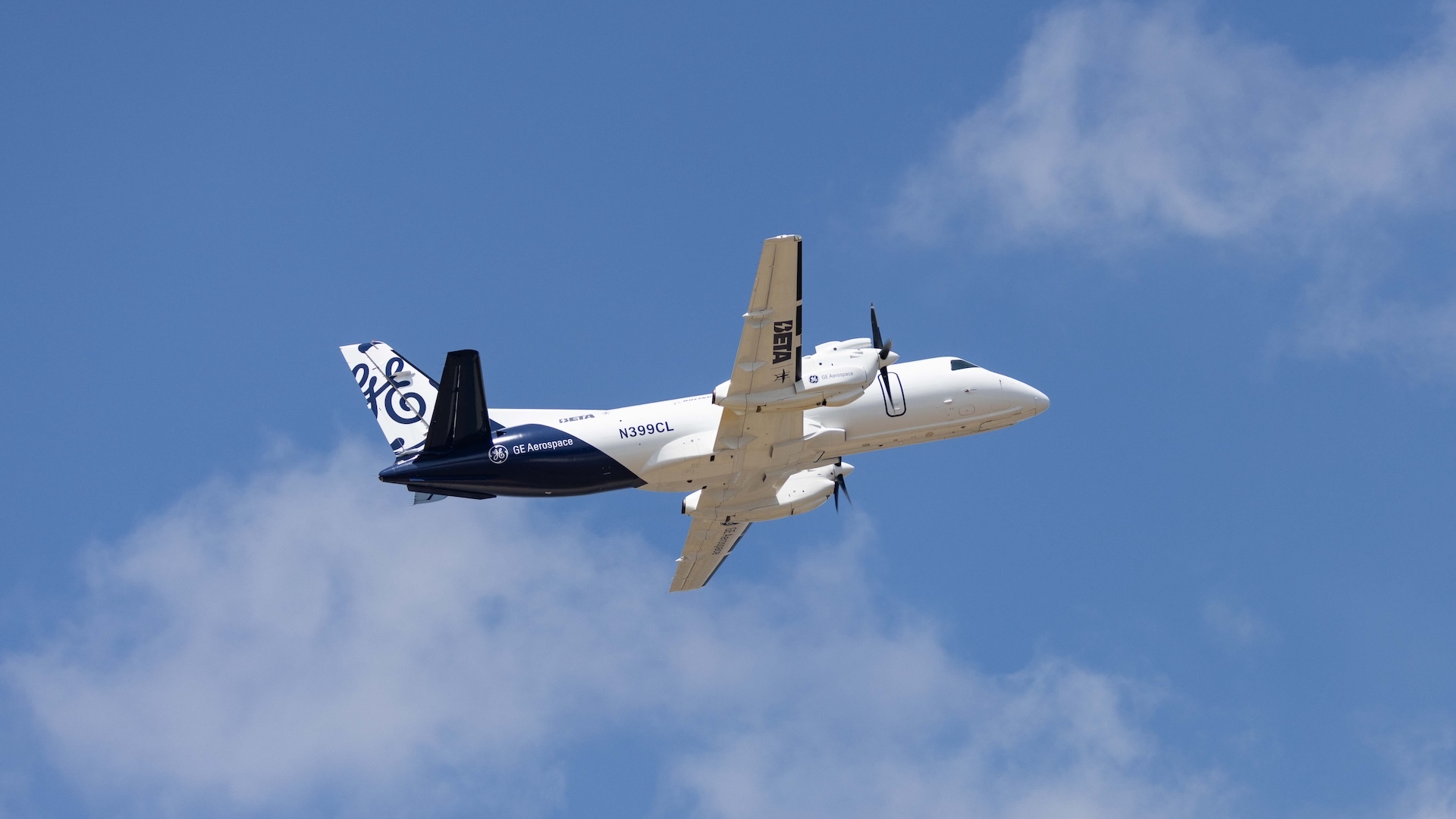
A megawatt-class hybrid-electric propulsion system created through a partnership between NASA and GE Aerospace has taken a major step from the laboratory to the runway, making its public debut at the Farnborough International Air Show in the United Kingdom. The engine, built by GE Aerospace and installed on a Saab 340B test aircraft, showcased a technology that NASA says could shape future generations of more fuel-efficient aircraft power systems.
The flight appearance follows a series of recent milestones for the program, including historic test flights that made the Saab demonstrator the first hybrid-electric aircraft to climb above 30,000 feet. NASA officials framed the achievement as a sign that long-running federal research—combined with industry engineering—can turn ambitious ideas into operational hardware.
“This achievement reflects what NASA does best in aeronautics: we explore bold possibilities, validate them through rigorous research and testing, and work with industry to turn breakthrough ideas into technologies that bring real value for the American people,” said Laurie Grindle, director of the Aeronautics Division in NASA’s Research and Technology Mission Directorate at the agency’s headquarters in Washington.
At the core of the demonstration is a propulsion architecture that blends multiple energy sources: electric motors working alongside a gas turbine, supported by onboard energy storage. The intent is not simply to electrify flight in the way small battery-powered aircraft and drones have begun to do, but to prove that a hybrid approach can deliver enough power for aircraft in the regional-jet class—while cutting fuel consumption and associated operating costs without compromising performance.
NASA and GE Aerospace describe the flight program as the product of years of coordinated work that drew on the agency’s former Electrified Powertrain Flight Demonstration project and the ongoing Subsonic Vehicle Technologies and Tools project. Those efforts involved extensive testing at NASA facilities and contributions from teams across multiple NASA centers, together with GE Aerospace and partner companies.
For engineers who have been working on electrified aviation for more than a decade, the moment is also a validation of an idea that once seemed out of reach for anything larger than a light aircraft.
“This is the culmination of more than 15 years of work, and we did that because it’s going to have an impact for aircraft that will help reduce energy use and help U.S. companies and the public,” said Ralph Jansen, an aerospace engineer at NASA’s Glenn Research Center in Cleveland. “It’s about having a vision that no one believes can happen and then doing the work to define and execute the research and development needed to make it happen.”
The challenge, NASA notes, is one of scale. While electric propulsion has expanded rapidly in small platforms, commercial passenger and cargo aircraft demand engines that can deliver enormous power reliably. When NASA began seriously investigating hybrid-electric concepts more than a decade ago, even using electric motors as a partial supplement posed difficult engineering hurdles.
The agency spent roughly seven years on early-stage research, working with small businesses and other partners to map technical barriers and gauge whether hybrid systems could make commercial sense. That work tackled constraints in power delivery, thermal management, battery technology, and the integration of electrical components with both the engine and the aircraft.
Under NASA’s Electrified Powertrain Flight Demonstration award, GE Aerospace and NASA researchers pursued lighter, more efficient systems and aggressively reduced the size of key components. They also relied on NASA facilities to accelerate development. In 2022, GE Aerospace tested an integrated version of the propulsion system at NASA’s Electric Aircraft Testbed at the Neil A. Armstrong Test Facility in Sandusky, Ohio, using the site to evaluate performance in simulated operating conditions. The designs and data from the current flight demonstrator are expected to inform the next wave of hybrid systems aimed at lowering airline fuel burn and costs.