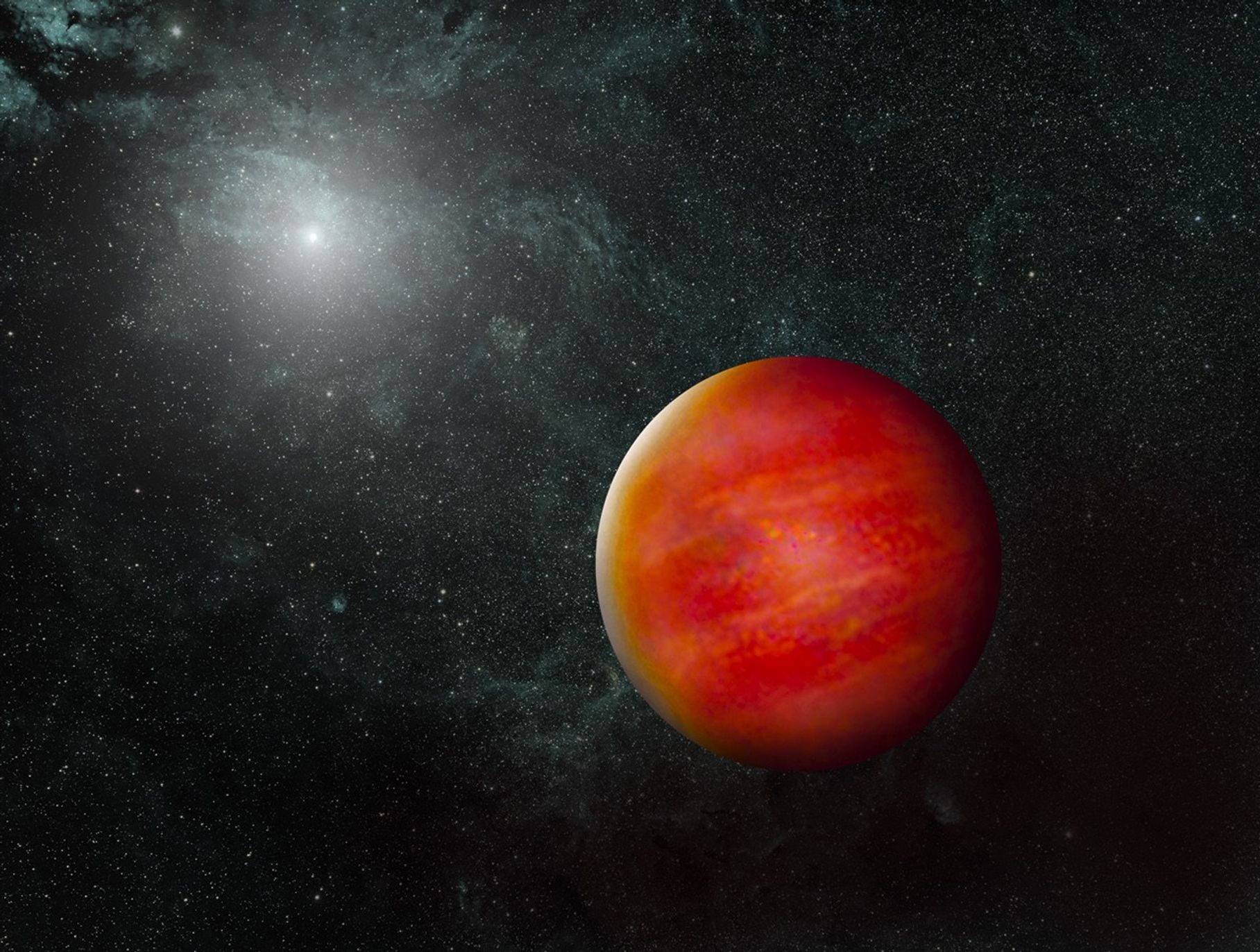
Citizen scientists working with NASA have dramatically expanded the census of one of the galaxy’s most elusive inhabitants: brown dwarfs.
Citizen scientists working with NASA have dramatically expanded the census of one of the galaxy’s most elusive inhabitants: brown dwarfs. A new study from the Backyard Worlds: Planet 9 project reports that volunteers have identified more than 3,000 previously unknown brown dwarfs over the past decade—an advance that effectively doubles the number of these objects known to astronomers.
Brown dwarfs occupy a middle ground between planets and stars. Roughly the size of Jupiter but far more massive than any planet, they lack the heft needed to sustain the long-term hydrogen fusion that powers stars. Even though they are thought to be plentiful—astronomers estimate there is about one brown dwarf for every three or four stars in the Sun’s vicinity—they are notoriously difficult to detect. Their light is faint compared with stars, and many are best seen in infrared wavelengths.
The newly published catalog immediately broadens the scientific value of brown dwarfs as a population. With many more examples available for comparison, researchers can better probe how these objects form, how their atmospheres behave, and where they fit into the Milky Way’s overall distribution of mass. The growing list is already yielding surprises, including a newly recognized class called “extreme T subdwarfs,” along with other unusual finds such as ultra-cool objects and a brown dwarf that appears to display aurora-like activity. Taken together, the results also support efforts to map the solar neighborhood and refine measurements of the galaxy’s mass inventory.
The discoveries are detailed in a paper in The Astronomical Journal led by astronomer Adam Schneider of the U.S. Naval Observatory. The author list underscores how central public participation has been: the work draws on contributions from roughly 200,000 volunteers, and 61 of the paper’s 75 authors are citizen scientists. Two additional authors first joined as volunteers before moving into professional astronomy careers.
For participants, the recognition is deeply personal. Walter Ruben Robledo, an amateur astronomer from Córdoba, Argentina, said he values the acknowledgment of everyone who played a role in the effort. Another volunteer, Mayahuel Torres Guerrero of Mexico City, described learning of their co-authorship as a dream realized.
Backyard Worlds relies on a rich archive of infrared images from NASA’s now-retired Wide-field Infrared Survey Explorer (WISE) and the subsequent NEOWISE reactivation mission. Volunteers analyze the data through the Zooniverse citizen-science platform, where they look for objects that shift position against the fixed background of stars. A key technique is “blinking” images taken at different times—here spanning 16 years—to make motion easier to see. Beyond visual inspection, some contributors have also built their own tools for searching and software for analyzing data, adding technical muscle to the community-driven hunt.
The search is far from over. The project continues to comb through more than two billion sources detected by WISE and NEOWISE-R, looking not only for brown dwarfs but also for nearby stars and potential worlds beyond Neptune. Anyone with a smartphone or laptop can take part at backyardworlds.org.