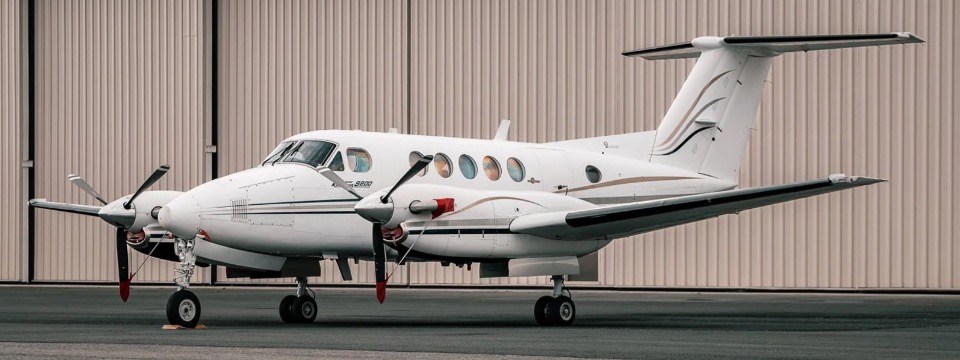
NASA’s FarmFlux mission will fly low-altitude passes over farms near Transit, Texas, using onboard sensors to measure pollutants from animal feeding operations and track their atmospheric evolution.
A NASA Dynamic Aviation A200 aircraft is set to fly repeated low-altitude research passes over agricultural land near Transit, Texas, in a campaign running from Thursday, Oct. 22, through Monday, Nov. 9. The flights are designed to gather detailed measurements of air pollutants released by animal feeding operations, a source of emissions that scientists say is significant yet still not well characterized.
The effort is part of NASA’s FarmFlux mission, which focuses on how gases and particles emitted from farms move into and interact with the atmosphere. During the Texas deployment, the aircraft will fly low enough to sample air close to the surface, where concentrations and chemical reactions can differ markedly from those higher aloft.
FarmFlux will rely on more than a dozen instruments carried onboard to track a suite of pollutants. Among the targets are ozone and its precursors, methane, ammonia, and airborne particulate matter, along with other contaminants associated with livestock and crop production. By capturing these measurements together, researchers aim to better understand not only how much pollution is being emitted but also how it evolves once it leaves fields and feedlots.
NASA describes agricultural emissions as an important component of the coupled land–atmosphere system—one that has historically received less attention than emissions from transportation or industry. Better observations, the agency says, can help close gaps in understanding about how farming influences regional air quality and atmospheric chemistry.
The FarmFlux mission is jointly led by NASA’s Goddard Space Flight Center in Greenbelt, Maryland, Colorado State University, and Boston University, bringing together federal researchers and academic teams to coordinate flight planning, instrumentation, and data analysis.
NASA’s plans extend beyond Texas. The agency has also scheduled additional low-altitude flights using a NASA P-3 Orion aircraft during the March-to-July 2027 growing season. Those campaigns will shift the emphasis from animal operations to cropland, with study areas planned for the U.S. Midwest and California’s Central Valley—two major agricultural regions with distinct crops, climates, and farming practices.
More information about the FarmFlux mission is available through NASA’s Ames Research Center in California’s Silicon Valley.
Why it matters
Farms and feedlots emit methane, ammonia, and particle-forming compounds that can affect air quality and climate, but real-world measurements remain limited. By flying low and using many sensors at once, FarmFlux could improve estimates of agricultural emissions and how they transform in the atmosphere. Communities near intensive agriculture, as well as policymakers and modelers, will be watching for results that clarify where and when pollution is highest—and what that means for future mitigation efforts.