What does it mean to belong to an ethnic community or group? And who gets to decide?
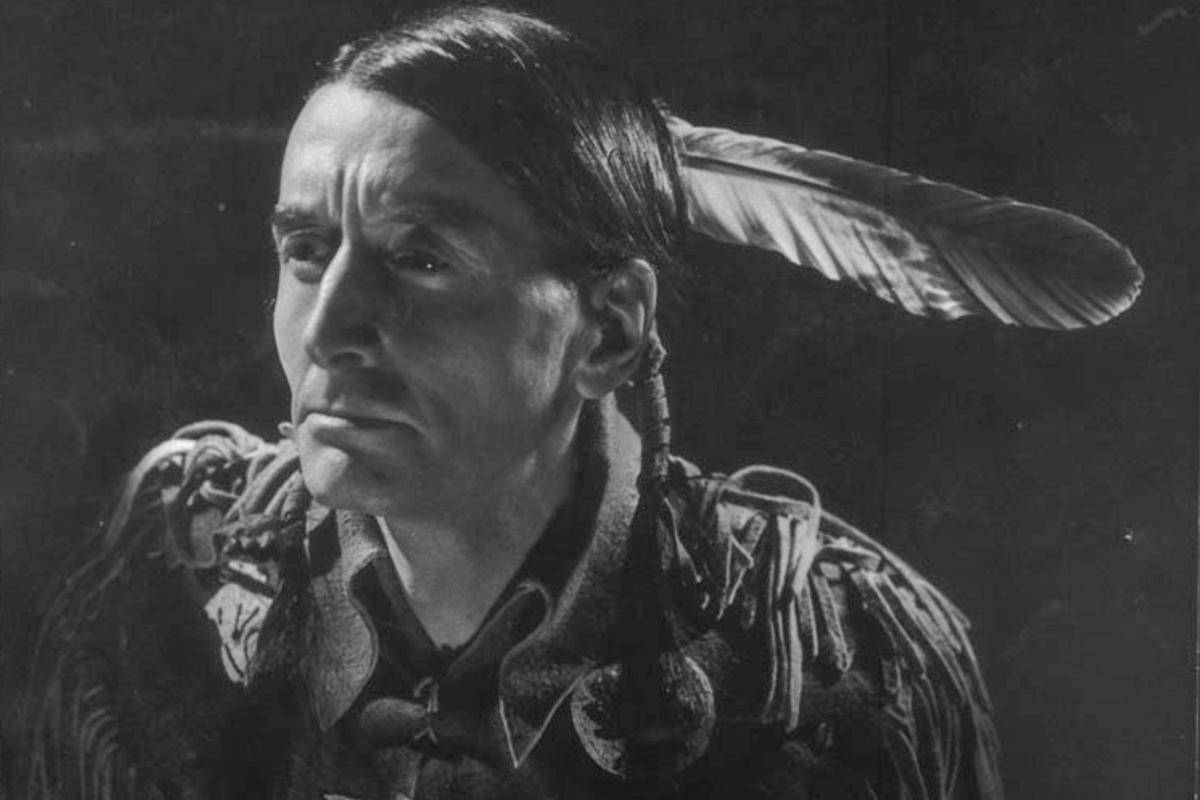
What does it mean to belong to an ethnic community or group? And who gets to decide? From an Indigenous American perspective, people are ‘Indigenous’ because they have family and clan-based ties to the community. When those ties don’t exist, stories fill the gap. But what if those stories are unverifiable? Or what if people take on ‘identities’ based on ‘knowledge’ that turns out not to be true, what then? How do they benefit from those narratives, whether true or not? Self-indigenisation based on self-identification describes people who claim to ‘be’ Indigenous, even when there is ample evidence that they have no Indigenous ancestry or lived experience as Indigenous people. It is a growing phenomenon in the United States and Canada as well as in other countries. Explaining why people pretend to be Indigenous when they aren’t is complicated, especially in light of the fact that the United Nations accepts self-identification as one criterion for indigeneity. However, in places where self-indigenisation has become egregious, it usually comes down to the fact that they perceive benefits, both material and psychological. The way it plays out varies from place to place, but there are commonalities across difference. I am an Indigenous studies scholar in the US, and I study and wrote abookabout self-indigenisation. I am an American Indian person, someone who comes from a long line of people who have been colonised. So mine is in part an insider perspective. As Native people, our experiences and cultures are unambiguous to us, if not always well known to others. They are well recorded in our families’ oral histories and usually in mountains of documentation, given that Indians are arguably the most documented ethnic group in the history of the US. Beginning with the earliest European settlers, missionaries and colonists kept track of the lives of Indigenous people for reasons including religious conversion, treaty negotiations, and census enumeration. Anthropologists also, of course, study Indigenous people. The kinds of knowledge produced from external perspectives can vary widely from that which Indigenous people produce about themselves. Sometimes they conflict, but on occasion anthropologists’ research has helped tribes to recover lost knowledge. Both have their place. Anthropologists who study Indigenous cultural identity use the termethnogenesisto describe how the identities of ethnic communities are formed or understood, and how they can change over time. Even Indigenous studies researchers recognise that, contrary to popular thought, Indigenous communities don’t remain static and unchanged over vast expanses of time. A popular tendency to misconceive of Indigenous people as gripped in terms of ‘authentic cultures’ doesn’t account for historical processes, including colonisation. History has imposed seismic changes on all Indigenous peoples, especially those who were in the way of foreign invasion and conquest. Expectations of cultural authenticity, then, can be a trap that doesn’t allow for peoples to experience history, to change with changing times. In our modern world, there are of course many ways that cultures have evolved, both Indigenous and non-Indigenous. This blending of cultures through intermarriage has resulted in a blurring of lines that has made it difficult to make distinctions based on social constructions of race and ethnicity. Around the world, the questions are about what Indigeneity is and who decides, and how those questions are answered will vary. Laws and custom vary by country, and people will also make their own determinations. That said, there is also the very real phenomenon of ethnic fraud, the wrongful claiming of Indigeneity by people without any demonstrable connection to a historical Indigenous community. In extreme examples, these claims are based on flagrant lying. Some anthropologists have identified a phenomenon they refer to as neo-Indianism. It was first named by Jacques Galinier and Antoinette Molinié, whosebookThe Neo-Indians: A Religion for the Third Millennium(translated from French by Lucy Lyall Grant, 2013) examined the rise of a new kind of Indigenism in Latin America where New Age rituals were invented for tourist consumption at Teotihuacan in Mexico, Cuzco in Peru, and other archaeological sites. Misrepresented as traditional Indigenous religion, the general public was unaware of the ruse even as it became a global industry. Similarly, there are growing instances of fake Aboriginal individuals in Australia. The same ishappeningin Aotearoa (New Zealand) among the Māori. Nowhere, however, is the problem of ethnic fraud more prevalent than in the US and Canada, where it is called ‘pretendianism’. The Boy Scouts of America blatantly relied on playing Indian to build its movement under the guise of ‘honouring’ Native people Pretendianism is sometimes known by the more benign-sounding termcultural appropriation, which describes an array of offensive behaviours, such as sports mascots or events with inappropriate names and imagery, Halloween costumes, or the flagrant, unauthorised use of Native spirituality and culture, such as pipe ceremonies and sweat lodges, just to name a few. In Germany, for example, there is an entiresubculturededicated to the fetishisation of Native Americans, which perpetuates harmful, inaccurate stereotypes. If we understand Nativeness conceptualised as a spectrum, then cultural appropriation, ethnic fraud and pretendianism can be understood as existing on the extreme end, at which claims to Indigeneity are objectively illegitimate. The noted American Indian studies scholar Philip J Deloria coined the term ‘playing Indian’ with his seminal 1998bookof the same name, in which he traced a history of Americans’ penchant for adopting the dress and cultures of Native Americans for a variety of reasons, ranging from frivolous to serious and even politically motivated. The Boy Scouts of America, an extremely popular hobbyist club for children that romanticised America’s frontier days, blatantly relied on playing Indian in the early20th centuryto build its movement under the guise of ‘honouring’ Native people. More than a century earlier, the1773 BostonTea Party, in which colonists costumed in Indian garb, was clearly a political incident that contributed to the incitement of a revolution. Many, many examples can be given of how the cultures of Native Americans are claimed for reasons that most Native people find offensive. Pretendianism takes cultural appropriation to the next level when it goes beyond playing Indian tobecomingIndian. People ‘become’ Indian when they claim to ‘be’ Indian with no connection to a tribal community, or little to no evidence of Native ancestry. It often begins with an individual who at some point in life transforms their identity claims from white (but sometimes other races or ethnicities) into Native American, based on family folklore or nothing at all, hence ‘race-shifting’, the term used in Australia. When those people have children and raise them with that mythology, pretendianism becomes generational. Amid many legitimate tribes who wrongfully lack political recognition by the US federal government, there are also hundreds of fake tribes that sprouted up in the20th century.The majority of them claim to be Cherokee, but there are numerous others claiming to be Chumash, Shawnee, and more. The work of Darryl Lerouxshowshow in Canada pretendianism is most prevalent in the east with a proliferation of ‘Abenaki’ groups. Faux Abenakis are also a problem in the state of Vermont, with four groups whom the state politically recognises but who have virtually no documentation to back up their claims of Abenaki descent. There are also dubious Metis and Inuit groups in Canada. Grey Owl turned out to be Archie Belaney, a British-born white man with no Indigenous ancestry There are many pretendians whose names or faces you may recognise, emerging predominantly from the fi