Discover the cosmos!Each day a different image or photograph of our fascinating universe is featured, along with a brief explanation written by a professional astronomer.
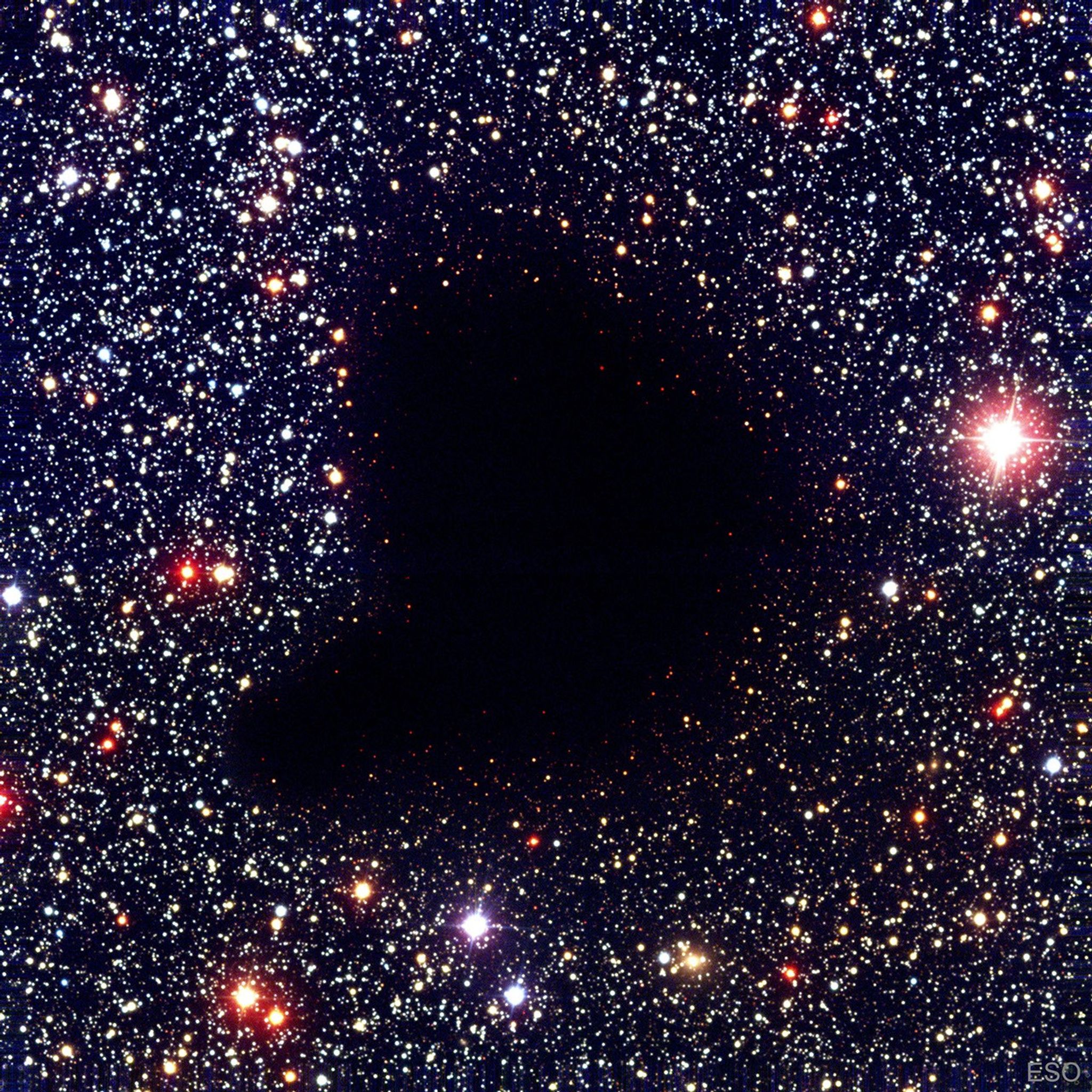
Discover the cosmos!Each day a different image or photograph of our fascinating universe is featured, along with a brief explanation written by a professional astronomer. Explanation:Where did all the stars go? What used to be considered a hole in the sky is now known to astronomers as a darkmolecularcloud. Here, a high concentration ofdustandmolecular gasabsorbs practically all thevisible lightemitted from background stars. The eerily dark surroundings help make the interiors ofmolecular cloudssome of the coldest and mostisolated places in the universe. One of the most notable of thesedark absorption nebulaeis a cloud toward the constellation of the Snake Carrier (Ophiuchus) known asBarnard 68,pictured here. That no stars are visible in the center indicates thatBarnard68 is relatively nearby, with measurements placing it about 500 light-years away and half alight-yearacross. It isnot knownexactly howmolecular clouds likeBarnard 68form, but it is known that these clouds are themselveslikely placesfornew stars to form. In fact,Barnard 68itself hasbeen foundlikely to collapse and form a new star system. It is possible tolook right throughthe cloud ininfraredlight.Tomorrow's Picture:open space