NASA’s push to speed up production of next-generation composite aircraft took center stage this spring as the agency convened a major project review at its Langley Research Center in Hampton, Virginia.
NASA’s push to speed up production of next-generation composite aircraft took center stage this spring as the agency convened a major project review at its Langley Research Center in Hampton, Virginia. From May 5–7, the Hi-Rate Composite Aircraft Manufacturing (HiCAM) team gathered for an in-depth assessment of technical progress and upcoming priorities, drawing roughly 150 participants from the Advanced Composites Consortium—a 22-member public-private partnership linking NASA with industry and other collaborators.
The three-day meeting served as both a checkpoint and a planning session, giving NASA and its partners a shared forum to evaluate results, compare approaches, and align on what needs to happen next. NASA also used the review to communicate recent decisions about its technology portfolio, narrowing its focus to manufacturing innovations judged most likely to increase production speed for a future aircraft program. The aim is clear: identify and mature the processes that could have the biggest effect on how quickly composite airframes can be built at scale.
Much of the technical discussion centered on findings from HiCAM’s Development Phase, where teams have been testing and refining advanced composite manufacturing methods. Participants also examined early work in Phase 2—the Demonstration Phase—when selected technologies begin moving from development toward larger, more production-representative demonstrations. This step is designed to take promising processes out of the lab and prove they can be applied to major aircraft structures in ways that support higher build rates.
A key feature of the review was a set of full-day workshops devoted to assembly demonstrations involving two of the largest and most complex components in commercial aircraft production: the wing and the fuselage. These sessions brought NASA researchers together with industry engineers and other partners to present updates, troubleshoot shared challenges, and map longer-term integration plans. By structuring the workshops around real assembly demonstrations, organizers emphasized practical questions—how parts fit together, how workflows can be streamlined, and how manufacturing steps can be scaled without sacrificing quality.
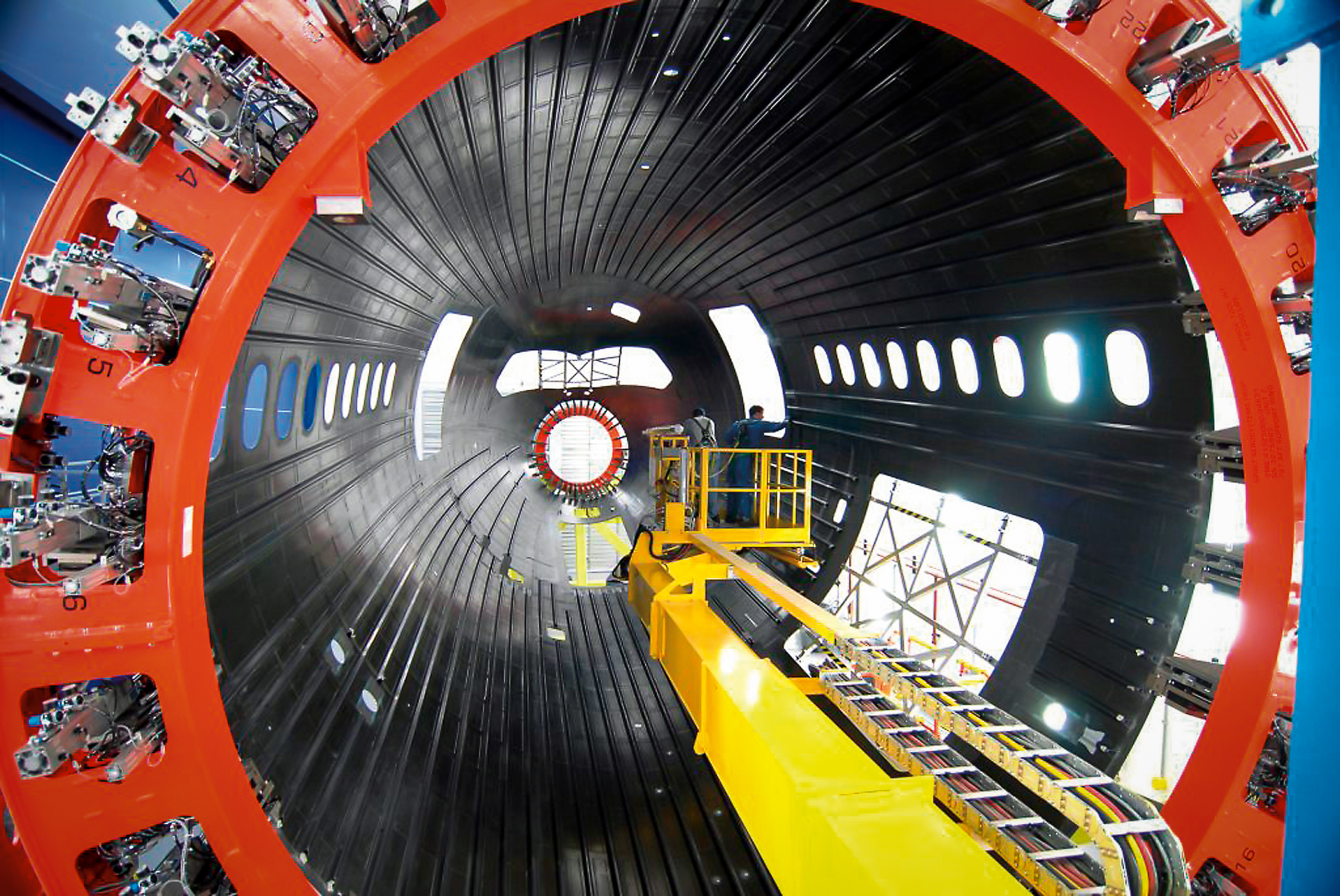
Participants reported that cooperation across the consortium has strengthened compared with previous years, with tighter coordination among teams working different pieces of the manufacturing puzzle. That increased alignment matters, because HiCAM is working toward a pair of major project milestones: large-scale manufacturing demonstrations of a composite fuselage barrel in 2028 and a composite wing box in 2029. Those demonstrations are intended to show, in realistic conditions and at meaningful scale, how advanced materials and manufacturing processes could enable faster and less expensive production of aircraft structures.
NASA and its partners described continued, steady progress toward these targets. If the upcoming demonstrations succeed, the work could help establish new approaches for producing lightweight composite structures—methods that could make future aircraft easier to manufacture while also improving operational efficiency. In short, HiCAM is positioning composite manufacturing not just as a materials story, but as a production-rate and affordability strategy for the next era of airplane design.