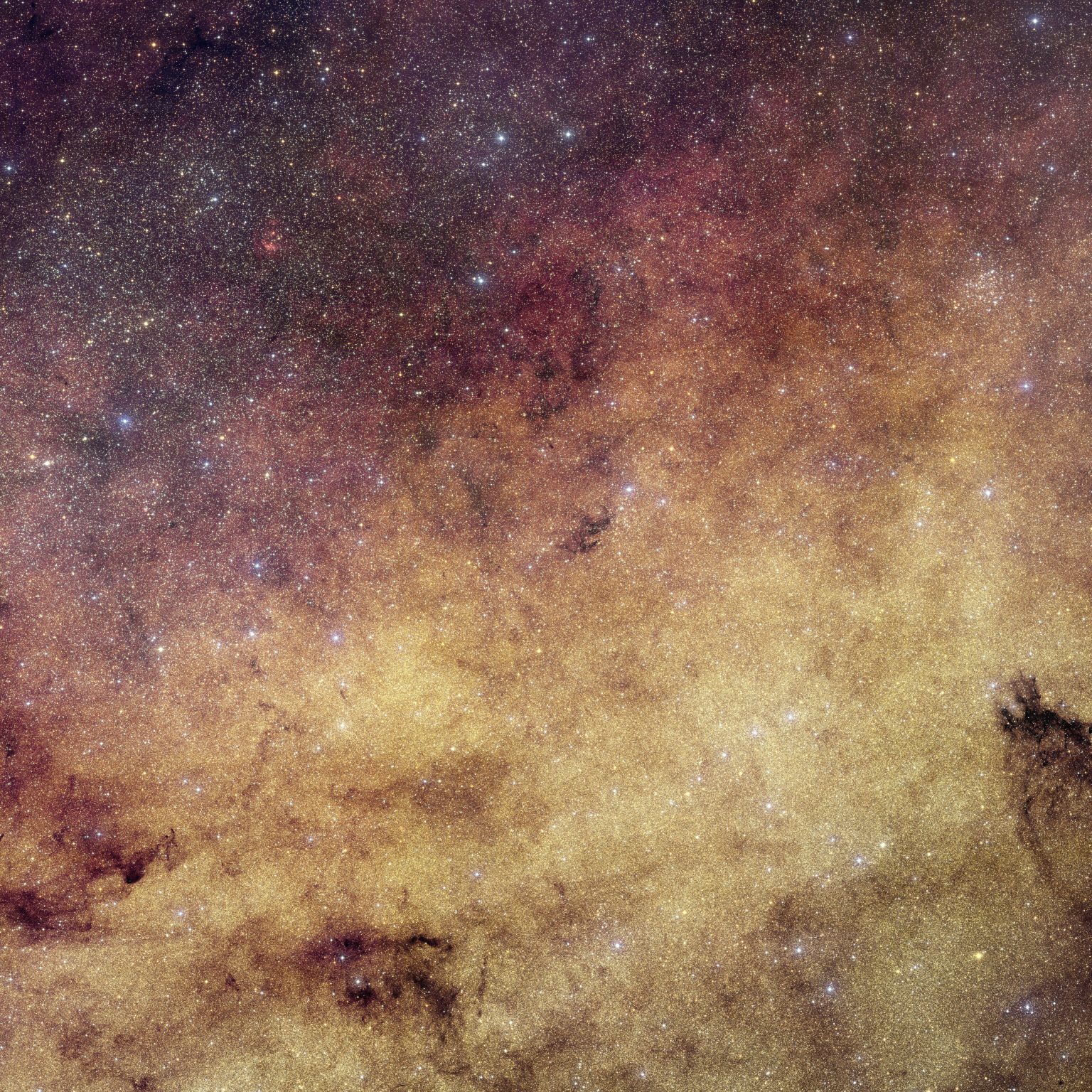
Euclid, the European Space Agency’s dark-universe observatory with key NASA participation, has delivered an early, detailed look toward the crowded center of the Milky…
Euclid, the European Space Agency’s dark-universe observatory with key NASA participation, has delivered an early, detailed look toward the crowded center of the Milky Way—an area that will later become a prime target for NASA’s forthcoming Nancy Grace Roman Space Telescope. The overlap offers astronomers an unusual head start: by combining Euclid’s single-epoch snapshot with Roman’s future, repeated monitoring, scientists expect to extract far more information than either mission could provide on its own.
The observation is notable for another reason: Euclid briefly stepped away from its primary cosmology-focused sky survey to do it. “This is the only time Euclid has paused its normal sky survey,” said Jason Rhodes, a senior research scientist at NASA’s Jet Propulsion Laboratory in Southern California. Rhodes, who serves as the U.S. Euclid science lead and JPL’s Roman project scientist, emphasized that such a deviation requires extensive planning and must promise significant scientific return. He said pairing Euclid’s view with Roman’s upcoming data should sharpen maps of the Galaxy and make elusive targets—such as isolated black holes and free-floating “rogue” planets—easier to spot.
Euclid devoted a single day of its six-year prime mission to preview the region that Roman will study in its Galactic Bulge Time-Domain Survey, designed to produce one of the deepest looks ever into the Milky Way’s core. Euclid’s data are not as deep and do not provide the same color information Roman will ultimately capture, but the image quality is comparable in resolution. Euclid also scanned a broader patch of sky: about 5 square degrees, roughly the area of 25 full moons. That larger footprint reflects the fact that Roman’s final survey boundaries had not yet been set when Euclid made the observation in March 2025.
Roman, scheduled to launch later this summer, will take a different approach once its main campaign begins. Over its five-year primary mission, it will repeatedly image a smaller field—about 1.7 square degrees, or around 8.5 full moons—tracking how hundreds of millions of stars and other objects brighten, dim, and shift over short timescales. Those subtle variations are expected to uncover vast numbers of new planets and a range of other transient and variable phenomena.
By effectively tacking Euclid’s earlier look onto the front end of Roman’s dataset, researchers gain a longer timeline—extending the survey baseline by about two years, since Roman’s bulge observations are slated to start in spring 2027. That added time is particularly valuable for one of Roman’s key techniques: gravitational microlensing, in which the gravity of a foreground object—such as a star, planet, or black hole—warps space-time and bends the light from a more distant background star. When the alignment is close enough, the nearer object acts like a lens, temporarily magnifying the background star’s light.
“Most often, the lensing object is another star,” said Matthew Penny, an assistant professor at Louisiana State University and co-lead of Euclid’s exoplanet science working group, who has spent more than a decade simulating how Euclid and Roman data will perform. But, he noted, the method can also reveal planets around those stars and other hard-to-detect bodies that rarely show themselves by any other means.
One of the most intriguing quarry is the Galaxy’s population of stellar-mass black holes, the remnants of massive stars. Astronomers estimate the Milky Way contains about 100 million of them, yet most detections so far have relied on cases where a black hole interacts with a nearby companion star. Many are thought to roam alone—effectively invisible unless their gravity briefly betrays them through microlensing. Planet-driven microlensing signals often last hours to days, but black holes can produce far longer events, sometimes requiring years of observations to see the alignment fully change. The extra time offered by Euclid’s early snapshot, researchers say, should make it easier to separate the lens from the source star and to determine the lens’s mass.