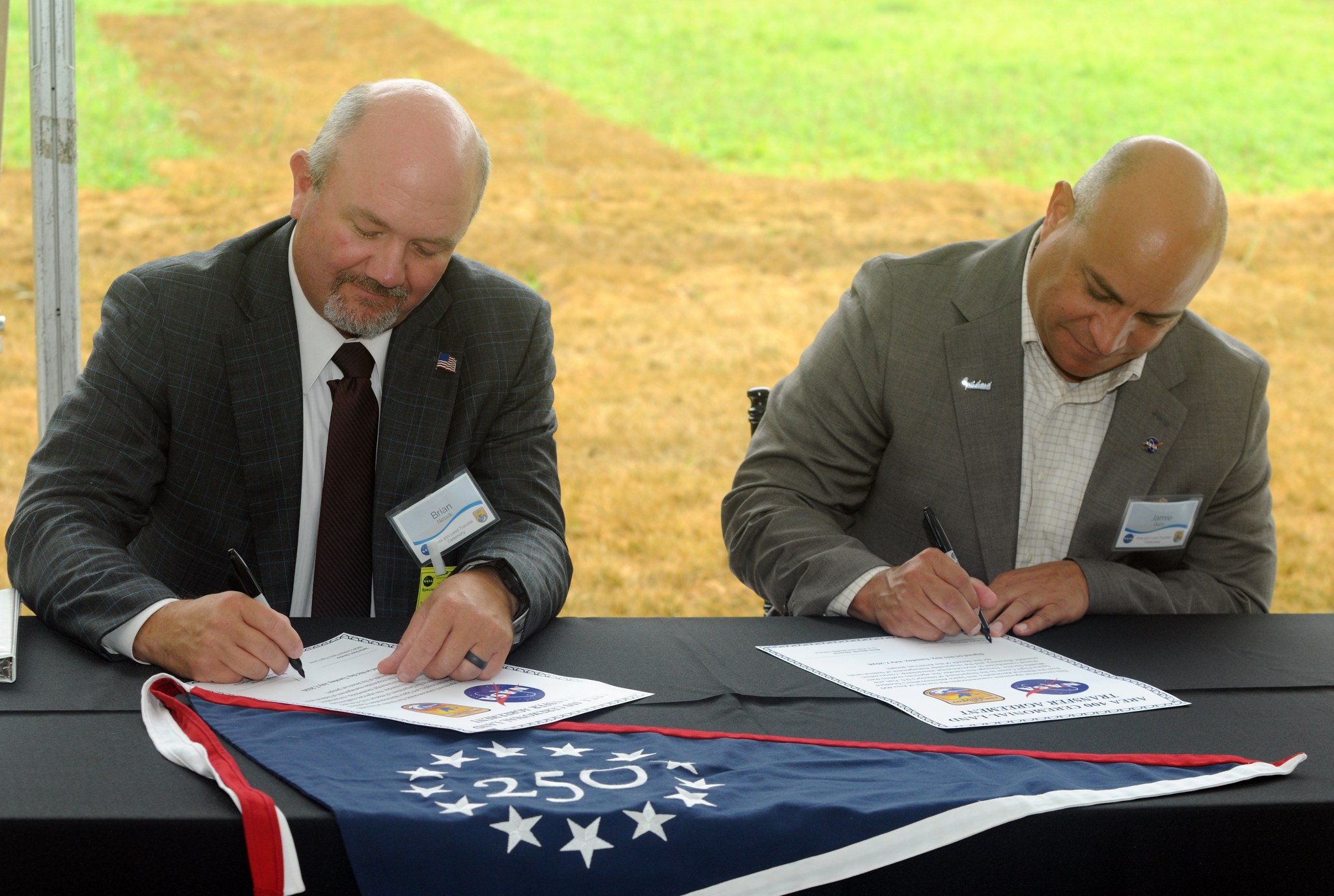
NASA has formally handed over roughly 105 acres of forest on the Greenbelt, Maryland, campus of the Goddard Space Flight Center to the neighboring Patuxent Research Refuge, a U.S.
NASA has formally handed over roughly 105 acres of forest on the Greenbelt, Maryland, campus of the Goddard Space Flight Center to the neighboring Patuxent Research Refuge, a U.S. Fish and Wildlife Service property dedicated to wildlife research. The tract—previously known within the agency as Area 400—now becomes part of the largest continuous, unbroken forest remaining between Washington, D.C., and Baltimore.
Patuxent Research Refuge spans nearly 13,000 acres and holds a distinctive place in the national refuge system: it is the only refuge created specifically to support wildlife research. Alongside its scientific mission, the refuge also provides space for public recreation, including walking, bicycling, horseback riding, fishing, and hunting.
The transfer was marked in a ceremonial event Tuesday at Goddard, underscoring a shift in how the land will be used. “For over six decades, NASA Goddard has helped shape humanity’s understanding of Earth,” said Goddard Center Director Jamie Dunn. Dunn said the agency was pleased to pass the property to Fish and Wildlife Service colleagues whose conservation and research efforts contribute directly to protecting the planet “for future generations.”
The story of Area 400 reflects changing priorities in federal science infrastructure. Beginning in the 1960s, NASA used the site for propellant research. Over time, that work largely moved to NASA installations in other states or was taken on by commercial providers. As a result, the parcel had for years been considered a candidate for divestment, and talks between NASA and the Fish and Wildlife Service about a transfer began in 2021.
Even before the handover, the land remained mostly forested. The main departure from woodland was a roughly two-and-a-half-acre clearing that contained 11 small structures. The interagency transfer officially took effect on Feb. 23. In the months since, NASA has completed closeout activities to remove its remaining footprint on the property, dismantling the buildings as well as associated roadway and utility services.
Fish and Wildlife Service leaders framed the move as part of a broader effort to coordinate land management across agencies to maximize conservation and public benefit. “Through working with partners on the best use of land, as exemplified with this land transfer, we can continue to conserve America’s natural beauty and expand outdoor recreation opportunities for future generations,” said Service Director Brian Nesvik.
With the addition of the former NASA parcel, the refuge not only grows in acreage but also strengthens the integrity of a major forest corridor in a heavily developed region—an outcome that supports both long-term ecological research and the protection of habitat in the Washington-to-Baltimore corridor.