A new delivery to the International Space Station is bringing a taste of Earth—and a fresh wave of science—into orbit.
A new delivery to the International Space Station is bringing a taste of Earth—and a fresh wave of science—into orbit.
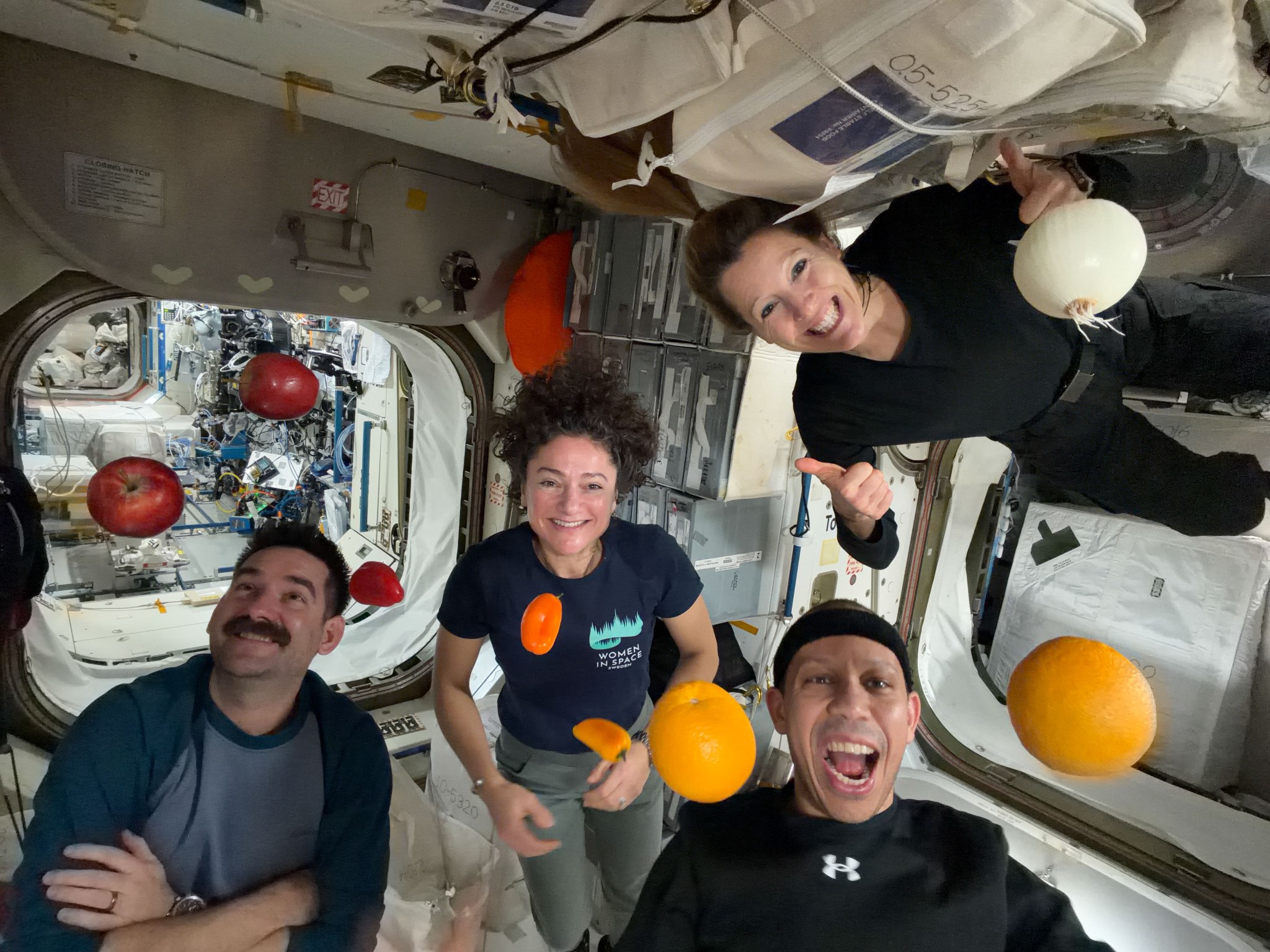
In a photo taken April 19, 2026, NASA astronauts Jack Hathaway, Jessica Meir, and Chris Williams, along with European Space Agency astronaut Sophie Adenot, are seen playing with food as it floats in microgravity. Their lighthearted moment follows the arrival of Northrop Grumman’s Cygnus XL cargo spacecraft, which recently docked with the station carrying a shipment of fresh produce for the crew.
Among the items packed for the astronauts were oranges, apples, onions, and peppers—simple ingredients that can be difficult to come by during long stretches in space. Fresh food is more than a morale boost: it also helps vary diet and provides nutrients that are harder to preserve in shelf-stable meals designed for months of storage.
But the delivery was not just about replenishing the pantry. Cygnus XL also transported more than 2,300 pounds of research equipment and experiments that will occupy the station’s laboratories in the weeks ahead. The new payload supports investigations into blood stem cells, research aimed at improving treatments for cancers and other blood-related disorders. Another set of experiments will focus on protecting astronaut gut health, an area of growing interest as space agencies plan for longer missions where changes to the microbiome and digestion could affect overall performance and wellbeing.
Alongside the scientific cargo, the spacecraft brought practical hardware intended to support everyday operations and crew health. ESA contributed an advanced exercise system, part of ongoing efforts to counteract the muscle and bone loss associated with living in microgravity. The shipment also included new eye-imaging equipment, adding to the station’s ability to monitor how spaceflight affects vision and ocular structures—an enduring concern for long-duration astronauts.
Cygnus XL delivered critical consumables as well, including oxygen and nitrogen tanks used to recharge spacesuits, ensuring the station can maintain readiness for spacewalk activities. Additional supplies and equipment rounded out the manifest, reinforcing the station’s role as both a home and a high-tech research platform.
Together, the fresh provisions, laboratory gear, and life-support resources highlight the dual reality of life aboard the orbiting outpost: maintaining human routines while advancing biomedical and technological research that can benefit both future exploration and patients on Earth.