A meteorite that plunged through the skies over New Jersey on July 16, 2024—and was picked up almost immediately after landing—is giving NASA researchers an unusually…
A meteorite that plunged through the skies over New Jersey on July 16, 2024—and was picked up almost immediately after landing—is giving NASA researchers an unusually unspoiled window into how water once moved through ancient asteroids and helped shape their chemistry. Because the rock was recovered so quickly, scientists say it retained fragile minerals and organic material that are typically degraded by Earth’s moisture, weathering, and contamination.
The chain of events began when an amateur astronomer in New Jersey recognized that a fresh meteorite had fallen onto his property. Understanding the scientific stakes, he handled the fragments with protective gloves and stored them in aluminum foil and glass containers—simple steps that proved crucial for preserving delicate compounds that often do not survive long once exposed to air and humidity.
As the object entered the atmosphere, cameras across New Jersey recorded the bright fireball. Researchers used those observations to calculate the meteor’s flight path and reconstruct its trajectory. After the meteorite was recovered, the team paired that atmospheric data with laboratory measurements to infer where in the solar system the rock likely originated, narrowing its source to the asteroid belt.
In findings published Wednesday in Science Advances, scientists report that the meteorite carries chemical and mineral clues pointing to ancient, salty water—brines—that once circulated through its parent asteroid. Those fluids altered the rock’s minerals and left behind evidence that remained intact for billions of years. “When we have both a documented fireball and a quick recovery of its meteorite, we can learn not only what the rock is made of, but where it came from in the asteroid belt,” said lead author Peter Jenniskens, a meteor astronomer at NASA’s Ames Research Center and the SETI Institute.
The specimen was named the Hillsborough meteorite after the township where it was found. It belongs to the CM carbonaceous chondrites, a carbon-rich class of meteorites prized by researchers because they are considered among the most primitive rocks available for study—remnants that record chemical activity from more than 4.5 billion years ago, near the solar system’s beginning.
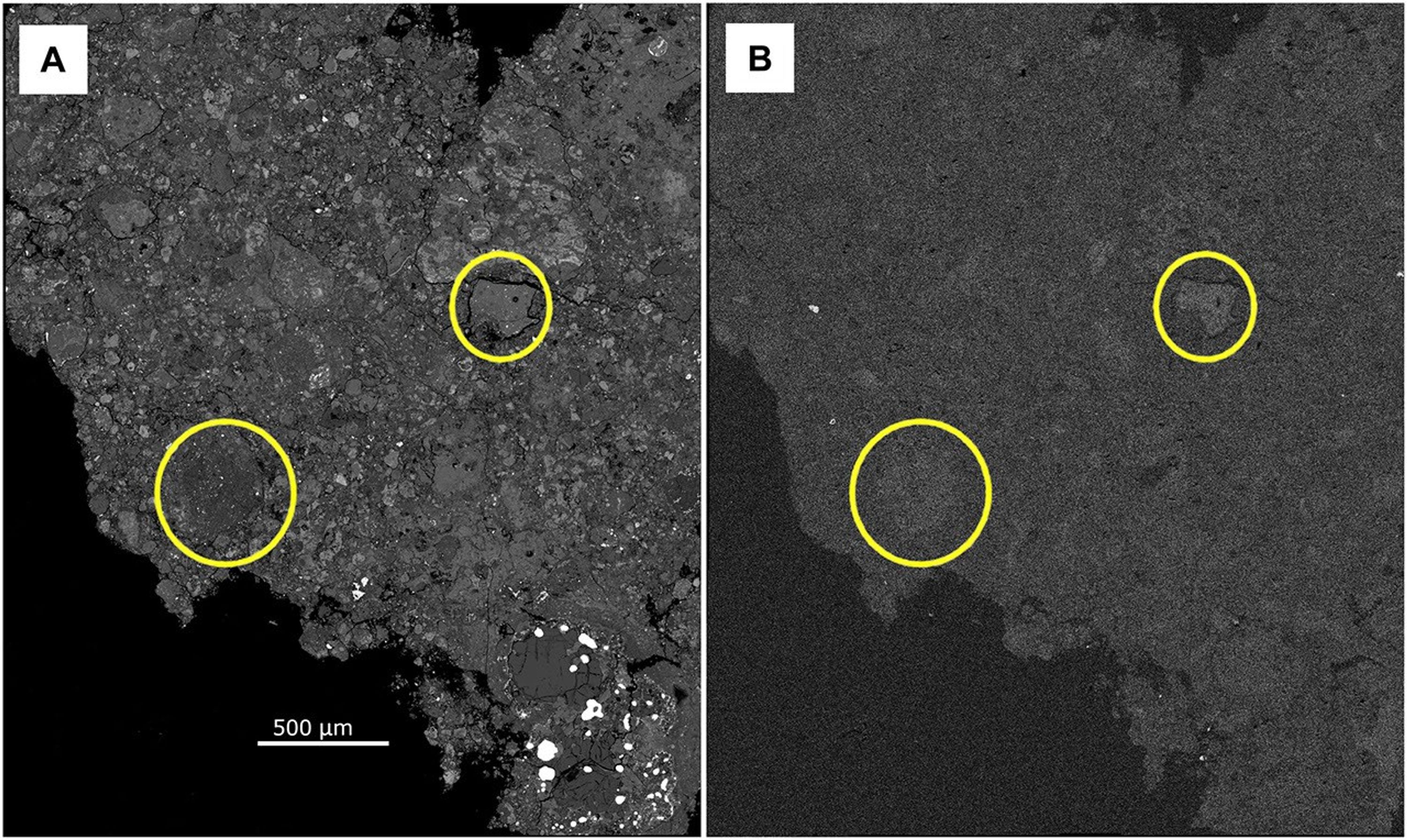
When the team examined the remarkably pristine sample, they found it was made of a patchwork of tiny fragmented clasts. Some of these pieces carried unusually high levels of sodium—an unexpected signature for CM meteorites. That anomaly led researchers to take a closer look using advanced electron microscopy, enabling analysis across scales from millimeters down to the atomic level. By integrating those views, they pieced together a timeline of mineral changes and the fluid activity that produced them.
The microscopic work revealed fine fractures filled with sodium-rich deposits consistent with residues left by brines. Unlike pure water, salt-laden fluids can transport a broader range of elements and drive distinctive chemical reactions as they percolate through rock. In Hillsborough, those brines appear to have modified minerals inside the asteroid and locked in chemical fingerprints that survived until the meteorite’s fall to Earth.
The team also detected fragile sodium-carbonate salts—compounds that typically react quickly with moisture in Earth’s atmosphere, making them difficult to study in most meteorite finds. Co-author Jangmi Han, a mineralogist at NASA’s Johnson Space Center, identified evidence of these brine-related materials preserved inside microscopic cracks.
Similar salts have been reported in samples returned directly from asteroids Bennu and Ryugu by NASA’s OSIRIS-REx mission and JAXA’s Hayabusa2 mission. Hillsborough, however, is the first CM carbonaceous chondrite meteorite in which these salts have been identified, offering a new perspective on the surfaces of the primitive asteroids that supply this meteorite group.
Taken together, the results suggest that salt-rich fluids may have been more common across primitive asteroids than scientists once assumed—creating new opportunities to compare how water reshaped different small bodies in the early solar system and what that chemistry might have meant for distributing life’s building blocks.