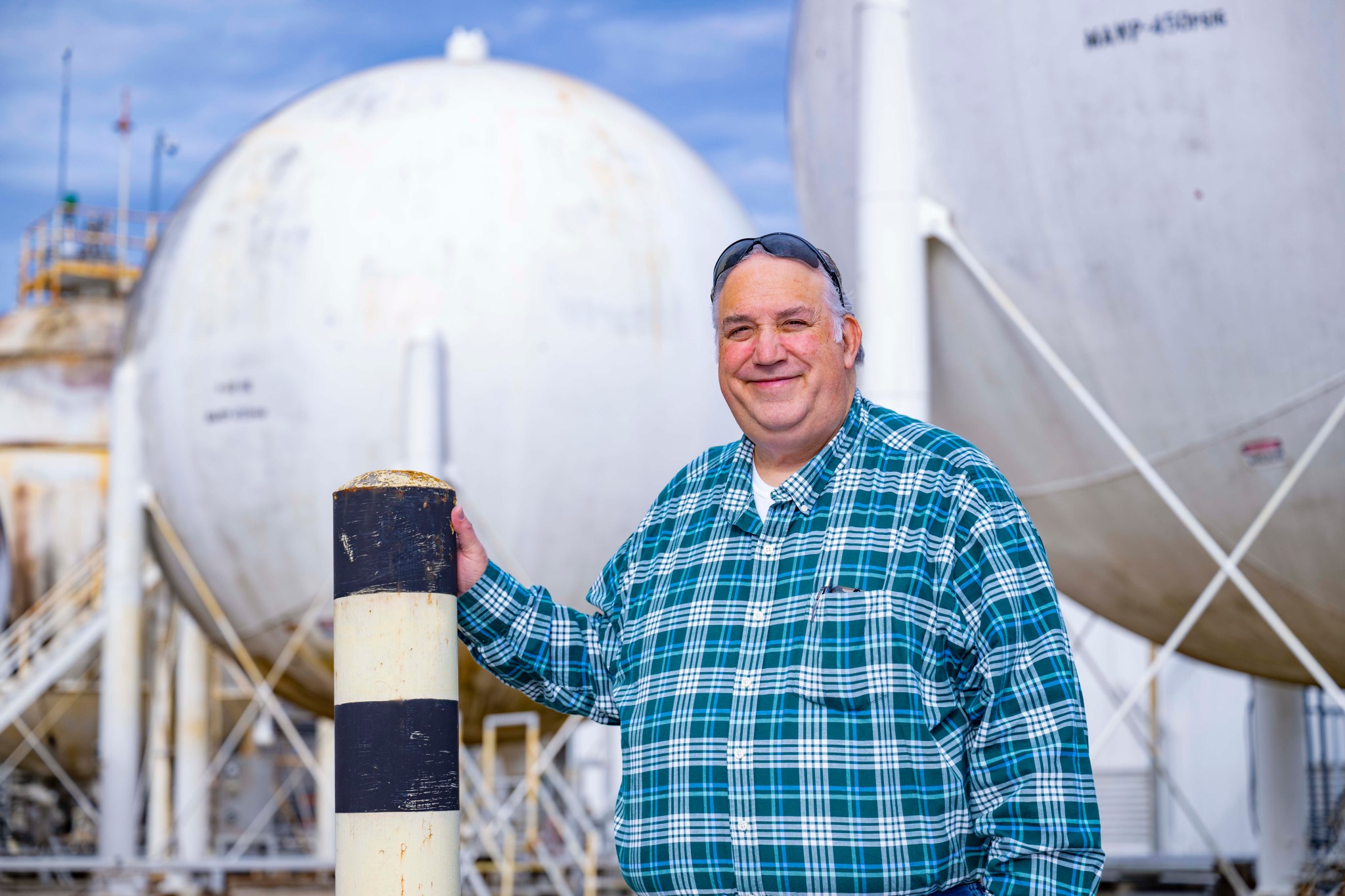
NASA Stennis has hired longtime contractor Jim Mirandy as a civil-service quality assurance specialist, part of an initiative to protect core technical expertise for rocket testing and safety.
For Jim Mirandy, the sound of rocket engines is more than background noise — it has traced the arc of his life and career. After three decades supporting NASA as a contractor, Mirandy has now joined the agency’s civil service workforce at NASA’s Stennis Space Center near Bay St. Louis, Mississippi, becoming a quality assurance specialist under a NASA initiative aimed at rebuilding and protecting core technical capabilities by converting key contractor roles into government positions.
Mirandy’s new status doesn’t change the focus of his work so much as it formalizes what he has long provided: deep, site-specific expertise at the nation’s largest rocket propulsion testing facility. That expertise underpins testing that helps enable NASA’s Artemis campaign, the program designed to return American astronauts to the Moon and sustain U.S. leadership in space. In a place where engines are pushed to their limits, Stennis’ ability to execute tests safely — and to document that safety with rigor — is critical. NASA’s decision to bring Mirandy into the civil service is meant to help ensure that continuity.
Mirandy describes quality assurance as an essential “second set of eyes” across operations, with an emphasis on spotting risks before they turn into incidents. In addition to his day-to-day responsibilities, he serves as Stennis’ close call investigator, a role centered on examining near-misses and identifying lessons that can prevent future harm. He also helps lead the center’s participation in the Voluntary Protection Program, a federal workplace safety framework, and contributes to the Striving to Achieve Real Safety committee, an employee-driven group focused on maintaining and improving safety across the site.
His influence at Stennis extends beyond current assignments. Over the years, Mirandy developed training courses in high-pressure systems and cryogenics — specialized topics central to rocket propulsion work — and taught those classes for a decade. He has also contributed to establishing safety practices used in multiple locations throughout the center, adding to the institutional knowledge that allows complex testing operations to run smoothly and consistently.
Mirandy’s connection to NASA reaches back to childhood in Titusville, Florida, where spaceflight was part of daily life. His father, Wes Mirandy, worked for Rocketdyne at NASA’s Kennedy Space Center, and local schools would gather to watch launches. The family later followed Wes Mirandy’s career to Stennis, where he became the A-1 test stand manager overseeing space shuttle main engine testing.
Mirandy credits his father as his most important mentor — not only for inspiring an interest in rockets, but for teaching a practical approach to problem-solving. He also recalls arriving at Stennis and finding guidance from his father’s colleagues, who took time to explain the test stands and the systems that support them.
That hands-on mindset first carried him into work at NASA’s Michoud Assembly Facility in New Orleans, where he began as a mechanic on the Space Shuttle External Tank. A turning point came when an unexpected event occurred on the production floor and Mirandy stepped in to support operations and safety teams. The experience shifted his trajectory toward safety and quality — a path he would later bring to Stennis.
Now living in Bay St. Louis and a graduate of the University of Southern Mississippi, Mirandy says his motivation is straightforward: protect people and improve how work gets done. His personal motto reflects the long view required in high-stakes testing: working safely today, he says, is what ensures there is a tomorrow.
Why it matters
NASA’s push to convert experienced contractors into civil servants is designed to preserve hard-won expertise at facilities like Stennis, where propulsion testing is essential to Artemis and other missions. Continuity in safety and quality roles can reduce operational risk in complex, hazardous environments. The next indicator to watch is whether similar conversions expand across other NASA centers and technical disciplines tied to upcoming Moon and deep-space plans.