NASA’s Psyche spacecraft has successfully completed a close pass by Mars, using the planet’s gravity to help propel it onward toward its ultimate target: the metal-rich asteroid Psyche.
NASA’s Psyche spacecraft has successfully completed a close pass by Mars, using the planet’s gravity to help propel it onward toward its ultimate target: the metal-rich asteroid Psyche. The flyby occurred on May 15, when the spacecraft swept to within 2,864 miles (4,609 kilometers) of the Martian surface.
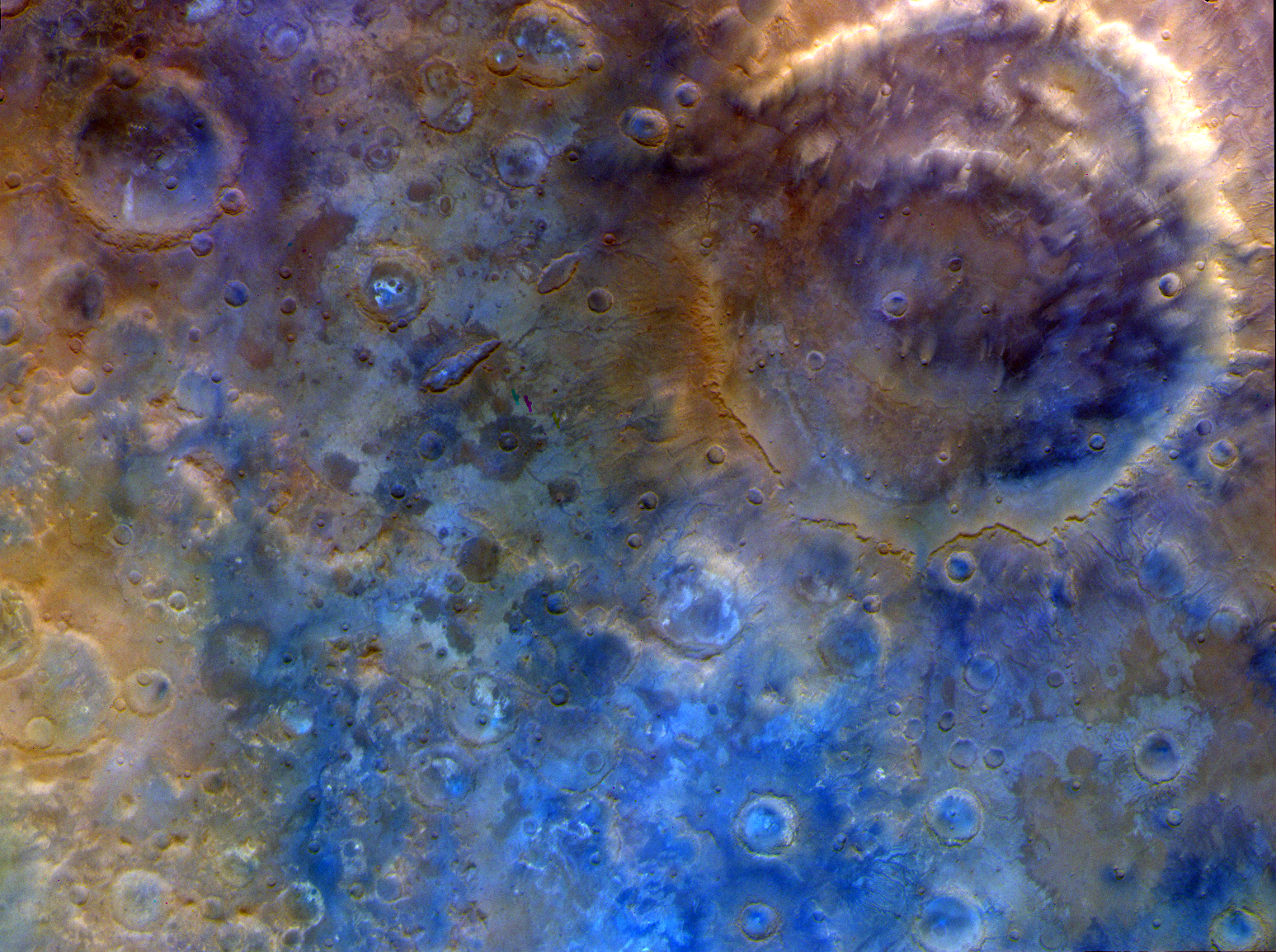
As it skimmed past the Red Planet, Psyche’s onboard multispectral imager captured a series of photographs. Among them is a representative color view highlighting Huygens crater, a distinctive double-ring impact feature set amid the rugged, heavily pockmarked terrain of Mars’ southern highlands. The region’s dense concentration of craters reflects an ancient landscape that has preserved the marks of impacts over billions of years.
But the flyby’s purpose went far beyond taking pictures. Mission engineers designed the encounter as a gravity assist—an orbital maneuver that trades momentum with a planet to change a spacecraft’s trajectory. In this case, Mars provided a crucial increase in speed and helped reshape Psyche’s orbital plane. Importantly, the adjustment was achieved without expending onboard propellant, conserving fuel for the long cruise and the complex operations to come around the asteroid.
Psyche is now continuing its multi-year journey to the main asteroid belt, where it is expected to arrive in August 2029. Once there, the spacecraft will execute an orbital insertion and begin an extended campaign of mapping and scientific observations designed to characterize the asteroid’s composition, structure, and history.
The mission is aimed at investigating an unusual world: asteroid Psyche is thought to be exceptionally rich in metal compared with typical rocky asteroids. Scientists are interested in the possibility that it could represent the exposed core of a long-ago planetesimal—one of the building blocks of the early solar system—that was stripped of its outer layers through ancient collisions. If that hypothesis is confirmed, Psyche could provide a rare natural laboratory for studying material similar to what lies deep inside rocky planets, including Earth.
With the Mars flyby complete, the spacecraft has gained both the speed and the trajectory adjustment it needed to stay on course—an important step toward reaching an object that may hold clues to how planetary interiors form and evolve.