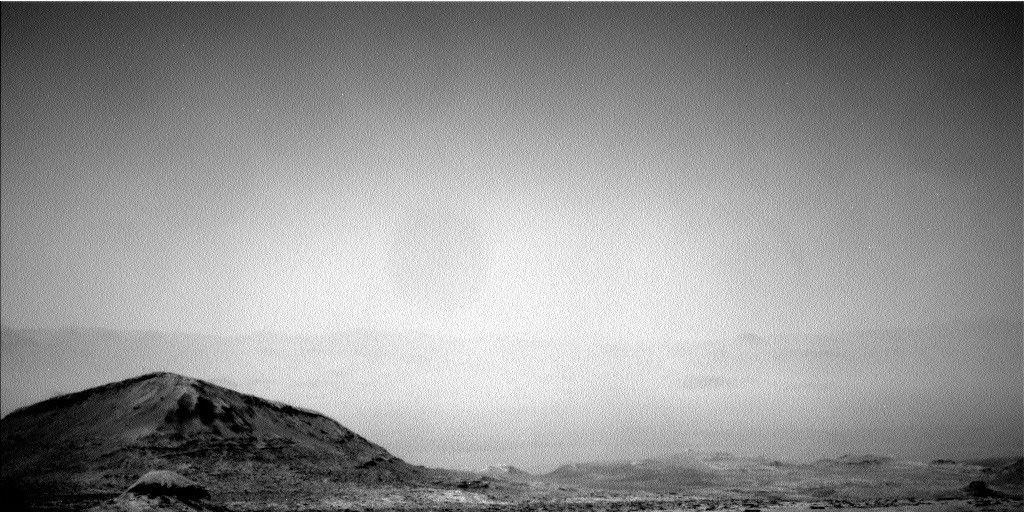
Curiosity wrapped up a productive long weekend in Gale Crater and began the new week poised to keep moving.
Curiosity wrapped up a productive long weekend in Gale Crater and began the new week poised to keep moving. Over three science stops between sols 4947 and 4953, the rover traversed relatively quickly across a series of mapped geological “units” — distinct rock terrains that researchers have charted as separate areas of interest. Each stop offered a new slice of the crater’s complex history, with scientists using subtle differences in texture, color, and chemistry to reconstruct how these rocks were deposited and how later conditions altered them.
At all three locations, the team carried out close-up “contact science,” pressing Curiosity’s instruments against the surface to interrogate the rocks directly. MAHLI, the rover’s hand-lens-style camera, documented fine-scale structure, while APXS measured elemental makeup. ChemCam added another layer by firing its laser for LIBS analyses, vaporizing tiny amounts of material to read the resulting light and infer composition. Meanwhile, Mastcam and ChemCam continued to place these detailed measurements into a broader geological setting through medium- and long-distance imaging of nearby buttes and other landforms.
The bedrock in this part of Gale is far from uniform. Layering and varied textures hint at changing environmental conditions over time, and the rover also examined features shaped by erosion — evidence that wind and other processes have modified the landscape since the rocks first formed. Through the week, the team targeted multiple examples of these erosional signatures, building a more complete picture of how the crater evolved.
Two targets, however, drew special attention. At workspaces visited on Monday and Wednesday, Curiosity encountered rocks noticeably darker than surrounding material. That contrast raised an intriguing question: were these stones formed locally under different conditions, transported in from elsewhere, or could they even be meteorites? To help narrow the possibilities, the team trained ChemCam’s LIBS on the dark rocks to compare their chemistry with nearby bedrock and typical Martian compositions. Every named target on Mars is selected because it can help answer a scientific question, but these darker samples offered an especially strong opportunity to test competing explanations for their origin.
The week’s plan also reflected a parallel priority: understanding Mars as it is today, not only as it once was. As Gale Crater approaches the end of the Martian year — transitioning from summer toward autumn in the crater — the atmosphere can appear to settle. This seasonal turning point marks a shift away from the dustier part of the year and back toward a cloudier regime, so the team is monitoring both airborne dust and clouds closely.
This period is considered the final stretch of the dusty season, known as the “C” storm season, when mid-sized regional dust storms can still develop. Curiosity watched for early signs of such activity using Mastcam and Navcam imaging, while its REMS meteorological package continued to add to the rover’s long-running daily record of conditions at Gale Crater through regular weather measurements.
Together, the week’s rapid movement across geologic units, targeted chemical checks of unusual dark rocks, and steady atmospheric monitoring underscored Curiosity’s dual mission: decoding the ancient environments preserved in stone while keeping a vigilant eye on the shifting Martian climate overhead.