A year after Edward H.
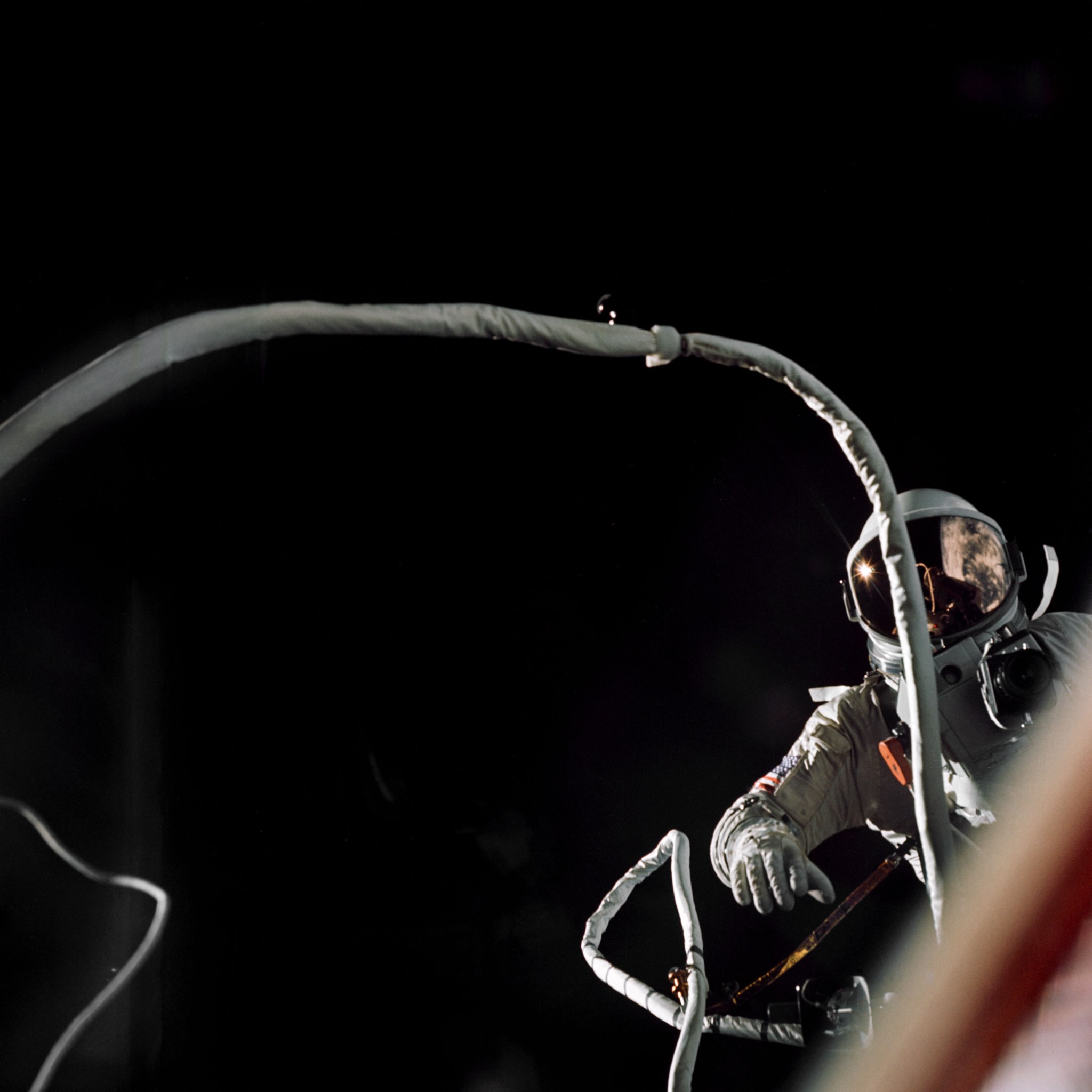
A year after Edward H. White made history with NASA’s first spacewalk during Gemini IV, the agency moved toward what was expected to be a far more demanding second attempt outside a spacecraft. The plan had initially been to carry out the next extravehicular activity during Gemini VIII, but when that mission ended prematurely, NASA reassigned the task to Gemini IX-A. Astronaut Gene Cernan would be the one to step into the void.
On June 5, 1966, the third day of Gemini IX-A, Cernan opened the hatch and began the EVA that engineers hoped would build on White’s pioneering outing. Almost immediately, the spacewalk turned into a punishing physical contest—not with the environment of space, but with the limitations of the equipment meant to keep him alive.
Cernan found his suit unyielding. Basic body motions that would be routine on Earth demanded sustained exertion, and he had trouble completing even straightforward movements. The workload escalated quickly. Only minutes into the activity he was already spent, drenched in sweat and fighting fatigue as he tried to press on with the EVA’s objectives.
The suit’s cooling capability proved inadequate for the effort required. With temperature control dependent only on oxygen circulation, Cernan’s heat and moisture had nowhere to go. His helmet visor began to fog until his view was fully obscured, leaving him effectively blind at a time when precision and situational awareness were essential. At the same time, his heart rate climbed to around 180 beats per minute, a sign of intense strain that raised alarms for flight controllers and crewmates watching his condition worsen.
As the risks mounted—including the possibility that Cernan could pass out while outside the spacecraft—NASA made the call to terminate the EVA. After two hours and eight minutes, the spacewalk was over, ending not as a triumph of routine operations but as a warning about how little margin existed when humans worked in space with early-generation gear.
The toll became even clearer after splashdown. Medical examinations following Gemini IX-A determined that Cernan had lost 13 pounds during the three-day mission. Much of that weight loss was attributed to water expelled during the exhausting EVA, underscoring how rapidly dehydration and heat stress could become serious threats.
Cernan’s difficult experience became a turning point. The problems exposed during Gemini IX-A forced NASA to rethink what it would take to make spacewalking reliable and safe. His EVA directly shaped changes in astronaut preparation, the procedures used to conduct work outside a spacecraft, and improvements in spacesuit engineering. Those lessons, learned the hard way in Earth orbit, became an essential part of the agency’s push toward the far more demanding tasks that awaited astronauts on the lunar surface just a few years later.