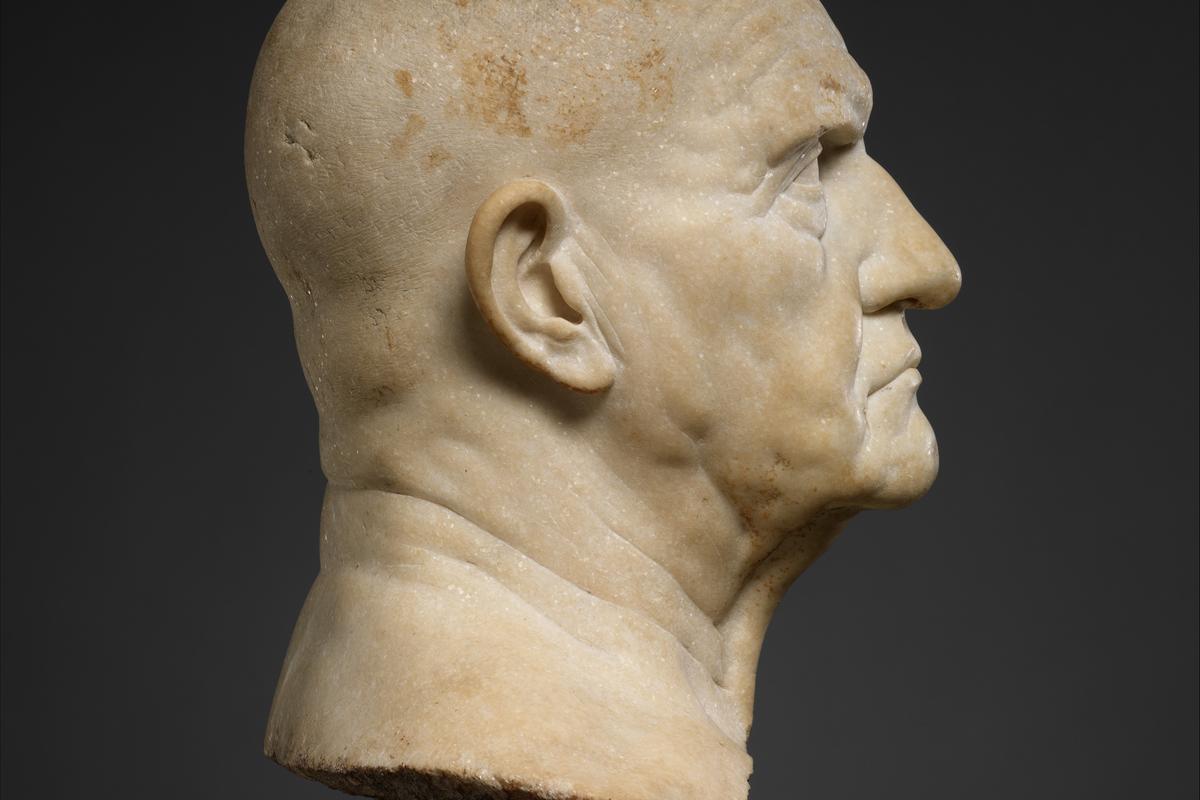
Ancient Rome is often cited as a model of clear-cut male authority, but Roman sources show masculinity was contested and performed. Cicero’s career reveals manhood was shaped as much by civic speech as by combat.
In today’s culture wars, masculinity is often presented as both under threat and in need of recovery. Online figures sell a version of manhood built on status symbols—speed, sex, and muscle—and sometimes point longingly to earlier societies as if they offered a clear, universally admired template. Ancient Rome is frequently drafted into this story as a supposed showcase of disciplined hierarchy and uncomplicated male authority.
But the Roman evidence, even from Rome’s most “masculine” political spaces, suggests something more complex. Marcus Tullius Cicero, the republic’s celebrated statesman and master of public speech, is regularly treated as an emblem of Roman civic greatness. In the mid-first century BCE he was unmatched in the courts and the senate, and his surviving speeches were used as models for aspiring orators for centuries afterward. The arena in which he operated was explicitly male-coded: for a Roman man, being accused of behaving “like a woman” could be socially devastating. Roman culture marked “the feminine” as something to be rejected or ridiculed.
Yet that still leaves a difficult question: what, in practical terms, counted as acting like a man?
In the second and first centuries BCE, the late republic elevated a series of military commanders as public exemplars of masculine virtue. Gaius Marius was among the most prominent. He built his reputation through campaigns in Spain and North Africa and fighting on Italy’s northern frontier, then achieved the extraordinary feat of being elected consul—one of Rome’s two chief executive magistrates—year after year. Marius also became a symbol of hard-earned authority because he did not come from an old aristocratic lineage. Later Roman writers even imagine him answering critics who dismissed him as uncultivated, casting his roughness as proof that his manliness had been forged under battlefield pressure.
This link between masculinity and combat was deeply embedded in Roman language and values. The term virtus, derived from vir (meaning a man, as distinct from a woman), appears in Rome’s early records in the mid-fifth century BCE with the sense of bravery in war. Military courage could be treated as the purest expression of Roman manhood. Sallust, writing in the 40s BCE, looked back to earlier Romans as paragons whose virtus “drove back dangers” and enabled them to support allies and friends.
But even as Rome expanded through major victories from the third to the first century BCE, warfare was not the only proving ground for elite masculinity. Cicero’s own life highlights a second arena: civic performance and persuasion.
When Cicero was about 16, his passage into adulthood followed a public ritual typical for boys of his status, probably during the festival of the Liberalia in 90 BCE. The moment was marked by donning the toga virilis—the “toga of manhood”—a heavy wool garment associated with citizenship and civilian life rather than soldiering. Decades later, as consul in 63 BCE, Cicero confronted what he described as an existential threat: the conspiracy led by Catiline. He portrayed its defeat not as a military triumph but as a victory won by “citizens in togas.” Through speeches that persuaded senators and the wider public of the danger, he helped drive the response that crushed the plot. In later oratory he insisted that saving the state with words was comparable to the greatest generals’ achievements.
For Rome’s governing class, public speaking was not decorative polish—it was power. The goal was to bend an audience toward action. In that world, Cicero’s dominance as an orator by the time he reached the consulship amounted to a form of conquest in its own right, suggesting that Roman “manliness” could be built not only on the sword, but also on the voice.
Why it matters
Rome is often invoked today as a simple model of masculine certainty, yet the sources show that elite Roman manhood was contested and multi-stranded—rooted in both military courage and civic performance. That complexity matters for anyone using the ancient world as a cultural blueprint. The debate to watch is not whether Romans valued masculinity—they did—but which kinds of achievement their society allowed to count as fully “manly.”