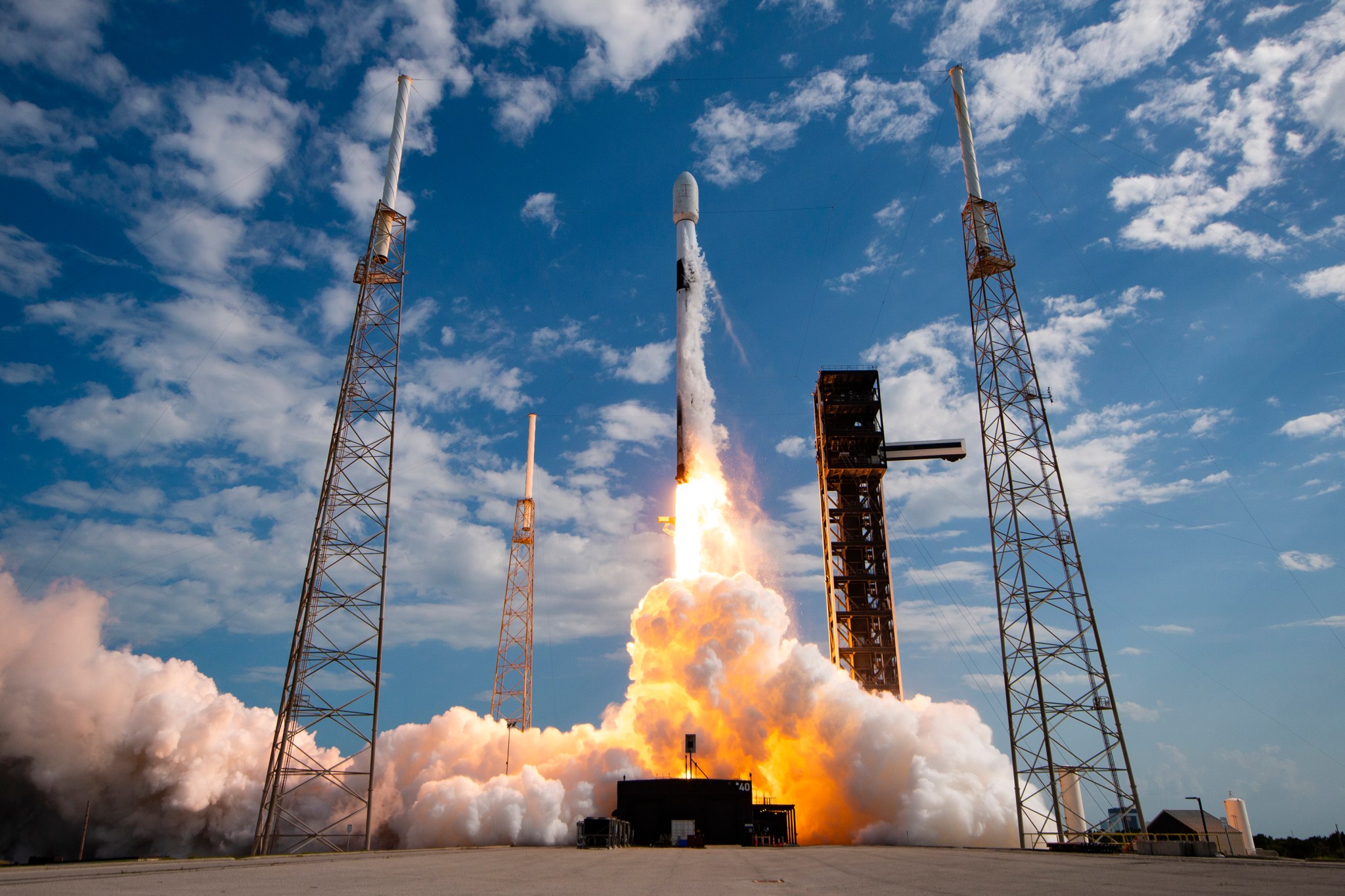
A new era of satellite maintenance moved closer to reality on July 21, when a SpaceX Falcon 9 lifted off from Cape Canaveral carrying the Mission Robotic Vehicle MRV , a…
A new era of satellite maintenance moved closer to reality on July 21, when a SpaceX Falcon 9 lifted off from Cape Canaveral carrying the Mission Robotic Vehicle (MRV), a spacecraft designed to perform hands-on work in orbit. The MRV is now traveling toward geosynchronous Earth orbit, where it will host the NASA-supported Robotic Servicing of Geosynchronous Satellites (RSGS) payload—an advanced robotics system intended to inspect, repair, and upgrade satellites without bringing them back to Earth.
RSGS is funded by the Defense Advanced Research Projects Agency (DARPA) and reflects a growing U.S. push to make in-space servicing, assembly, and manufacturing practical for both commercial uses and future exploration. NASA’s role, centered at the agency’s Goddard Space Flight Center in Greenbelt, Maryland, is aimed at applying decades of agency experience with complex space robotics to a new operational environment: the crowded belt of geosynchronous orbit, where spacecraft match Earth’s rotation and provide key communications and weather services.
At the heart of the RSGS system are two highly capable robotic arms engineered by the U.S. Naval Research Laboratory. DARPA delivered the robotic arm assembly for integration onto Northrop Grumman’s MRV, described as the nation’s first multi-mission robotic spacecraft built specifically for in-space servicing. Together, the vehicle and its robotic payload are intended to demonstrate how delicate, technically demanding work—traditionally impossible once a satellite is deployed—could become routine.
One major task planned for the mission is extending the useful life of aging satellites by adding small propulsion units known as mission extension pods. Many satellites in geosynchronous orbit remain functional but face early retirement because they exhaust their fuel reserves or because some onboard components no longer meet evolving needs. By enabling upgrades and life-extension in orbit, the MRV and RSGS aim to keep otherwise healthy spacecraft operating for additional years, potentially changing how satellite operators plan missions and manage fleets.
NASA began supporting RSGS in 2024 through an interagency agreement with DARPA. The agency is contributing tools and expertise that draw on its history of on-orbit servicing, including the Space Shuttle-era servicing missions that kept the Hubble Space Telescope operating and the Robotic Refueling Missions conducted on the International Space Station. For RSGS, NASA’s support includes developing dynamic simulation and analysis capabilities, performing software analyses to verify performance, and providing a specialized team of flight robot operators to assist with intricate on-orbit procedures.
With hundreds of satellites populating the geosynchronous region, the ability to maintain and modernize spacecraft after launch could have outsized impact. The RSGS effort is also a high-profile example of collaboration between government and industry, intended to validate advanced robotics in the harsh conditions of space and to build a domestic capability that could make satellite operations more flexible and cost-effective in the years ahead.