Jaclyn Kagey spends her workdays thinking about what it will take for astronauts to step out onto the Moon again—and to do it safely.
Jaclyn Kagey spends her workdays thinking about what it will take for astronauts to step out onto the Moon again—and to do it safely. As NASA’s Artemis extravehicular activity lead within the Flight Operations Directorate, she is helping choreograph the spacewalks that will define the agency’s next era of lunar exploration.
Artemis missions are designed to return humans to the lunar surface with an emphasis on the Moon’s South Pole, an area no crew has ever visited. The region’s challenging terrain and potential resources are expected to support scientific discovery while also serving as a proving ground for deeper-space expeditions. For Kagey, that ambition translates into the practical questions that determine whether a mission succeeds: exactly what astronauts will do once they exit their lander, how long each task should take, and how operations teams respond when reality diverges from the plan.
Her responsibilities span meticulous pre-mission planning and real-time guidance. She helps build detailed timelines for lunar surface spacewalks and supports operations as crews execute them. Astronauts will begin these excursions after leaving NASA’s human landing system—a commercially built lander intended to ferry crews from lunar orbit down to the surface and then back again.
Kagey’s path to this role has been shaped by more than 25 years at the agency and work across some of NASA’s most demanding programs. While studying at Embry‑Riddle Aeronautical University, she watched space shuttle launches that sharpened her resolve to join the nation’s spaceflight enterprise. That goal became tangible through United Space Alliance, where she and her husband both entered NASA work as contractors, building experience that would carry her into increasingly complex operational roles.
One episode, she says, illustrates the intensity and speed that human spaceflight can demand. She has planned and executed seven spacewalks, but U.S. EVA 21 aboard the International Space Station remains a standout. A serious ammonia leak threatened a critical station system, and once the problem was identified, the team had only 36 hours to design the repair plan, prepare the spacesuits, and conduct the spacewalk. The crew completed the job successfully and restored the system—a result Kagey attributes to rapid decision-making, disciplined execution, and a tightly coordinated team operating under pressure.
That experience also reinforced a lesson she applies to Artemis planning: adaptability is not optional. In her view, missions rarely unfold exactly as expected, and the operational challenge is to adjust quickly while protecting the crew and keeping objectives on track.
Kagey’s influence reaches beyond procedures and timelines into the evolving hardware astronauts will wear. Earlier in her career, she encountered a limitation in the legacy Extravehicular Mobility Unit: despite passing a fit check, her shorter stature meant the suit’s proportions impeded mobility enough to prevent her from completing a full test. The mismatch strengthened her commitment to spacesuit designs that accommodate a broader range of body types.
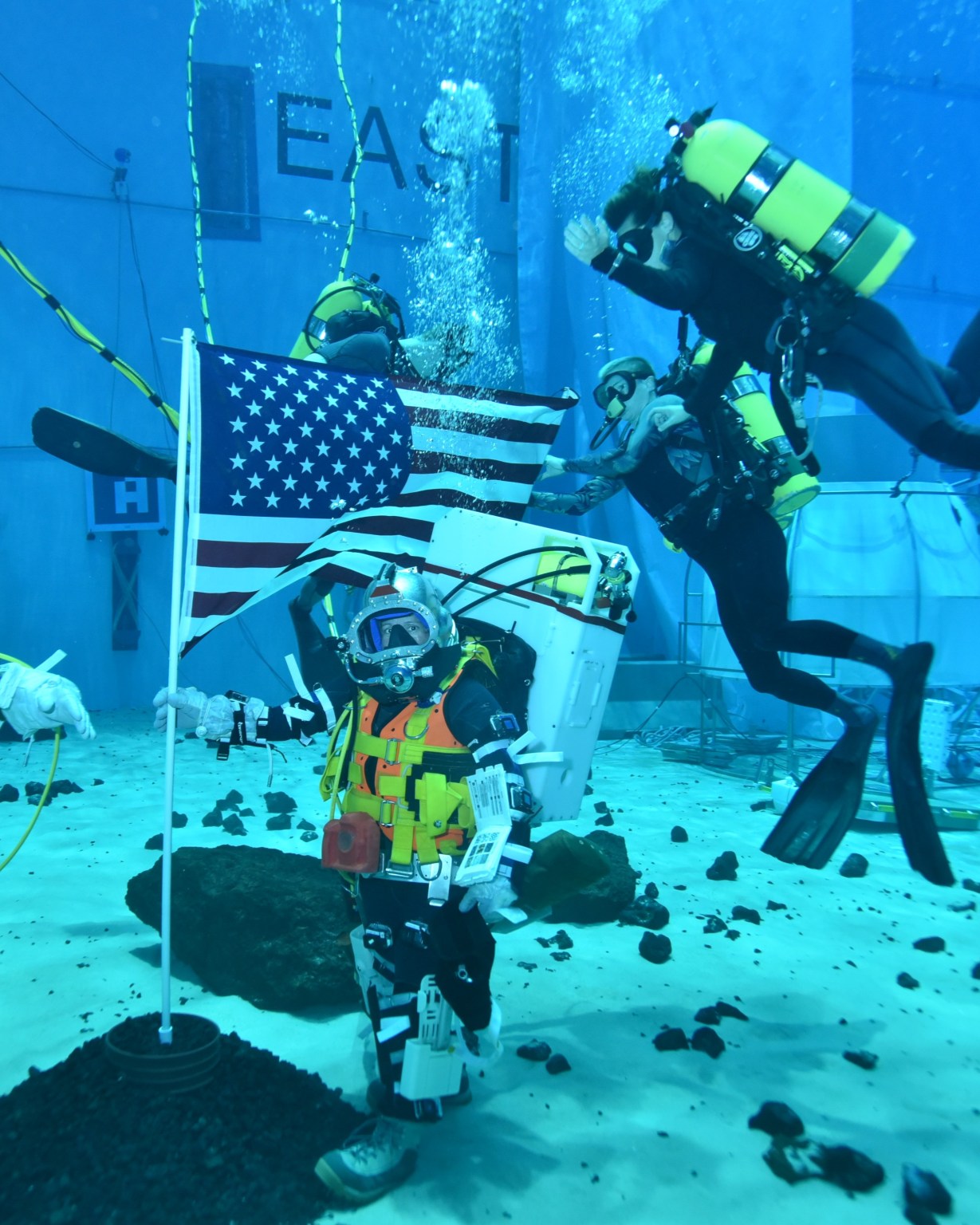
Recently, that advocacy came full circle at Johnson Space Center in Houston. Kagey completed her first test in Axiom Space’s new lunar suit, the Axiom Extravehicular Mobility Unit (AxEMU), using the Active Response Gravity Offload System, known as ARGOS, which helps simulate reduced gravity for spacewalk training and evaluation. For Kagey, the moment was both technical and personal—evidence that the next generation of lunar exploration is being built with more astronauts in mind.