As NASA’s Artemis II astronauts looped around the Moon on a 10-day voyage, they carried more than checklists of technical and operational tasks.
As NASA’s Artemis II astronauts looped around the Moon on a 10-day voyage, they carried more than checklists of technical and operational tasks. They also acted as the mission’s eyes for the scientific community, using the crewed flyby to scrutinize and document features on the lunar far side—landscapes shaped by impacts and volcanism that still hold clues to the Moon’s deep past.
From their vantage point in lunar orbit, the crew examined and photographed geologic landmarks, including impact craters and ancient lava flows. Those observations are expected to inform the planning of future Artemis expeditions that will return astronauts to the lunar surface, strengthening the scientific return of later missions and adding to broader lunar and planetary research.
To make those observations meaningful, astronauts must be able to translate what they see into usable scientific descriptions—subtle variations in form, texture, and color that can help reconstruct an area’s geologic history. That capability, NASA officials say, is built long before launch through fieldwork and classroom instruction designed to give crews both competence and confidence.
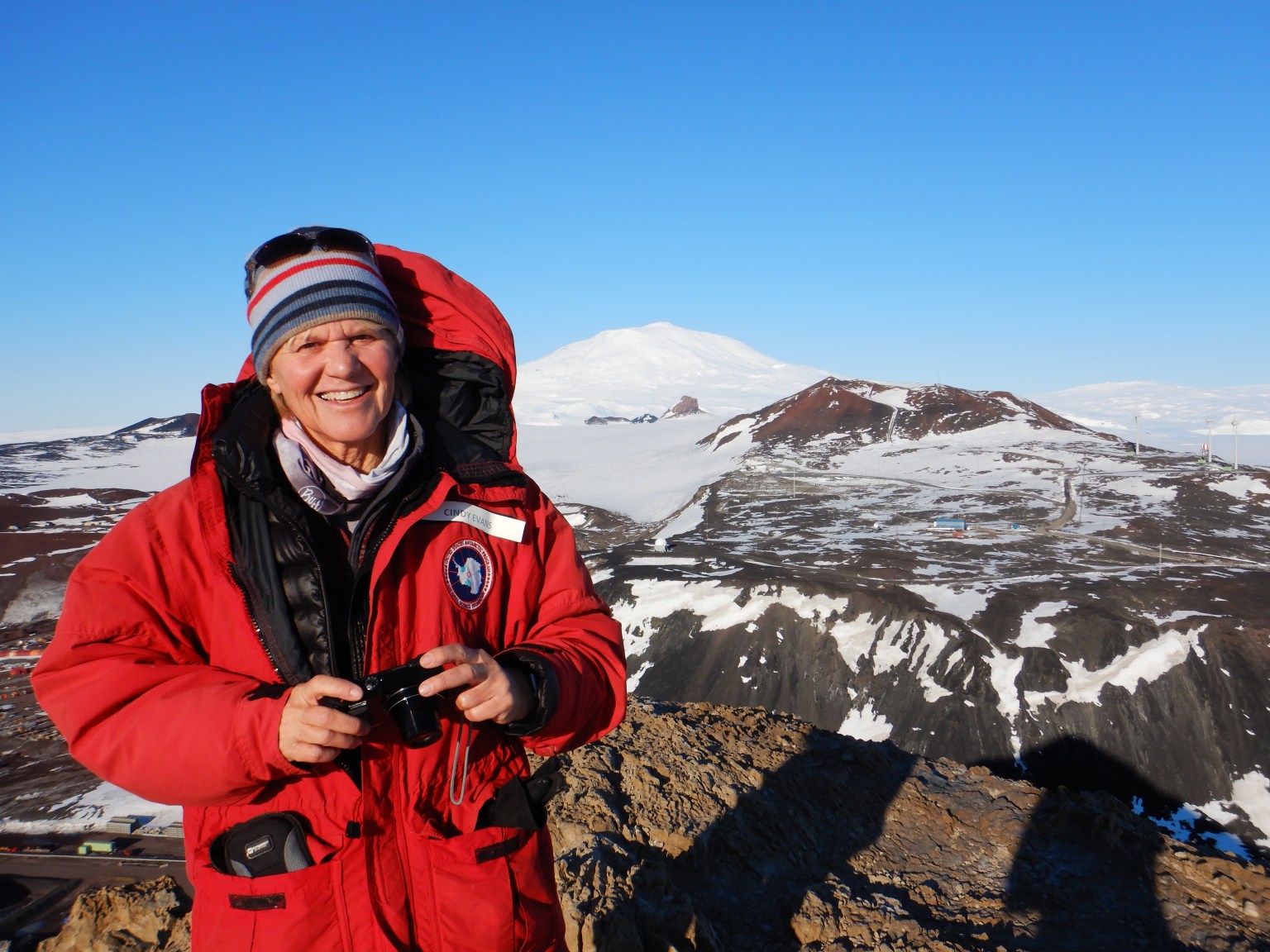
One of the people shaping that training is Cindy Evans, NASA’s Artemis exploration scientist and the lead for geology instruction. Based at the Johnson Space Center in Houston within the Astromaterials Research and Exploration Science (ARES) Division, Evans serves on the Artemis Internal Science Team and directs geology preparation not only for astronauts, but also for mission managers, engineers, and flight controllers who support science operations.
The training program she leads combines a structured foundation in geology, lunar science, and planetary science with progressively more advanced field exercises focused on real-world geologic interpretation. The goal is to ensure that astronauts can carry out mission science requirements whether they are describing what they see through spacecraft windows or, on later missions, working directly on the Moon’s surface.
Evans describes Artemis crews as “scientists on the ground”—or in this case, in orbit—tasked with gathering evidence of the processes that shaped the Moon and, by extension, the early solar system. To do that well, she argues, crews need repetition and practical experience so that the skills become second nature, enabling clear observations, effective sampling decisions, and other science tasks under mission time constraints.
Her path to leading lunar science training began in a different environment: Earth’s oceans. Trained as an oceanographer studying rocks that make up oceanic crust, Evans once imagined she might explore the Moon herself as an astronaut. That ambition brought her to Johnson, though her contributions would ultimately come from supporting human spaceflight from the ground.
Across a 37-year NASA career, Evans worked on the Space Shuttle Program, the Shuttle-Mir Program, and the International Space Station before turning her focus to Artemis. Among her key accomplishments, she helped establish Crew Earth Observations during Shuttle-Mir, preparing astronauts to photograph a changing planet from orbit. She also served on the imagery team investigating the Columbia accident, contributing to the development and integration of the space shuttle’s Return to Flight imagery inspection procedures.
Evans’ own field experience includes two deep-field geology deployments to Antarctica, where teams camped on blue ice within a few hundred miles of the South Pole and collected meteorites—rocks delivered from space and preserved in the polar environment.
Throughout her career, she has relied on collaboration across disciplines, moving between science and engineering cultures. That background, she says, taught her to stay adaptable in a field where missions evolve quickly and roles can change. The most enduring lesson, she adds, is that progress in human spaceflight ultimately depends on people working together toward a common goal.