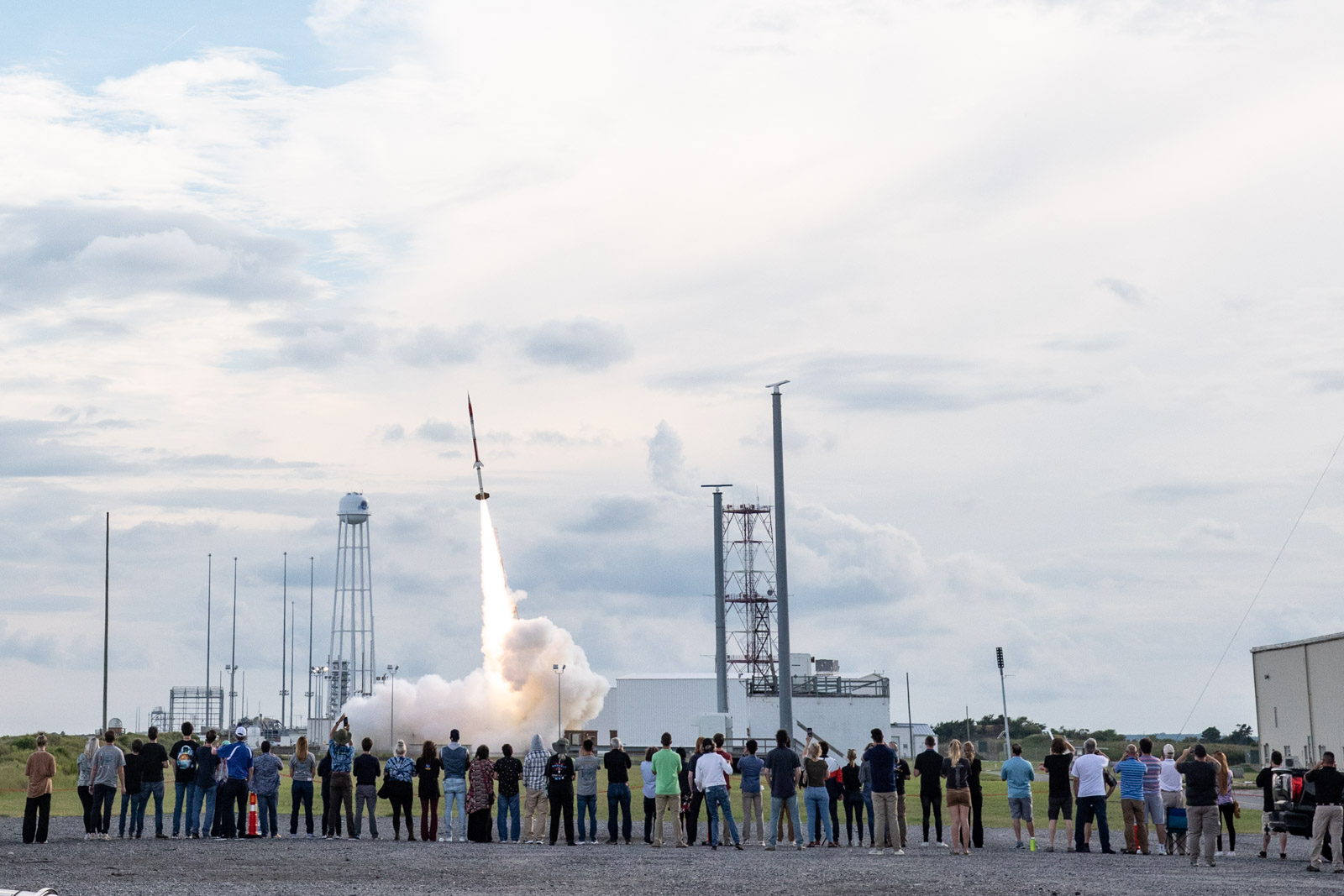
NASA’s Wallops Flight Facility on Virginia’s Eastern Shore is preparing to send a sounding rocket aloft carrying a large suite of student-built experiments, giving…
NASA’s Wallops Flight Facility on Virginia’s Eastern Shore is preparing to send a sounding rocket aloft carrying a large suite of student-built experiments, giving hundreds of emerging engineers and scientists a rare chance to see their hardware fly.
The launch is scheduled for Wednesday, June 24, during a morning window from 5:30 to 9:30 a.m. EDT, with Thursday, June 25, set aside as a backup opportunity if conditions delay the attempt. The mission supports NASA’s RockSatX and RockOn programs, training pipelines designed to give students practical experience with the kinds of technical work and mission processes used across the U.S. aerospace sector.
This flight marks a first for the initiative: NASA is combining RockSat and RockOn payloads on a single rocket. In total, experiments were developed by nearly 250 participants representing 38 teams from universities and community colleges.
Packing that many projects into one vehicle required careful coordination, according to Victoria Stoffel, workforce development lead at NASA Wallops. She said the major hurdle was finding enough room for the broad set of instruments and student payloads, and credited the Sounding Rocket Program Office with devising solutions that allowed nearly 50 experiments to be accommodated. The result, she noted, is a mission structure that maximizes the hands-on opportunities students can gain from the flight.
The two student programs take different approaches. RockOn is structured as a collaborative build experience: teams assemble their experiment hardware onsite, including constructing a circuit board from the ground up, and then follow it through integration and launch. RockSatX is aimed at more advanced groups, which design and build their own experiments and participate in formal design reviews modeled after the milestones used in larger NASA missions. Together, the programs are intended to give participants a realistic view of end-to-end mission development—from early engineering decisions to launch-day operations.
The experiments aboard the rocket span both science and technology demonstrations. Some teams will use the brief trip to the edge of space to gather data on Earth’s upper atmosphere, including weather-related measurements and radiation. Others are testing concepts and components that could support future NASA efforts, such as thermal protection systems, methods for tracking space debris, robotic servicing capabilities, and other mission-enabling technologies.
NASA plans to fly the payloads on a Terrier-Improved Malemute suborbital sounding rocket. The vehicle is expected to climb to roughly 100 miles in altitude—about 160 kilometers—before returning under parachute. After splashdown in the Atlantic Ocean, recovery teams will retrieve the rocket and the experiment modules.
For residents and visitors in the Chesapeake Bay region, the launch may be visible, NASA said. The Wallops Visitor Center’s launch viewing area is scheduled to open at 4:30 a.m. on June 24. NASA will also provide a live video feed beginning about 10 minutes before liftoff on the Wallops YouTube channel, with additional updates shared through the visitor center’s Facebook page.