A megawatt-class hybrid-electric aircraft engine developed with NASA support and built by GE Aerospace has taken a major step toward making fuel-saving propulsion…
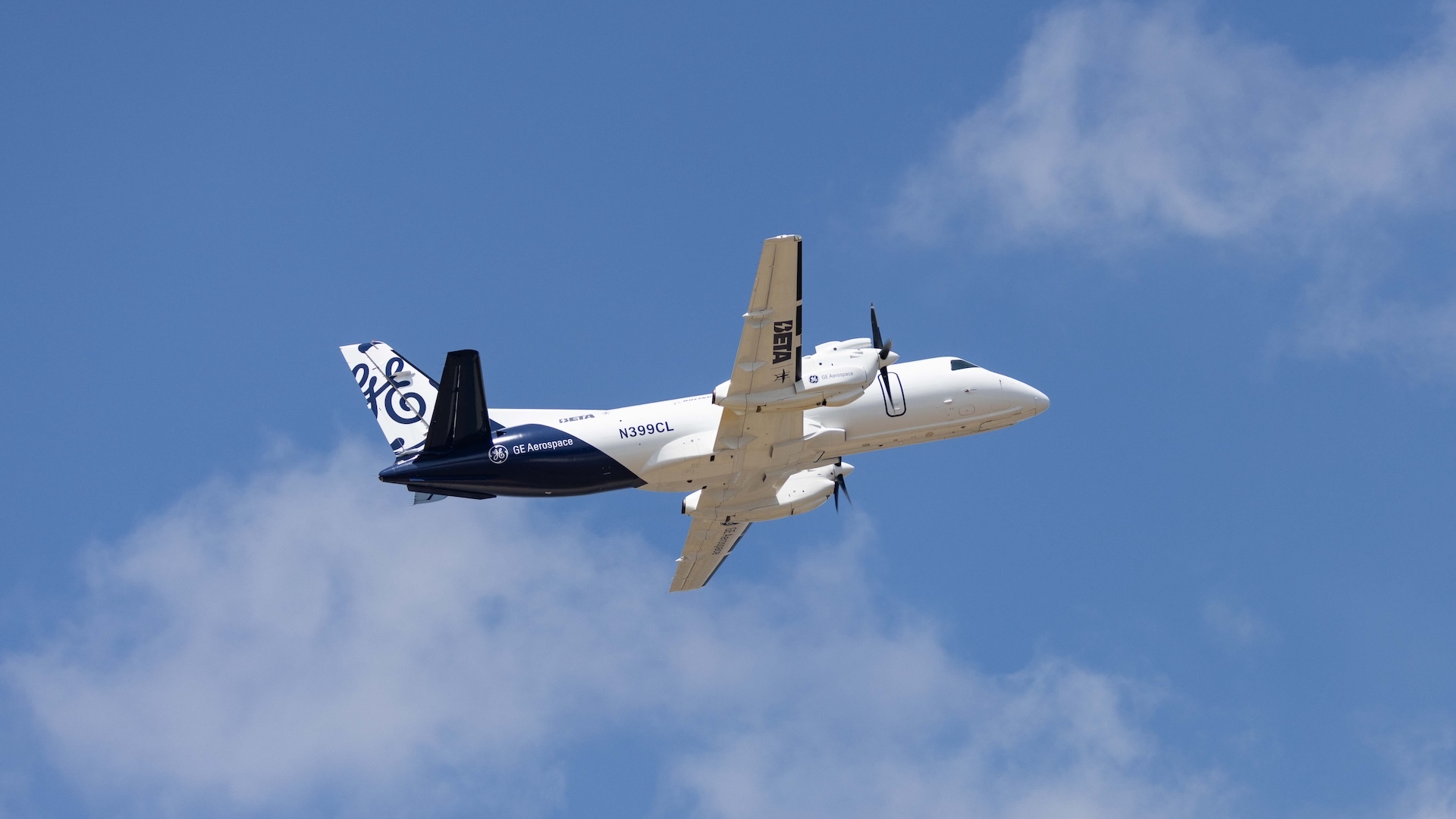
A megawatt-class hybrid-electric aircraft engine developed with NASA support and built by GE Aerospace has taken a major step toward making fuel-saving propulsion practical for larger airplanes, with a public flight demonstration at the Farnborough International Air Show in the United Kingdom.
The experimental power system was installed on a Saab 340B, a regional turboprop-sized aircraft used as a flying testbed. Farnborough marked the first time the technology was shown in a major public venue, following a string of milestone flights in recent months. Those tests included what NASA described as the first time a hybrid-electric aircraft flew above 30,000 feet, as well as the longest hybrid-electric flight to date, lasting more than two hours.
“This achievement reflects what NASA does best in aeronautics: we explore bold possibilities, validate them through rigorous research and testing, and work with industry to turn breakthrough ideas into technologies that bring real value for the American people,” said Laurie Grindle, director of the Aeronautics Division in NASA’s Research and Technology Mission Directorate at headquarters in Washington.
The flight campaign draws on years of agency work, including NASA’s former Electrified Powertrain Flight Demonstration (EPFD) project and its continuing Subsonic Vehicle Technologies and Tools effort. Those programs supported collaborative research and provided access to NASA test facilities used to evaluate components and integrated systems.
At its core, the demonstrator combines multiple power sources and subsystems: electric motors, a conventional gas turbine, and onboard energy storage. The architecture is intended to show that a hybrid approach can deliver the power needed for aircraft in the regional-jet class while cutting fuel burn and operating costs without compromising performance. NASA and GE Aerospace expect the designs and lessons from this effort to feed into future hybrid propulsion concepts that could eventually lower airline expenses.
For NASA engineers, the Farnborough debut represents a validation of a long-running bet that electrification could move beyond small aircraft. “This is the culmination of more than 15 years of work, and we did that because it’s going to have an impact for aircraft that will help reduce energy use and help U.S. companies and the public,” said Ralph Jansen, an aerospace engineer at NASA’s Glenn Research Center in Cleveland. He described the effort as a process of pursuing ideas that initially seemed out of reach, then systematically building the research and development needed to prove them.
While battery-electric propulsion has rapidly expanded in drones and small airplanes in recent years, scaling to large passenger and cargo aircraft requires far higher power levels and more intricate propulsion integration. NASA began exploring hybrid options more than a decade ago, at a time when even using electric machines to supplement thrust was considered a significant engineering hurdle.
The agency spent roughly seven years on early-stage studies with small businesses and other partners, probing both technical barriers and commercial prospects. Among the key challenges: generating megawatt-scale power efficiently, managing heat, advancing battery capability, and integrating the electrical system with the engine and airframe.
Through the EPFD award, NASA and GE Aerospace focused on making powertrains lighter and more efficient, shrinking critical components—sometimes by large margins—and using NASA infrastructure to accelerate development. In 2022, GE Aerospace tested an integrated configuration of its propulsion system at NASA’s Electric Aircraft Testbed at the Neil A. Armstrong Test Facility. The new flight demonstrations now extend that ground work into the air, providing data that could shape a new generation of hybrid-electric aircraft systems.