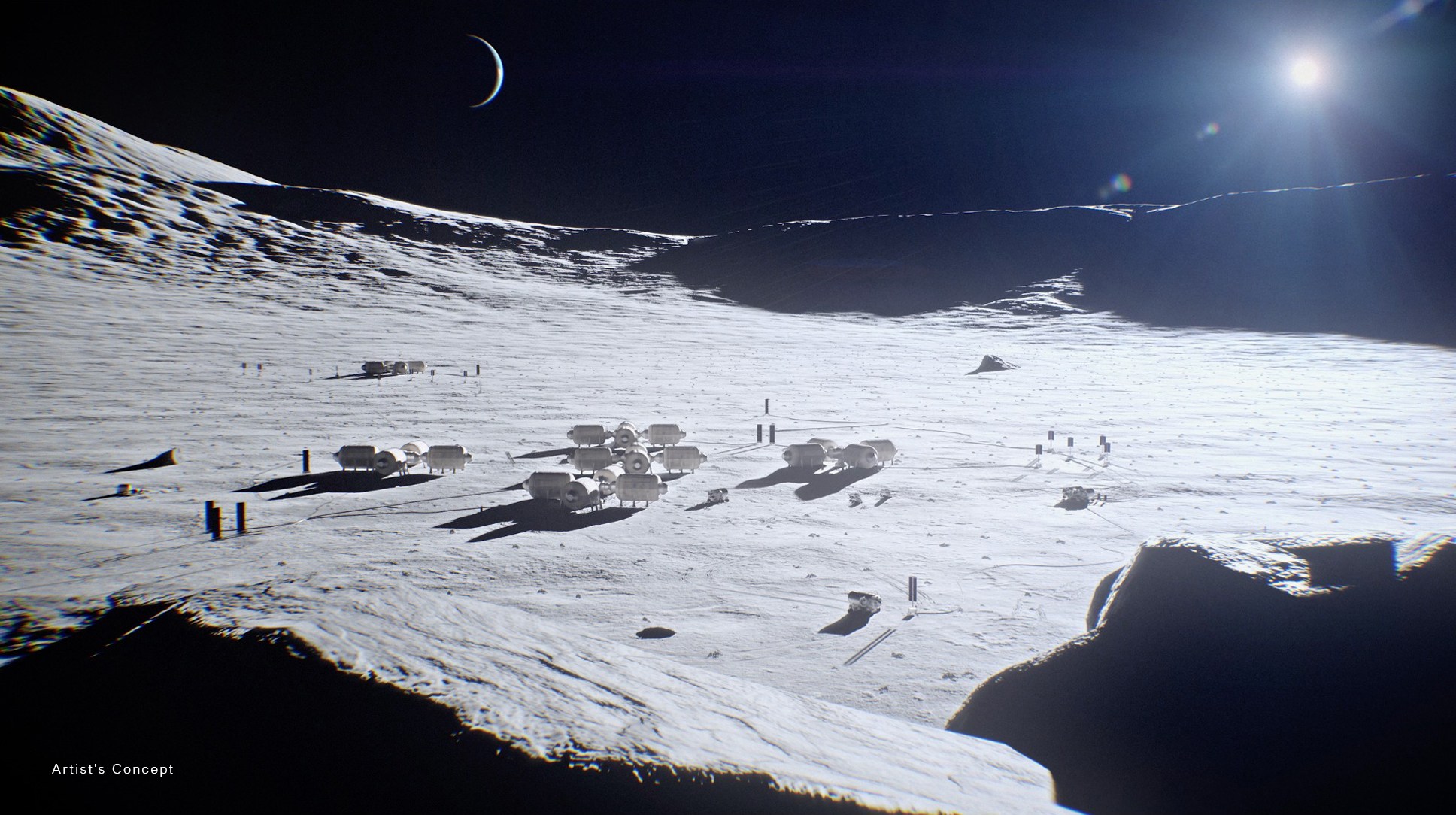
NASA announced a suite of awards and mission updates on Saturday to expand the agency’s Moon Base exploration, science, and infrastructure capabilities.
NASA announced a suite of awards and mission updates on Saturday to expand the agency’s Moon Base exploration, science, and infrastructure capabilities. The investments will advance commercial robotic deliveries, a nuclear-powered rover named PROMISE, launch and orbital transfer services, and surface infrastructure as the agency works with American industry to establish a sustained presence on the Moon’s South Pole. The agency shared the news at the MAX POWER aerospace expo and air show at NASA’s Kennedy Space Center in Florida. “We are building the Moon Base mission by mission,” said NASA Administrator Jared Isaacman. “Today’s announcements expand nearly every part of that campaign, using the playbook that carried NASA through its greatest eras: fly often, learn, apply those lessons, and get more better and more capable with every mission. When our astronauts return to the Moon, they will arrive with the first elements of the Moon Base already waiting for them on the surface.” “In the eight months since Ignition, we’ve made incredible strides in accomplishing the near impossible: establishing a permanent outpost on the lunar surface,” said Carlos García-Galán, manager, Moon Base Program. “We’ve consolidated numerous efforts into a streamlined program, evolving our human exploration architecture into an iterative and sustained campaign for Moon Base technology development and implementation. Most importantly, we’ve taken action, awarding new contracts and forging new partnerships to accelerate development.” To strengthen the cargo lander network needed to support the Moon Base, NASA selected eight companies for the next phase of its CLPS (Commercial Lunar Payload Services) initiative. The companies are eligible to compete for future lunar surface delivery missions under the new CLPS 2 contract: Under the CLPS 2 framework, the companies will provide lunar delivery services, including managing, building, and operating landers that transport NASA science, technology, and infrastructure payloads to the Moon. The CLPS 2 framework is a 10-year, multiple-award, indefinite-delivery/indefinite-quantity master contract with a combined maximum value of 10billion.NASAincreasedthevalueofthecurrentCLPS1.0contractfrom2.6 billion to 4.2billiontosupportinitialPhaseOneMoonBaseobjectives.TheoriginalCLPScontractwillremaininplacethroughNovember2028,withanadditionalfive−yearperiodtocompleteawardedlunardeliveriesthroughNovember2033.NASAalsoannounceditismovingforwardwithdevelopmentofPROMISE(PolarRoverforObservation,Mapping,andIn−SituExploration).Carryingscienceinstrumentsandtechnologydemonstrations,thesix−wheeledroverwilllandattheMoon’sSouthPoletocharacterizethesurfaceandsubsurface,assessresourcepotential,andprovidedatatoenablelandingsiteselection,aswellasfutureinfrastructureandexplorationactivities.Thenuclear−poweredrovercanoperateduringlonglunarnightsandwithinpermanentlyshadowedregionsthoughttoharborice,whichiscrucialforasustainedhumanpresenceontheMoon.Theagency’sJetPropulsionLaboratoryinSouthernCalifornia,adivisionofCaltech,willmanagethemissionandbuildtheroverfromacombinationofspareflightcomponentsandengineeringtestmodelsforNASA’sCuriosityandPerseveranceMarsrovers.Usingprovenhardware,software,andMarsroveroperationapproachessignificantlyreducescostandenablesintegrationandtestingofthecomplexPROMISEroveronashortertimeline.NASAhasassessedthecompatibilityofthehardwarewiththelunarenvironmentanddetermineditcantoleratetheharshconditionsfoundneartheMoon’sSouthPole.ThePROMISEroverwillcarryadrilltoextractregolith,orlunardust,tocharacterizeiceandotherresourcesfromapproximately3feet(1meter)belowthesurface,spectrometersforanalyzingthechemicalcompositionofsurfacematerial,temperatureandradiationsensors,andvisible−lightcameras.Itwilldemonstrateanext−generation,radiation−tolerantcomputingsystem,NASA’sHighPerformanceSpaceflightComputing,andadvancedautonomysensorsandalgorithms.NASAistargetinglate2028tolaunchPROMISEandplanningan18−monthmissionfortherover.NASAawardedBlueOrigina94 million base contract, with an option period worth an additional 140millionbasedonperformancetodeliverPROMISEtothelunarSouthPole.TheawardexpandsthetaskorderawardedinMay2026todelivertwolunarterrainvehiclestotheMoon.BlueOriginwilluseitsMark1landertodeliveranddeploytheroveraspartoftheMoonBase’sfirstphase.DeliveringMoonBaseinfrastructurewillrequirearobusttransportationnetworkbetweenEarthandtheMoon.OrbitalTransferVehicles(OTVs)actlikelong−distancefreighttrucks,carryinglargeloadsacrossspace.Lunarlandershandlethefinaldelivery,bringingsupplies,equipment,andinfrastructuresafelydowntotheMoon’ssurface.Todemonstratethosecapabilities,NASAawardedsixtaskordersaspartoftheagency’sVenture−ClassAcquisitionofDedicatedandRideshare(VADR)launchservicescontract.TheawardsweregiventoArrowScienceandTechnology,BlueOrigin,andImpulseSpacetointegrateandtransportMoonBasecargo.ThreemissiontypeswillallowNASAflexibilitytoflyscienceandtechnologydemonstrationswhentheyareready.Thefirstwillincludemissionstoreducerisksoffuturelong−termhumanspaceflightforlunarexploration.ThemissionswillverifythatcommunicationandnavigationmethodsworkproperlyduringthejourneyfromEarthorbittotheMoon,andOTVcapabilitytosupportdeliveryofaCLPSlunarlandertoadesiredorbit.ThismissiontypewilldelivertheCAPSTONE02spacecrafttodeepspacetotestproximitymaneuvers,navigation,andcommunicationsaroundtheMoon.ThesecondcategoryofmissionswillpreparethelunarSouthPoleforhumanexplorationbysendingagroupofhighlymobiledronestosurveythesurfacebeforeastronautsarrive,enablingsafer,moreinformedhumanmissionswhiledemonstratingadvancedroboticcapabilities.Suchmissionswillincludetheagency’sMoonFalldrones,designedtoscoutareasbeyondthereachoftraditionalrovers,aswellasdeliveryofadditionalMoonBaseassetsnecessarytosupportPhaseOneobjectives.Toreduceriskforfuturemissions,thethirdmissiontypewilltestnavigationtechnologiesanddemonstrateoperationsinmultiplecislunarorbits,betweenEarthandtheMoon.Thismissiontypewilldemonstratecommercialorbitaltransfercapabilitiesintendedtoincreasetheamountofcargothatfuturelanderscandelivertothelunarsurface.Thetaskordershaveavalueofapproximately1.3 billion combined and fall under the 10-year VADR indefinite-delivery/indefinite-quantity contract, which has a maximum total value of $5 billion across all contracts. The VADR contracts are managed by NASA’s Launch Services Program Office at the agency’s Kennedy Space Center as part of the agency’s Commercial Access to Space Program. By procuring multiple launch and in-space transportation services together, NASA provides industry with a more predictable set of mission opportunities while gaining access to a broader range of commercial capabilities for future lunar exploration. Some missions will launch aboard Blue Origin’s New Glenn, Relativity Space’s Terran R, and SpaceX’s Falcon 9 rockets. In-space transportation spacecraft for these missions will be provided by Blue Origin, Firefly Aerospace, Impulse Space, and Quantum Space. Complementing those in-space transportation demonstrations, NASA selected SpaceX for the Cislunar Communications Deployment Demonstration under an existing lunar logistics contract. Through a Specialized Delivery Mission task order, SpaceX will launch communications satellites aboard a Starship to cislunar space in 2028. The demonstration will help inform the dev