NASA is asking universities, companies and other organizations to signal their interest in flying CubeSats on upcoming Artemis missions, with initial responses to a new…
NASA is asking universities, companies and other organizations to signal their interest in flying CubeSats on upcoming Artemis missions, with initial responses to a new request for information due by Monday, June 1.
The agency’s Space Launch System (SLS) and its Artemis flight series offer “great opportunities” for teams to pursue science and technology demonstrations that support the broader push to expand human exploration beyond Earth, said Courtney Ryals, acting manager for SLS payload integration at NASA’s Marshall Space Flight Center in Huntsville, Alabama.
NASA said the information it collects through the request will help shape potential CubeSat ride-along opportunities on Artemis III, Artemis IV and Artemis V. Mission details are still being assessed, but the agency expects it could host 6U and 12U spacecraft—common CubeSat form factors—on those flights. CubeSats are built from standardized modules called “units,” with each 1U measuring 10 by 10 by 10 centimeters; larger configurations, such as 6U and 12U, combine multiple units into a bigger nanosatellite.
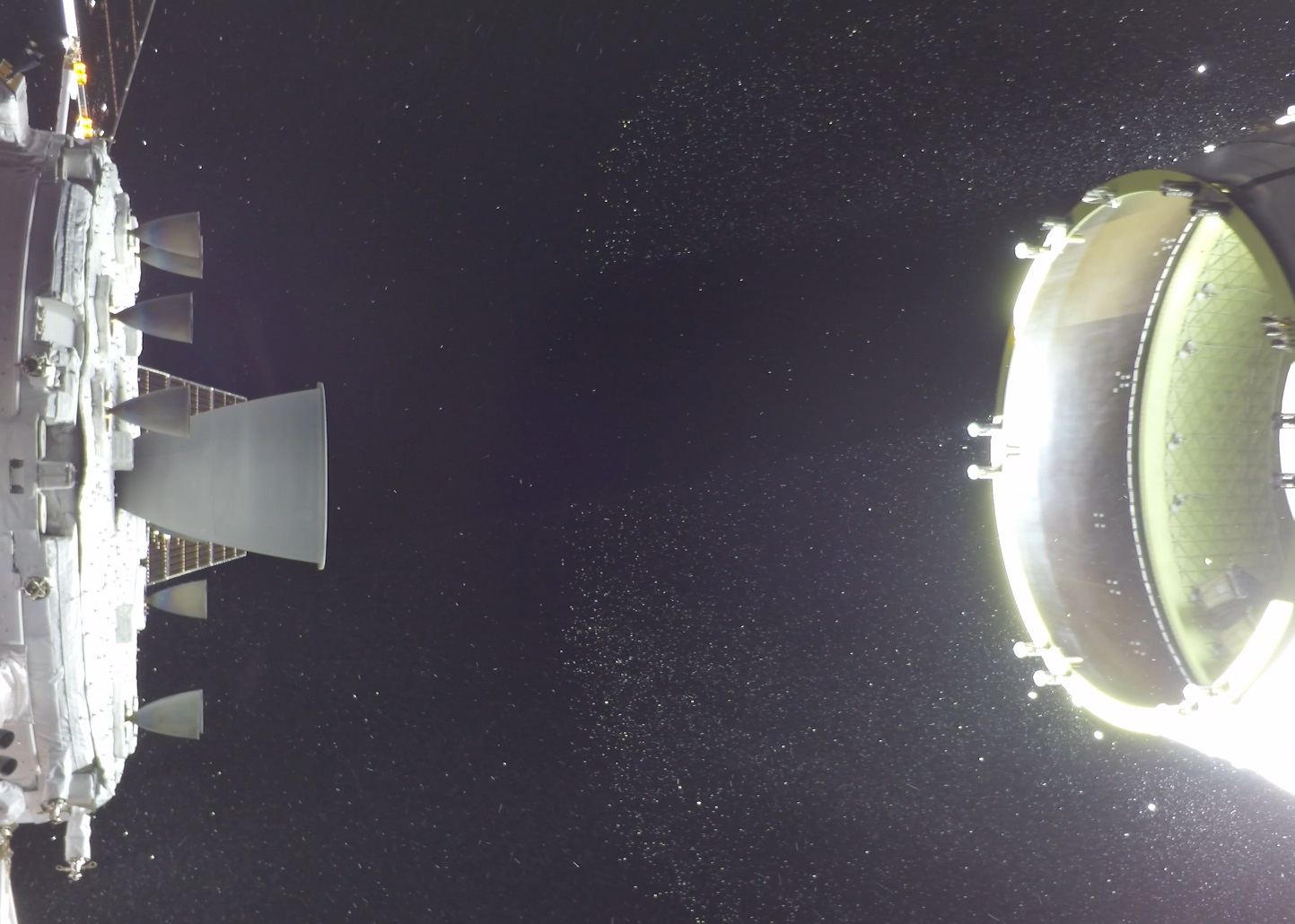
Under the expected deployment plan, the small satellites would be carried on a ring mounted to the rocket’s upper stage. After the Orion spacecraft separates and continues independently on its primary mission, the CubeSats would be released either into Earth orbit or onto a heliocentric disposal trajectory. NASA also noted that additional opportunities may exist for CubeSats that could be sent from Earth orbit onto a reentry path.
The solicitation builds on NASA’s recent experience integrating small secondary payloads into the Artemis architecture. The uncrewed Artemis I mission in 2022 carried 10 CubeSats, while the crewed Artemis II flight included four. In each case, deployment occurred only after the upper stage had separated and Orion was flying on its own, minimizing interference with the main mission.
Beyond providing a ride to space, NASA said it offers participating CubeSat teams integration services along with engineering and technical support—resources that can be critical for small missions operating within tight mass, volume and power limits.
NASA is positioning the CubeSat opportunities as part of Artemis’ broader goals: progressively more challenging lunar expeditions intended to expand scientific discovery, spur economic activity, and help establish a sustained human presence on the Moon. The agency also frames Artemis as a stepping-stone toward eventual crewed missions to Mars, using lunar operations to test technologies and approaches needed for longer, farther voyages.