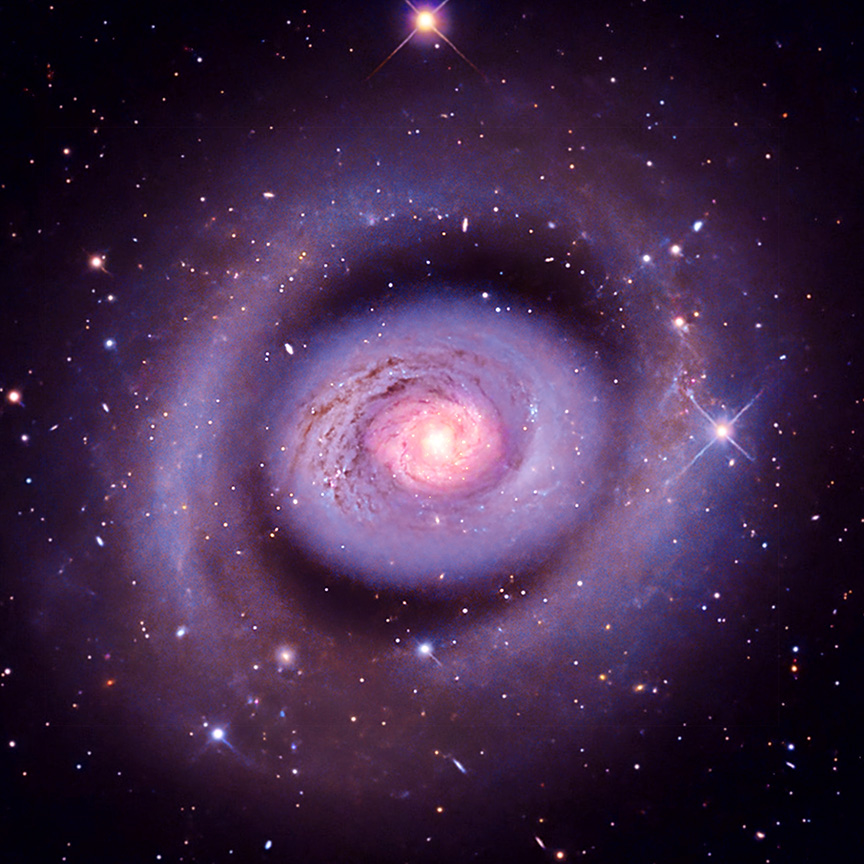
NASA’s Chandra X-ray Observatory has released a freshly assembled view of the nearby spiral galaxy NGC 4736—better known as Messier 94—revealing the system in high-energy detail on June 30, 2026.
NASA’s Chandra X-ray Observatory has released a freshly assembled view of the nearby spiral galaxy NGC 4736—better known as Messier 94—revealing the system in high-energy detail on June 30, 2026.
Messier 94 stands out among spirals for a striking, luminous ring wrapped tightly around its central region. Astronomers identify this feature as a “starburst ring,” a zone where star formation is proceeding at a heightened pace. The new composite suggests that this concentrated stellar production may be sustained by gas being funneled inward. One possible driver is the galaxy’s unusual oval-shaped structure, which can channel material and help pile it up in the inner ring, creating conditions favorable for new stars to ignite.
The image blends multiple kinds of light to show how different processes overlap in the same galaxy. Chandra contributes the X-ray component, presented here in several energy ranges mapped to red, orange, and blue. These high-energy colors trace phenomena that are typically invisible in ordinary photographs, such as hot gas and energetic sources associated with stellar endpoints and other extreme environments.
To place those X-ray features in context, the Chandra data are layered over an optical view captured from the ground by astrophotographers using their own telescopes. In the visible-light portion of the composite, the familiar red, green, and blue channels outline the galaxy’s spiral structure and the bright inner ring that gives Messier 94 its distinctive appearance.
NASA credited the X-ray observations to NASA’s Chandra X-ray Center (CXC) and the Smithsonian Astrophysical Observatory (SAO), while the optical data were provided by astrophotographers Brian Brennan and Remi Lacasse. The final combined image was produced by NASA/CXC/SAO image processors L. Frattare and K. Arcand.