Four astronauts lifted off Thursday morning on NASA’s SpaceX Crew-13 mission, beginning a new science-focused stay aboard the International Space Station and marking…
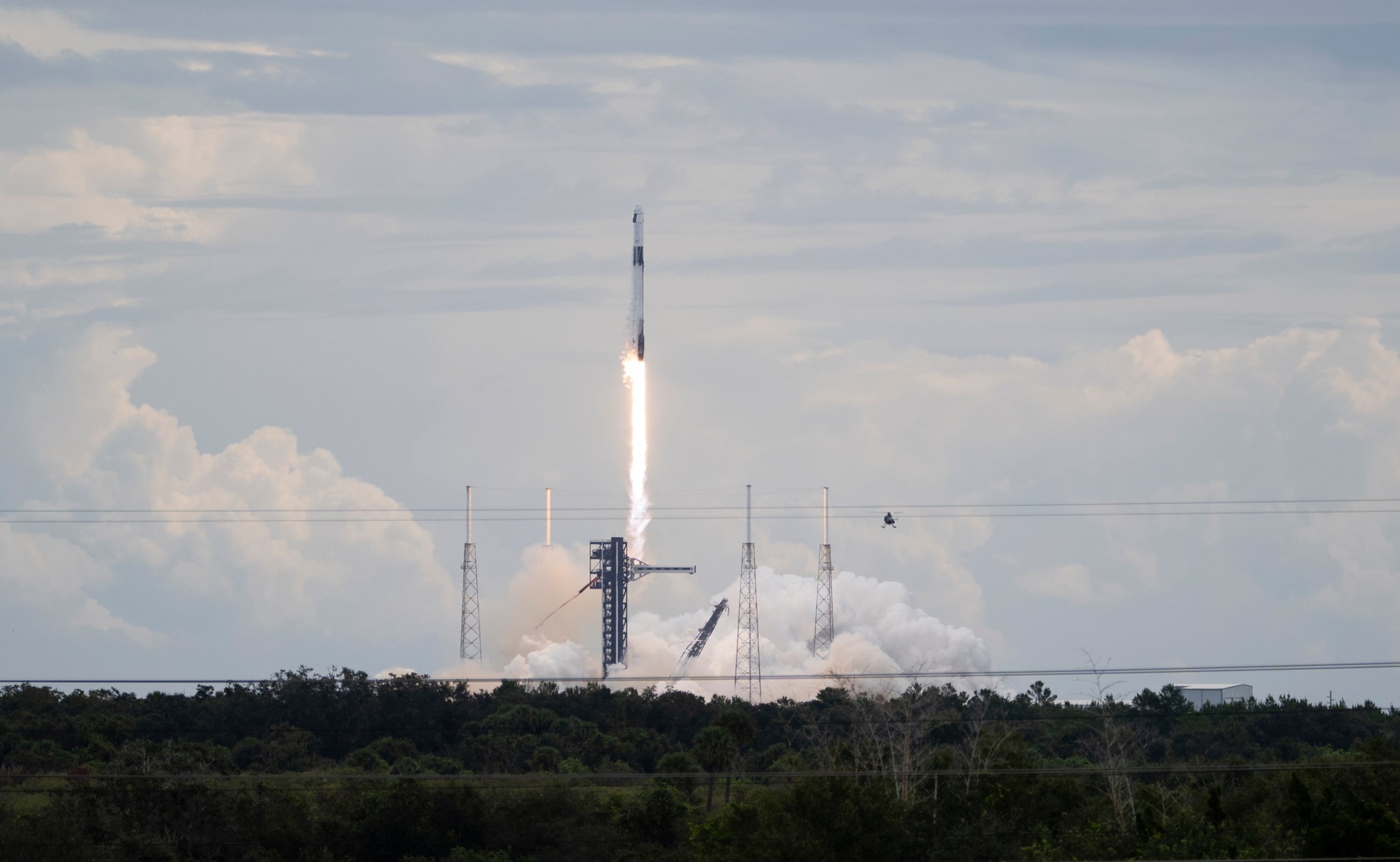
Four astronauts lifted off Thursday morning on NASA’s SpaceX Crew-13 mission, beginning a new science-focused stay aboard the International Space Station and marking another flight in the agency’s ongoing partnership with the commercial space sector.
The crew launched at 11:10 a.m. EDT from Space Launch Complex 40 at Cape Canaveral Space Force Station in Florida. Riding a SpaceX Falcon 9, a Dragon spacecraft carried NASA astronauts Jessica Watkins and Luke Delaney, Canadian Space Agency astronaut Joshua Kutryk, and Roscosmos cosmonaut Sergey Teteryatnikov into orbit.
NASA Administrator Jared Isaacman framed the mission as both a demonstration of U.S. human spaceflight capability and a step toward longer-range exploration. He said the team’s work on the space station will support current research goals while building experience and technology needed for future journeys to the Moon and beyond, crediting the combined NASA and SpaceX workforce for enabling the launch.
Dragon is expected to autonomously dock with the forward port of the station’s Harmony module at about 7 p.m. If the timeline holds, NASA said the roughly 7-hour, 50-minute trip from launch to docking will set a new record for the fastest U.S. spacecraft transit to the ISS. SpaceX will oversee the spacecraft’s automated maneuvers from its mission control center in Hawthorne, California, while NASA monitors station operations from Mission Control at Johnson Space Center in Houston.
NASA plans to begin live coverage of the arrival sequence at 5:20 p.m., following the rendezvous, docking, and hatch opening. After docking, the four newcomers will doff their spacesuits, organize cargo for transfer, and then open the hatch to Harmony at about 8:45 p.m. The agency said it will stream the proceedings across its platforms and provides viewing information online.
Once aboard, Watkins, Delaney, Kutryk, and Teteryatnikov will join the Expedition 75 crew currently on the station: NASA astronaut Anil Menon and Roscosmos cosmonauts Pyotr Dubrov and Anna Kikina. Following a brief handover period, the Crew-12 astronauts—NASA’s Jessica Meir and Jack Hathaway, European Space Agency astronaut Sophie Adenot, and Roscosmos cosmonaut Andrey Fedyaev—are scheduled to depart the orbiting laboratory and return to Earth.
NASA officials emphasized that the steady rhythm of commercial crew missions is central to maintaining a continuous human presence in low Earth orbit and to preparing for deep-space exploration. Dr. Lori Glaze, NASA’s associate administrator for the Human Spaceflight Mission Directorate, said each space station expedition adds to the agency’s “blueprint for exploration,” with lessons that feed forward into future plans for the Moon and Mars.
During their stay, Crew-13 will conduct a slate of experiments that take advantage of microgravity. The team will work on producing tissues derived from human stem cells, research aimed at improving personalized medicine, modeling disease, and testing pharmaceuticals for conditions including heart disease and Parkinson’s. They will also investigate new approaches to growing crops using a largely autonomous plant-growth system and examine how plants develop outside specialized growth facilities. Additional studies will focus on astronaut health, including research into factors associated with blood-flow abnormalities in microgravity and a test of a new in-flight diagnostic device designed to help monitor crew health.
Crew-13 flies under NASA’s Low Earth Orbit Program, which works with private industry to sustain access to space, support research aboard the ISS, and lay groundwork for missions beyond low Earth orbit.