Transportation underpins civilisation by moving energy, goods and armies, and chokepoints like the Strait of Hormuz can trigger cascading disruption. Mobility enabled states, cities and global power projection.
Transportation is the hidden infrastructure of civilisation: without reliable ways to move people, food, fuel and weapons, large-scale societies cannot hold together. That is why chokepoints such as the Strait of Hormuz carry such outsized strategic weight. The leverage does not really come from the waterway itself, but from what passes through it—energy that underwrites modern mobility. With oil powering more than 90 percent of global transport, the disruption of supply can cascade far beyond the pumps. If petroleum flows were halted entirely, much of today’s transport, logistics and communications would seize up, supply chains would fracture, and densely populated cities—dependent on constant inflows—could quickly become unviable.
Before engines and pipelines, the same principle applied in a more basic form. Without “extra-human” transportation—animals, carts, boats—human movement was constrained to what people could carry on their backs. That limit shaped settlement patterns and social organisation. Production tended to be bounded by the distance one could travel and return with goods; communities stayed relatively small because land and resources could not be coordinated over wide areas. Small scale, in turn, made rigid hierarchies harder to sustain. When villages cannot easily store, move or concentrate surplus, they are also harder to tax, control or conquer. In that sense, the physical constraints of travel and portage acted as a natural brake on inequality and on the emergence of states, keeping many groups relatively autonomous—more like societies historically found in places such as the Amazon Basin or the New Guinea Highlands than the city-based polities that later dominated Eurasia.
The breakthrough was not simply agriculture, but mobility. Domesticated animals and watercraft expanded the radius of action for trade, migration and war. With boats, rivers and coasts became corridors. With pack animals and later horses, land routes could be stitched into networks. As distances shrank in practical terms, populations and resources could be concentrated, administrative control extended, and cities integrated into larger systems—an early version of the logic behind the saying that “all roads lead to Rome.”
From the present, the pattern is visible in the hard power of states. Global influence rests heavily on the ability to move forces and supplies. Modern maritime traffic maps underscore how much of the world’s economy still depends on sea lanes; navies and air forces remain the tools that allow major powers to project force. The United States’ worldwide reach, like that of earlier European colonial empires, has been built on dominance at sea—warships and gunboats as the backbone of expansion.
Earlier civilisations relied on the best transport technologies available to them. Vikings used longships; the Aztecs organised movement across lakes and waterways by canoe; Egyptians moved goods and armies along the Nile; Mediterranean powers such as the Greeks, Phoenicians and Romans built influence with galleys. On land, equids—donkeys and horses—played a comparable role in enabling state formation and imperial reach, while llamas filled a similar niche in the Andes for the Inka.
Archaeology preserves this story in striking detail. The military prestige of Mesopotamian city-states is tied to chariot teams, including the kunga (a high-status hybrid equid) used for war. Early Egyptian kingship is likewise associated with donkeys as essential transport. By the end of the third millennium BCE, elites in Central Eurasia were being buried with complete horse-drawn chariots at Sintashta, signalling both wealth and cutting-edge military technology. In China, chariots became emblems of power for the Shang and Zhou; tradition holds that the Zhou fielded about 4,000 chariots in their victory over the Shang in 1046 BCE.
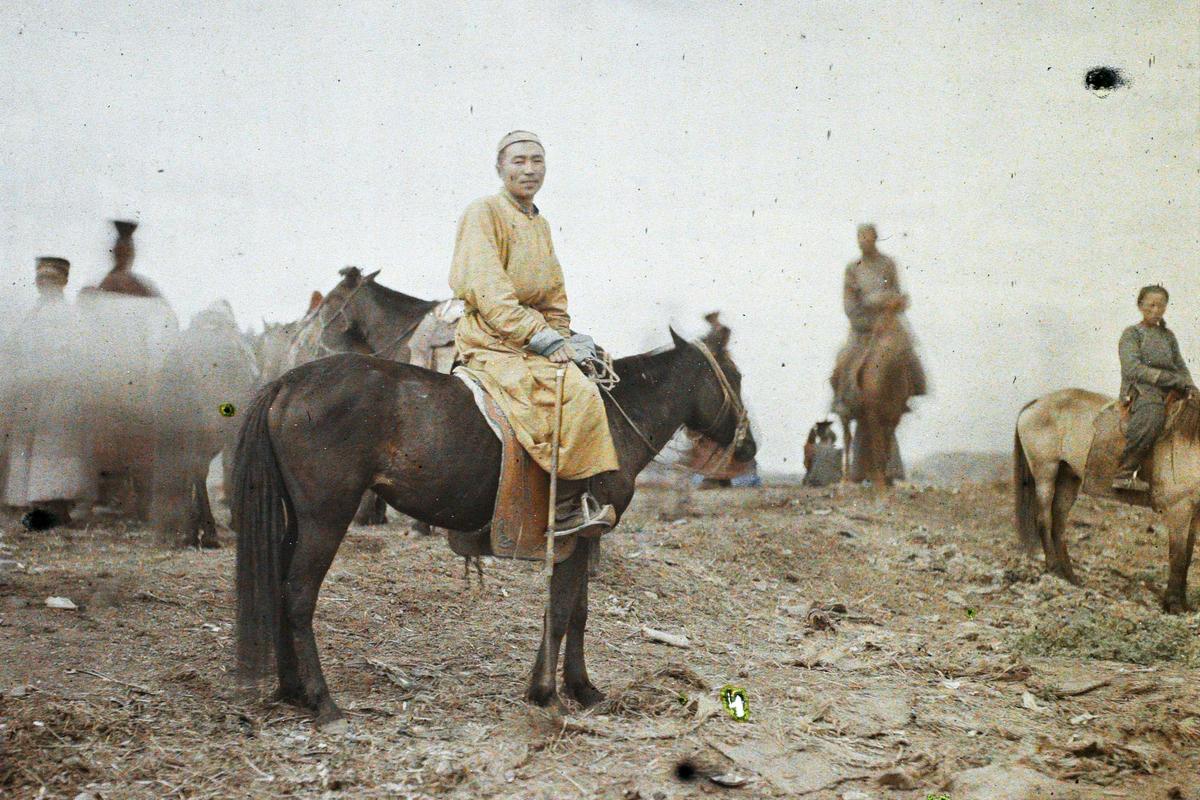
Mounted mobility reshaped politics so profoundly that the German sociologist Alexander Rüstow later described the rider as a new kind of human—almost a “centaur.” Horses, refined through Eurasian breeding, would dominate warfare and statecraft for nearly four thousand years. Even seaborne empires—from Carthage to Britain—still depended on horses to push inland. The conquest of the Inka by Francisco Pizarro illustrates the asymmetry: Spanish horsemen faced an empire whose long-distance logistics relied largely on human porters and llamas. Across North America, the adoption of horses also enabled the Comanche to build a powerful equestrian empire and contest European expansion for decades.
Why it matters
The piece highlights a recurring driver of state power: control over mobility, from horses and ships to oil and modern logistics. Societies that can move resources and force efficiently can build larger, more hierarchical systems—and disrupt rivals by targeting transport chokepoints. With energy security and shipping routes under renewed strain, the next geopolitical shocks may hinge less on borders than on the networks that keep goods and people moving.