Discover the cosmos!Each day a different image or photograph of our fascinating universe is featured, along with a brief explanation written by a professional astronomer.
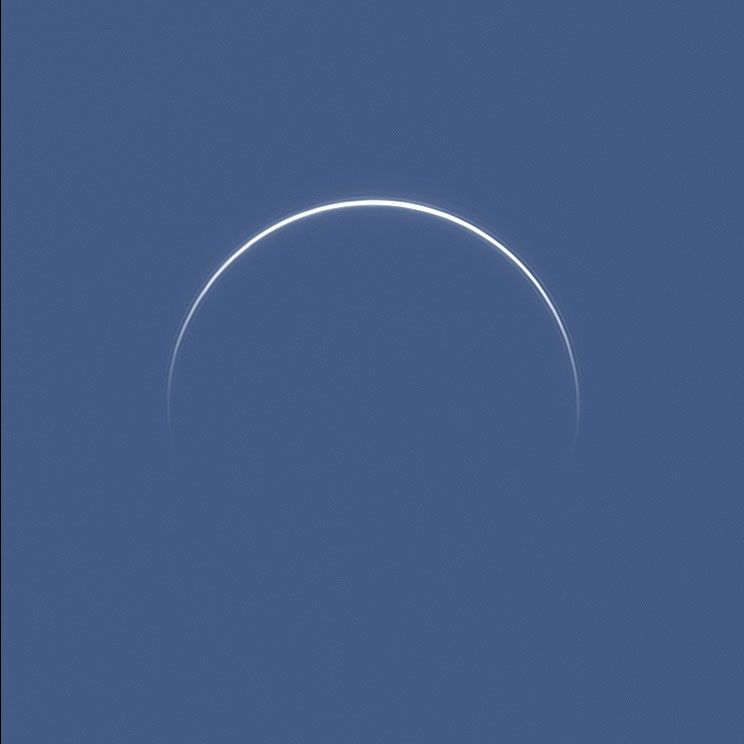
Discover the cosmos!Each day a different image or photograph of our fascinating universe is featured, along with a brief explanation written by a professional astronomer. Explanation:That's no moon.But you could be forgiven for thinking it was acrescent Moonin the sky. It is a lesser known fact thatVenus also has phases. (What aboutother planets?) Thefeatured imageshowsVenusseen almost directly between the Sun and the Earth. This happens once everyyear and a half, and it is like the alignment that happens every month during a new Moon. But the new Moon is dark, while Venus' backlitatmosphererefracts and scattersthe sunlight, creating a glowingcrescent arcthat extends beyond 180 degrees: the tips of this arc are called the "horns". The crescent can be seen with a small telescope or binoculars during twilight, but those withexceptionally acute eyesightmay be able to see it with the unaided eye. AncientBabylonianastronomers may have been the first to study Venus' brightness changes, which are related to itsphases.Many other cultureshave similar astronomical records, including theoldestsurvivingMaya book.Tomorrow's picture:What's next?