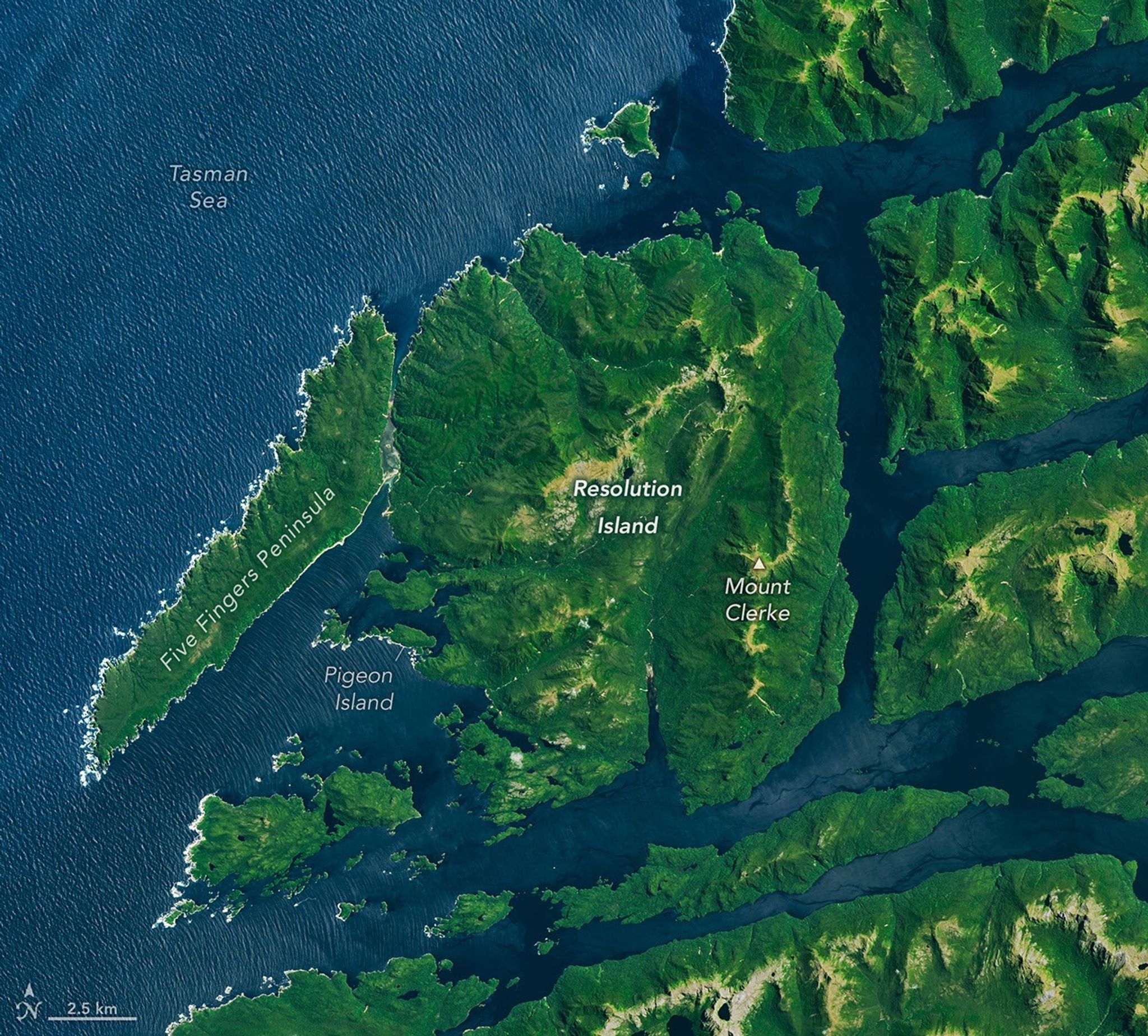
Resolution Island in New Zealand’s Fiordland was meant to be a safe haven for native birds, but stoats swam across, undermining early translocation efforts.
For well over a century, New Zealand conservationists have looked to offshore islands as potential lifeboats for native birds hammered by introduced predators. But on Resolution Island—one of the earliest and most ambitious experiments—the predators proved unexpectedly capable of closing the gap.
In the late 1800s, naturalists were increasingly alarmed that stoats and other predators, imported to curb other nonnative animals, were instead devastating endemic wildlife. The idea emerged that islands could function as sanctuaries, protecting species that were flightless or poor fliers from the new wave of hunters. Resolution Island, in Fiordland along the wild southwestern edge of New Zealand’s South Island, quickly became a prime candidate. In 1872, conservationist Thomas Henry Potts argued the island could provide refuge for “wingless” birds and species with limited flight ability—an early call that helped launch systematic attempts to shield kiwi, kākāpō, and other native birds there.
A recent satellite view underscores why the island attracted attention. Captured by the Operational Land Imager (OLI) aboard Landsat 9 on December 12, 2025, the image shows Resolution Island set among Fiordland’s steep valleys—landforms sculpted by glaciers and later flooded by the sea. Uninhabited and rugged, the island rises from sea level to the 1,069-meter (3,507-foot) summit of Mount Clerke. That dramatic elevation range supports multiple habitat types: bogs and wetlands near the coast, extensive podocarp forests at mid-elevations, and tussock grasslands higher up in subalpine and alpine zones.
The surrounding waters are protected, too. Near the entrance to Dusky Sound, east of Five Fingers Peninsula, the Taumoana (Five Fingers Peninsula) Marine Reserve safeguards estuarine areas and wave-battered rocky reef ecosystems.
Resolution’s conservation story is closely tied to Richard Henry, who lived on nearby Pigeon Island and became caretaker after Resolution Island was designated a reserve in 1891. Henry undertook what has been described as a landmark translocation effort, spending years moving more than 700 birds—mainly kiwi and kākāpō—by rowboat to Resolution and other nearby islands envisioned as havens.
Then the project collided with a hard biological reality: in 1900, people began reporting mustelids on Resolution Island. Stoats and their relatives, it turned out, could swim far enough to reach the supposed sanctuary. Henry attempted to trap the intruders, but the effort ultimately faltered, and he left to take up caretaking work elsewhere.
The aspiration behind those early efforts has not disappeared. In 2008, New Zealand’s Department of Conservation launched a program aimed at suppressing stoat numbers and strengthening native wildlife populations on Resolution Island—an ongoing attempt to deliver on a 19th-century vision under 21st-century conditions.
Why it matters
Island sanctuaries are central to New Zealand’s strategy for protecting species found nowhere else, but Resolution Island shows how quickly that protection can fail when predators can reinvade. The history highlights the long-term challenge of maintaining “predator-free” status, even in remote places. What happens next on Resolution will help inform conservation tactics for other island refuges, including how intensively predators must be controlled to give vulnerable birds a lasting chance.