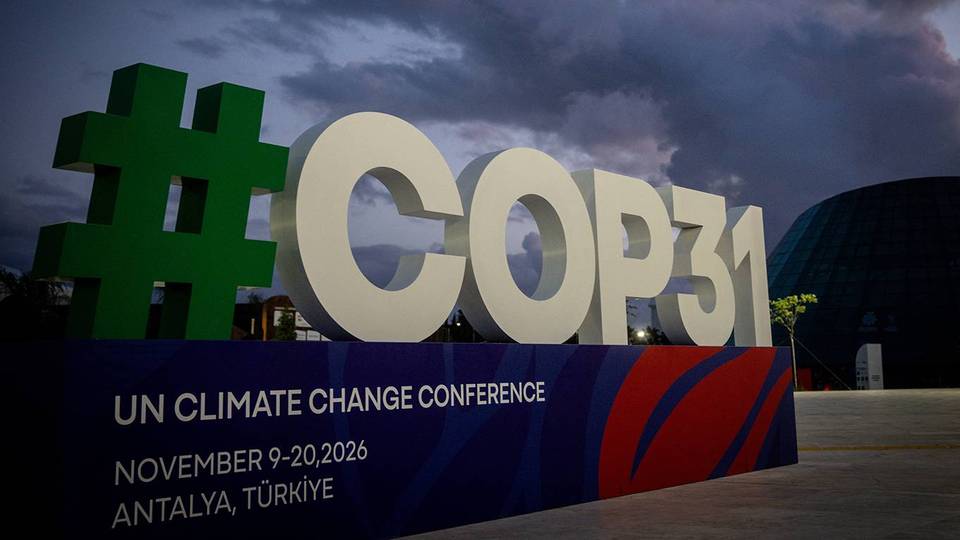
UN climate talks ended without agreement to mention phasing out coal, oil and gas, exposing the limits of unanimity. Markets are still accelerating the clean-energy shift.
The latest round of United Nations climate negotiations has ended the way many veteran observers now fear these gatherings often will: with plenty of debate, and no shared decision on the central question. Meeting in Antalya, Turkey, nearly 200 countries spent two weeks disputing whether a closing statement could even acknowledge the need to move beyond coal, oil and gas. When the talks wrapped on Sunday, that language was still missing.
The breakdown follows a similar outcome at last year’s summit in Belém, Brazil, where governments also failed to agree on a clear pathway for winding down fossil fuels. Together, the back-to-back disappointments underline a stubborn weakness of the COP model: it is built around unanimity, and unanimity is easiest to block when the stakes are highest.
Yet the diplomatic impasse does not mean the energy transition has stopped. If anything, markets and technology are shifting more quickly than at any previous point—though not fast enough to meet climate safety goals. Over the past decade, the cost of solar photovoltaics has dropped by about 90%. Onshore wind costs are down roughly 70%. Battery prices have fallen by more than 90%. Clean-energy investment worldwide now exceeds $2 trillion each year, and electric-vehicle sales continue to climb.
Transportation is pivotal in this story because it drives about 60% of global oil demand, largely from cars and trucks. As EVs improve, the competitive logic becomes harder to ignore: they convert energy to motion more efficiently, are cheaper to run, and are increasingly less expensive to purchase upfront. Once that value proposition is widely recognized across markets, oil demand may not merely level off—it could plunge, potentially within the next 10 to 20 years.
Major incumbents appear to understand the direction of travel even when their public messaging is cautious. ExxonMobil and Saudi Aramco have promised to reach net-zero emissions from their own operations by 2050, though both have been quieter about those pledges recently. Still, cutting operational emissions toward near-zero could happen regardless, as Norway’s experience suggests: the country is moving toward an overwhelmingly electric car fleet while running its power system entirely on renewables.
Even industry scenario planners increasingly assume the fossil era ends eventually. Shell’s forecasters, for example, project that global emissions approach net-zero by 2100 even under their most pessimistic outlook—one characterized by fragmented, nationalistic policies similar to today’s geopolitical landscape.
But “eventually” is the problem. Timing determines how much damage is locked in. A trajectory that reaches net-zero around 2100 is associated with roughly 2.2–2.8°C of average warming above pre-industrial levels—high enough to make irreversible climate tipping points far more likely. Achieving net-zero decades earlier would reduce human and economic losses and avoid trillions of dollars in climate-related destruction.
There is also a near-term economic case for speed. The energy shock tied to the Iran war has once again highlighted how exposed many countries remain to globally traded oil and gas—commodities vulnerable to conflict and producer power. That vulnerability shows up as inflation and instability, a phenomenon some describe as “fossilflation,” in which household prices, public budgets and national security are all tethered to volatile fuel markets. The remedy is the same as the climate solution: reducing dependence on fossil fuels.
So why do the official talks keep stalling? Two structural features stand out. The UN process tends to emphasize end goals—targets, timelines and emissions totals—while giving less attention to the upstream issue of fossil-fuel extraction and supply. And because decisions require consensus among about 200 countries, those with the most to lose can effectively veto the language others want.
That helps explain why an alternative model is starting to attract attention: smaller coalitions prepared to move faster than the full COP system. In April, that approach received a significant trial run at the First Conference on Transitioning Away from Fossil Fuels in Santa Marta, Colombia, offering a glimpse of how “coalitions of the willing” might try to steer markets toward a quicker and more orderly shift.
Why it matters
If COP outcomes remain constrained by veto politics, progress may increasingly depend on groups of countries willing to align policies outside the UN’s unanimity framework. The pace of the transition will shape not only climate risks but also exposure to fuel-driven inflation and geopolitical shocks. The next test is whether these smaller alliances can deliver concrete measures—especially on fossil-fuel supply—without the legitimacy and universality of a global consensus.