Robots are no longer just classroom projects or competition showpieces for NASA—they are central to how the agency expects to build a sustainable foothold on the Moon.
Robots are no longer just classroom projects or competition showpieces for NASA—they are central to how the agency expects to build a sustainable foothold on the Moon. That message took center stage in Houston at the 2026 FIRST Robotics World Championship, where NASA used one of the largest student engineering gatherings in the country to outline how today’s young designers could help make a lunar base possible.
More than 1,000 student teams traveled to the championship for matches and hands-on technical challenges, creating a ready-made audience for NASA’s recruitment and outreach efforts. Over the course of the event, the agency said it engaged more than 51,000 students, parents, and mentors through interactive demonstrations and conversations on the exhibit floor.
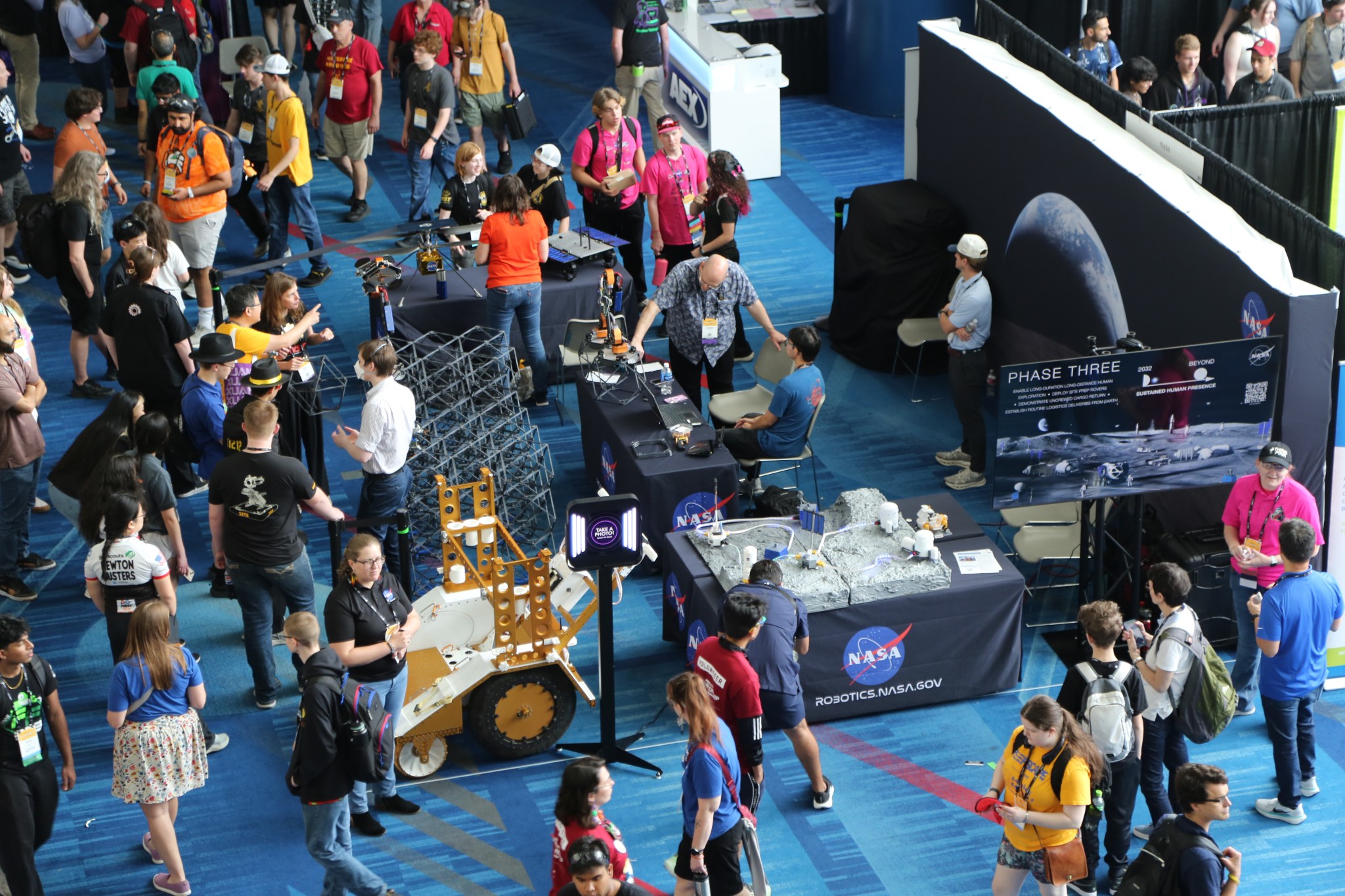
At the heart of NASA’s presentation was its long-term vision for a permanent lunar outpost, described as a “Moon Base” intended to support exploration, science, and technology testing. The concept is designed not only to expand what can be done on the Moon, but also to serve as a proving ground for the tools, systems, and operational experience needed for later human missions to Mars and deeper into the solar system. A detailed model of the proposed Moon Base served as a centerpiece of the agency’s exhibit, drawing crowds and anchoring discussions about what it would take to build and maintain infrastructure in the harsh lunar environment.
NASA emphasized that the first stage of this plan leans heavily on robotics. Phase 1 focuses on fast-paced robotic missions and early uncrewed flights that can survey landing areas, test equipment, and prepare for more complex surface operations before astronauts arrive on crewed Artemis missions. A key element is the agency’s Commercial Lunar Payload Services (CLPS) effort, which uses commercial providers to deliver NASA payloads to the Moon. NASA’s current target calls for an accelerated tempo of CLPS flights, with as many as 30 robotic landings planned for 2027. Those missions are meant to speed delivery of science instruments and technology demonstrations, including mobile and flying systems such as rovers, hoppers, and drones.
NASA’s footprint at the championship reflected the breadth of its lunar ambitions. Multiple field centers and facilities contributed hardware, expertise, and staff to engage with students, including Johnson Space Center in Houston, Kennedy Space Center in Florida, Langley Research Center in Virginia, Ames Research Center in California, Michoud Assembly Facility in New Orleans, Armstrong Flight Research Center in Edwards, California, Glenn Research Center in Cleveland, Goddard Space Flight Center in Greenbelt, Maryland, White Sands Test Facility in Las Cruces, New Mexico, and Wallops Flight Facility in Wallops Island, Virginia.
The outreach also built on decades of involvement with FIRST. NASA has backed and mentored teams since 1996, and this year the agency sponsored more than 160 FIRST Robotics teams, including 50 that also worked with a NASA mentor. NASA Johnson Space Center directly mentored six teams, and two of those teams advanced to the FIRST Championship.
NASA also provided practical help on site: a Mobile Machine Shop staffed by agency machinists offered repairs for teams struggling with broken parts. Over the event, the shop completed more than 600 repair jobs—support that kept robots running and reinforced NASA’s broader message that the skills being honed in student workshops today are the same ones needed to tackle the agency’s next giant leap.