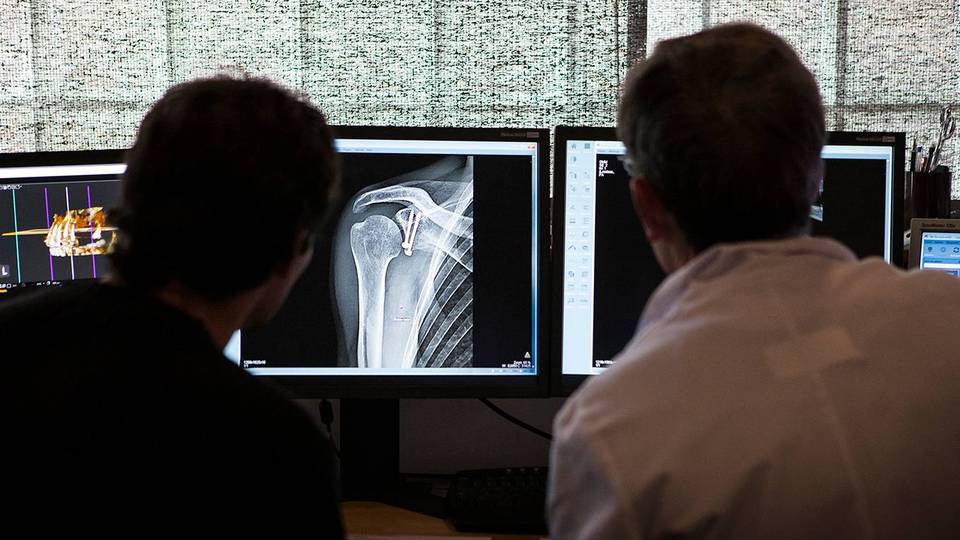
Medical AI may be shelved despite strong accuracy if patients feel anxious or clinicians find it disruptive. “Comfort-by-design” aims to build trust and usability from the start.
Even the smartest medical AI can fail in the clinic if it doesn’t feel right to the people expected to use it. Researchers and health-care leaders increasingly argue that accuracy and predictive power, while essential, are not enough on their own: if patients are left anxious or confused by an algorithm’s recommendations, or if clinicians see the software as slow, awkward, or disruptive, the technology may end up sidelined no matter how strong its performance looks in testing.
That tension is becoming more visible as artificial intelligence spreads rapidly across the economy, sharpening forecasts and improving decision-making in fields from finance to manufacturing. Medicine is no exception. In hospitals and doctors’ offices, AI systems are beginning to influence how diseases are detected, how risks are calculated, and how treatment options are presented. Some tools are already helping patients play a bigger part in their own care by organizing health information and flagging patterns that might otherwise be missed. For physicians, AI can surface insights from vast and complex data streams—details that were previously hard to access, or in some cases essentially out of reach.
But the path from a promising model to a trusted clinical aid is often blocked by human factors. Patients may worry about how decisions are made, whether their personal data are being used appropriately, or whether an opaque recommendation is replacing genuine medical judgment. Clinicians, meanwhile, can bristle at systems that demand extra clicks, require new workflows, or produce outputs that are difficult to interpret during a busy day. In real-world practice, usability, clarity, and trust can matter as much as the underlying mathematics.
A growing response to these concerns is what some developers describe as “comfort-by-design”—an approach that treats acceptability as a core requirement rather than a final polish. Instead of building an AI tool in isolation and then trying to persuade hospitals to adopt it, this strategy involves the people most affected from the start: patients who will receive AI-influenced care, and the practitioners who must integrate the technology into established routines. The goal is to ensure that new systems complement existing medical practices, communicate in ways patients understand, and support clinicians rather than burden them.
Advocates of comfort-by-design argue that participation early in development can identify problems that standard technical benchmarks miss. For example, a model might be statistically strong yet still trigger discomfort if its reasoning is unclear, if it communicates risk in alarming terms, or if it appears to override the doctor–patient relationship. Likewise, a tool could be clinically useful but underused if it forces a redesign of established procedures, or if it doesn’t fit smoothly into the flow of an appointment.
The message emerging from discussions in places such as Paris, where health and technology communities often convene, is that the next phase of medical AI will be shaped not only by better algorithms but also by better design choices—ones grounded in the realities of clinical work and patient experience.
Why it matters
Medical AI is poised to affect patients and clinicians alike, but adoption will hinge on trust and usability, not just accuracy. Tools designed with patients and practitioners can reduce anxiety, streamline care, and help ensure that AI supports—rather than disrupts—medical decision-making. The next key test will be whether developers can prove their systems fit into everyday practice while remaining transparent and patient-centered.