After NASA’s Artemis II astronauts splashed down in the Pacific Ocean on April 10, ending a record-setting flight around the Moon, the mission’s science work quickly…
After NASA’s Artemis II astronauts splashed down in the Pacific Ocean on April 10, ending a record-setting flight around the Moon, the mission’s science work quickly shifted into a new phase—one happening largely on Earth. Research teams have spent the weeks since landing gathering fresh measurements and poring over observations from the test flight, aiming to sharpen the agency’s understanding of how people cope with deep-space travel and how future crews might carry out science and operations on the Moon as NASA works toward a sustained lunar presence and an eventual Moon base.
In the critical hours and days after return, Artemis II commander Reid Wiseman, pilot Victor Glover, mission specialist Christina Koch, and Canadian Space Agency astronaut Jeremy Hansen became the focus of an intensive set of postflight examinations designed to capture how the body transitions from microgravity back to Earth’s gravity. The timing matters: collecting health and performance data immediately after landing helps NASA estimate how quickly astronauts could handle essential tasks once they arrive on another world—especially on the Moon or Mars, where there will be no large recovery teams waiting to assist.
Within 24 hours of splashdown, researchers began the Artemis II Spaceflight Standard Measures study, part of a broader effort across NASA’s astronaut corps to build a consistent baseline of health indicators. The team gathered measurements including blood pressure, heart rate, eye health, and aspects of motor control. The crew also worked through a short obstacle course—moving from lying down to standing, deploying a rope ladder, climbing, and performing other movements—so investigators could see how balance, coordination, and strength responded immediately after re-entry and landing.
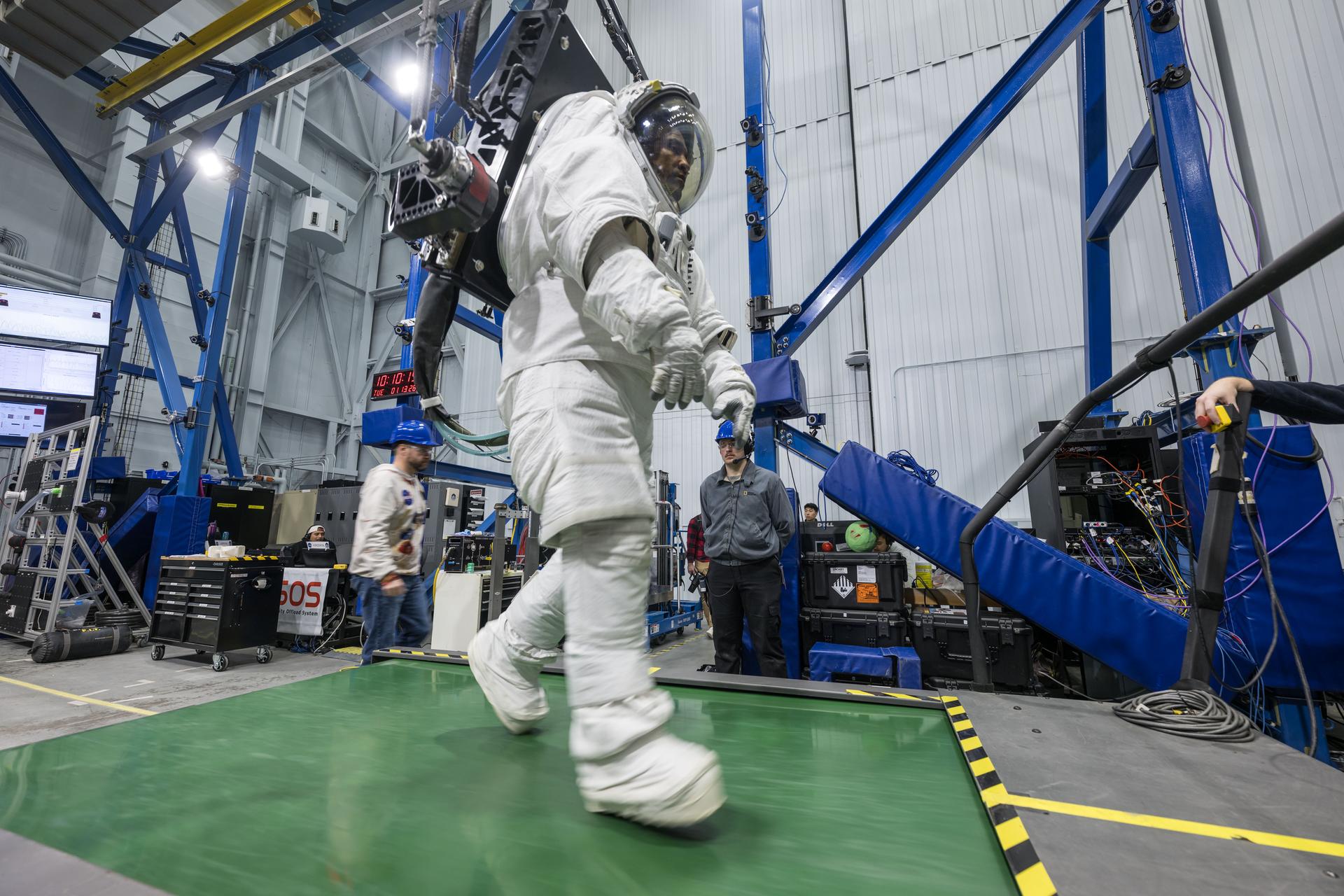
Once the astronauts returned to NASA’s Johnson Space Center in Houston, the monitoring continued with additional medical evaluations and motor-control testing. Over subsequent days, the crew repeated obstacle-course tasks while wearing spacesuits “offloaded” to mimic lunar gravity, which is about one-sixth of Earth’s. Scientists are now analyzing these results to better predict how astronauts may function while adapting to a planetary surface.
Artemis II also contributed to investigations of immune health. For the Immune Biomarkers study, researchers are comparing blood and saliva collected after splashdown with samples gathered before launch and during the mission. One key question is whether dormant viruses can reactivate during spaceflight and how those changes might be detected and managed.
Other crew members completed postflight cognitive assessments and a simulated manual spacecraft docking exercise as part of ARCHeR—Artemis Research for Crew Health & Readiness. Those tests, combined with data from wrist-worn devices used in flight, are intended to map how spaceflight hazards influence well-being and performance.
The first intensive phase of postflight health data collection wrapped up 45 days after landing, but NASA will continue monitoring the crew’s health over their lifetimes. After processing and de-identifying the information, the agency plans to make it accessible to researchers through NASA’s Life Sciences Data Archive, enabling broader study of spaceflight’s effects and potentially guiding new technologies and screening tools for future Moon and Mars crews.
Alongside human testing, researchers are examining “organ chips” flown on Artemis II for NASA’s AVATAR (A Virtual Astronaut Tissue Analog Response) investigation. Developed with Emulate and now being analyzed at the company’s Boston laboratory, the chips contained bone marrow cells from each astronaut and traveled around the Moon with the crew. Scientists are comparing the flown chips with ground controls and astronaut blood samples using advanced methods, including single-cell RNA sequencing, to understand how microgravity and deep-space radiation affect human biology at the molecular level.