During Artemis II’s roughly 10-day flight, four astronauts circled the Moon and returned to Earth after traveling 694,481 miles—an ambitious deep-space journey that…
During Artemis II’s roughly 10-day flight, four astronauts circled the Moon and returned to Earth after traveling 694,481 miles—an ambitious deep-space journey that demanded more than navigation and life support. Inside NASA’s Orion spacecraft, maintaining crew health was also a daily requirement, and one of the key tools enabling that routine was a small, power-free exercise machine known as the flywheel.
The device, used for about 30 minutes of exercise per crew member each day, was developed under the leadership of Ryan Schulte, Orion’s flywheel project manager. Based at NASA’s Johnson Space Center in Houston, Schulte heads the team that designed, constructed, tested, and ultimately flew the flywheel on Artemis II. With that milestone achieved, he is now focused on building a fleet of more reusable exercise systems intended for upcoming Artemis missions.
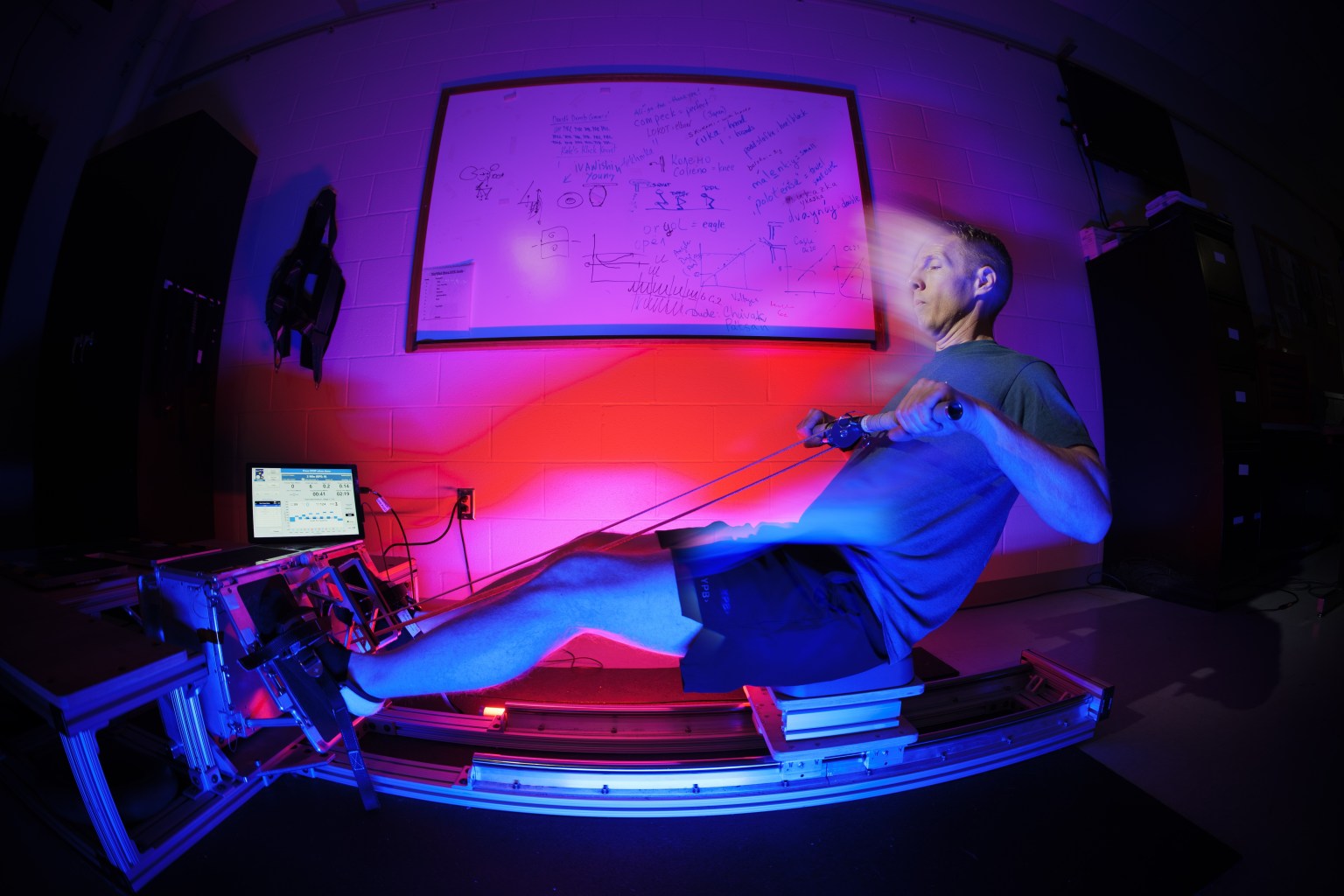
Despite its unassuming footprint—about the size of a large shoebox—the flywheel was built to do the work of multiple pieces of gym equipment. It delivers both aerobic and resistance training without drawing any electrical power from Orion. Schulte describes its operating principle as similar to an inertial yo-yo: astronauts generate resistance through their own effort, while selectable gear ratios allow them to shift between modes. In its highest configuration, the system can deliver as much as 500 pounds of resistance.
That range makes it possible to perform a broad set of movements with a single machine. Schulte said the flywheel supports exercises including squats, deadlifts, bent rows, high-pulls, curls, heel raises, and rowing-style aerobic workouts—an important level of versatility in a capsule where every cubic inch matters.
Fitting a full-body training capability into Orion, however, was not a straightforward engineering task. Schulte’s team had to balance tight space constraints, crew mobility, and the realities of exercising in microgravity, where astronauts must be able to extend their bodies safely even during fast, repetitive movements. Another key consideration was limiting noise so the crew could communicate easily while someone worked out. The challenge, Schulte noted, was to compress the entire system into a compact package while still allowing enough room in the capsule for an astronaut to stand up fully and move through a complete range of motion.
The payoff is more than improved fitness. In microgravity, the absence of Earth’s constant pull leads to progressive weakening of muscle, bone, and cardiovascular capacity. Schulte emphasized that regular exercise is a countermeasure against that decline—especially as Artemis missions grow longer and demand more from astronauts. Conditioning in flight, he said, helps reduce the risk of injury when crews must carry out extended lunar spacewalks or, if necessary, exit the capsule quickly during an emergency.
Schulte also points to psychological benefits. Living in a confined spacecraft can be mentally taxing, and exercise can provide stress relief and sharpen thinking. He said astronauts have reported feeling clearer after workouts, in part because movement helps circulate fluids and blood that can otherwise pool toward the head in zero gravity.
Schulte’s path to the project began at Johnson in 2007 as a cooperative education student. He later joined NASA full time, working as a test engineer on pyrotechnics, propulsion, and power systems before moving into the Human Health and Performance Directorate and the Human Research Program. That shift—toward the intersection of engineering and human needs—set the stage for his current role.
As Artemis pushes farther into deep space, the flywheel and its next-generation successors are poised to become essential hardware, helping ensure astronauts arrive at the Moon healthy, resilient, and ready for the demands of exploration.