William the Conqueror had conquered and launched a new era in England under the Normans, but he had to keep an eye on the heirs of his fallen foe Thebattle of…
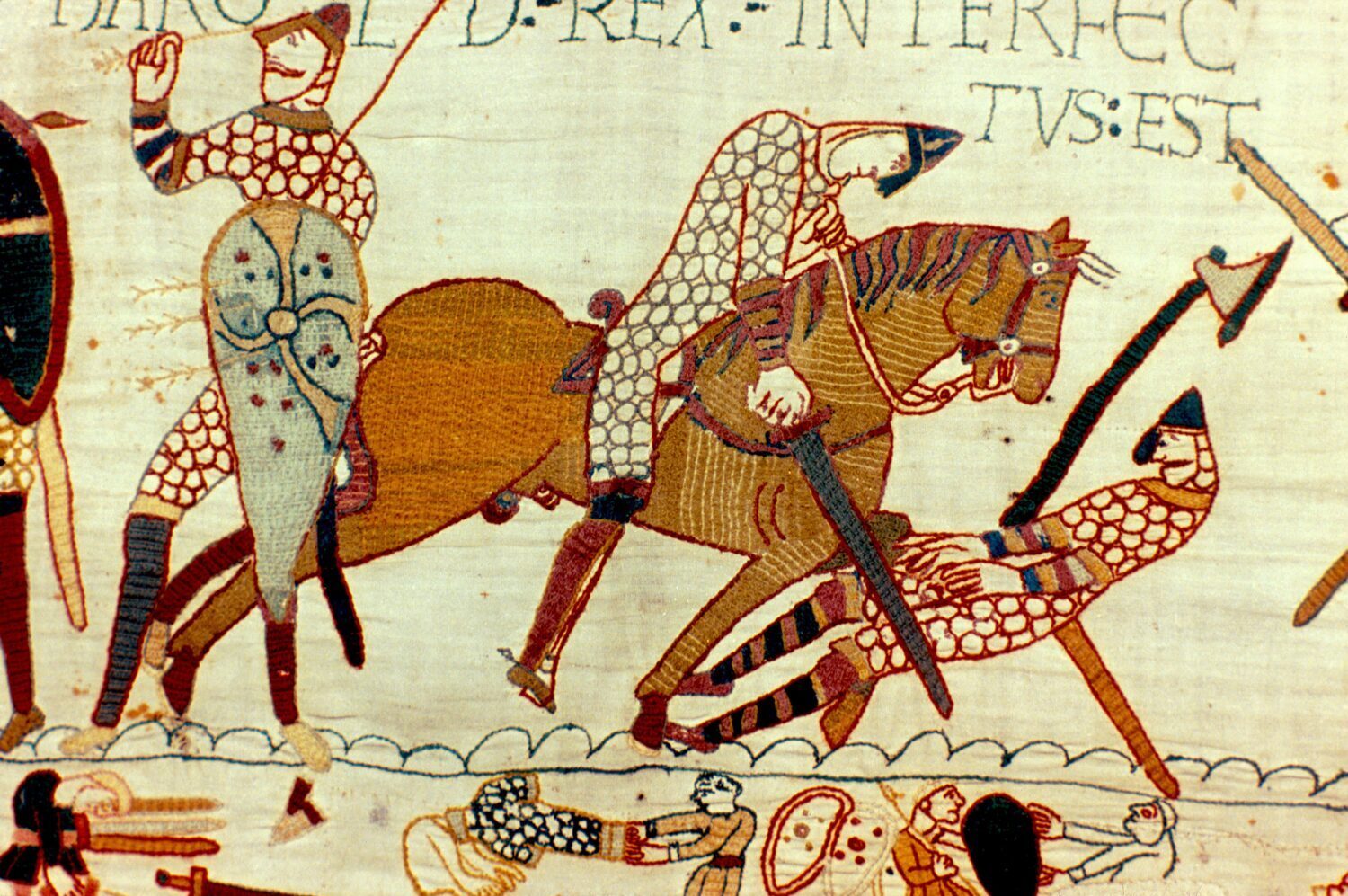
William the Conqueror had conquered and launched a new era in England under the Normans, but he had to keep an eye on the heirs of his fallen foe Thebattle of Hastingswas over: from the bloody fighting on 14 October 1066, William, Duke of Normandy, emerged as King of England while Harold Godwinson, after less than a year on the throne, was dead. TheNorman Conquesthad begun, yet the family of the fallen king still posed a threat toWilliam the Conqueror. Yes, three of Harold’s brothers also died that same year:Tostighad allied withHarald Hardradaand been killed at the battle of Stamford Bridge, while Gyrth and Leofwine perished alongside Harold at Hastings. But in the early years of William’s reign Harold’s mother Gytha became a figurehead of rebellion in Exeter, and there were concerns that his seven children may one day seek to restore their line. Harold Godwinson had five sons and two daughters. With his first wife,Edith Swanneck, he had three boys, Godwin, Edmund and Magnus, and two girls, Gunhild and Gytha. He had two more boys, Harold and Ulf, possibly with his second wife, Ealdgyth, although the lack of historical records means there remains confusion over who gave birth to Ulf. Details are scant, but it seems that Edith Swanneck – also called Edith the Fair or the Handfasted Queen as she may have been unofficially married to Harold – survived the immediate aftermath of the battle of Hastings. According to legend, it was she who identified Harold’s body on the battlefield. Ealdgyth, or Edith of Mercia, was married to Harold in early 1066 as part of a political alliance. After Hastings, her brothers, the earls of Mercia and Northumberland, took her to Chester for safety. It was possibly there that she gave birth to Ulf. The eldest sons, Godwin and Edmund, were teenagers in 1066 and fled to Ireland, where they lived under the protection of Diarmait, King of Leinster. Twice, they launched a campaign to western England in the hopes of overthrowing the Norman regime. In 1068, leading a force of Dublin Norse mercenaries, they failed in their initial aim of seizing Bristol before losing a decisive battle in Somerset. They found no support from their father’s former allies, who had made peace with William. The following years, they returned with a fleet of ships and headed for Exeter, but again failed. Instead, Godwin and Edmund raided parts of Devon and Cornwall, then, with no hopes of success, they fled again, this time to the court of their relative, Sweyn II of Denmark. It is possible that their younger brother Magnus accompanied them, but only clues remain in the historical sources. He may have died during Godwin and Edmund’s doomed campaigns, or became a monk in Sussex or a count in modern-day Poland. Accounts suggest that Harold (junior) found his way to the court of Olaf III of Norway, the son of Harald Hardrada. Despite Harold Godwinson defeating and killing Hardrada, he spared Olaf’s life at Stamford Bridge, so Olaf welcomed the young Harold into his service. It appears that he participated in expeditions to the Orkneys, Hebrides, Isle of Man and Anglesey. Ulf, however, had been immediately captured after Hastings and was imprisoned in Normandy until William’s death in 1087. By then, any thoughts of opposition had been stamped out: in fact, he became a knight of the new Duke of Normandy. Gunhild was at a nunnery at Wilton Abbey in 1066 and remained in England. She married one of William’s inner circle, Alan the Red, possibly a strategic alliance to help Alan secure his lands, which had belonged to Gunhild’s mother. When he died shortly afterwards, she ended up with his brother, Alan the Black. Gytha, meanwhile, escaped to Denmark and married Vladimir II Monomakh, ruler of Smolensk and Chernigov and the future Grand Prince of Kiev. They had several children together, with one of them becoming known as Harald; a small way of honouring Gytha’s father, since reclaiming the English crown was out of reach. Jonny Wilkes is a former staff writer for BBC History Revealed, and he continues to write for both the magazine and HistoryExtra. He has BA in History from the University of York.