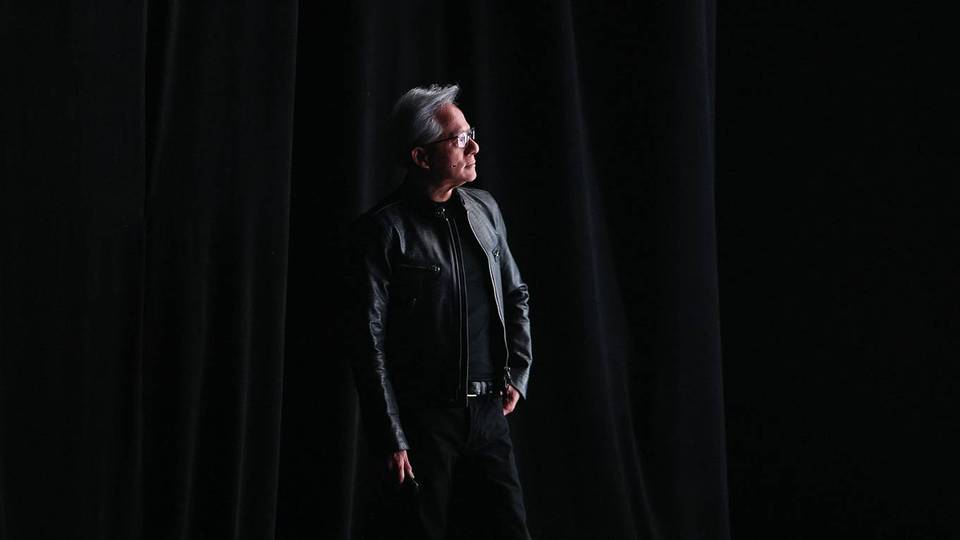
Nvidia’s abrupt removal and rapid reinstatement of CEO Jensen Huang highlights how US AI progress can depend on centralized corporate leadership to coordinate chips, cloud and power.
Building cutting-edge artificial intelligence systems is not simply a matter of writing better algorithms. It demands tight coordination across a sprawling industrial web: AI research labs, chip design and manufacturing, cloud data centers, energy generation, and the long investment horizons needed to scale all of it. In China, much of that alignment is typically orchestrated through government direction and national planning. In the United States, the prevailing narrative has been that competitive markets and decentralized decision-making do the job instead.
Events at Nvidia are complicating that story.
In a rapid and unexpected turn, Nvidia removed co-founder and longtime chief executive Jensen Huang from his post—only to restore him to the job less than a month later. The reversal, described by people familiar with the situation as sudden and decisive, has become an emblem of how much coordination the American AI ecosystem can concentrate around a single corporate leader, rather than emerging organically from the market.
The US–China contest over AI capability is often framed as a clash between two models: a bottom-up private sector in the US versus a top-down, state-led approach in China. Yet the Nvidia episode underscores that the boundary between these systems may be thinner than commonly assumed. In practice, the American system can also hinge on central figures with the authority—and the relationships—to align disparate parts of the supply chain, steer capital toward long-range bets, and impose strategic coherence across multiple industries.
Huang’s importance to Nvidia has long extended beyond product decisions inside the company. Nvidia’s position in AI computing depends on synchronized execution by outside partners as well: foundries and packaging firms that manufacture advanced chips, cloud providers that deploy them at scale, and utilities and infrastructure companies that can supply the electricity and facilities required to run massive data centers. Maintaining momentum also requires credibility with customers and investors who are underwriting projects measured in years, not quarters.
The whiplash of Huang’s removal and quick reinstatement suggests that, at least for Nvidia, leadership continuity is not a mere governance preference—it is a stabilizing force for an ecosystem that relies on coordination and patience. The speed of the reversal hints at concerns that a prolonged leadership vacuum could disrupt partnerships, slow planning, or weaken confidence at a critical moment in the AI buildout.
The episode also invites a broader rethinking of what “market-driven” really means in the context of strategic technologies. Even without formal industrial policy, the US can end up with de facto central planning—channeled through a dominant firm and a singular executive who functions as a coordinating node across sectors. That does not make the American and Chinese systems identical. But it does suggest the competition is less a clean battle of ideologies than a race between two different ways of solving the same coordination problem.
In the scramble to build ever more powerful AI, the lesson from Nvidia is that leadership—and the ability to align sprawling industrial dependencies—can be as decisive as any breakthrough in software.
Why it matters
Nvidia’s leadership turmoil highlights how fragile the AI supply chain can be when it depends on a small number of decision-makers and companies. Customers, investors, and infrastructure partners may treat executive continuity as a prerequisite for long-term commitments in chips, data centers, and power. The episode also blurs the usual narrative about US “market” dynamism versus Chinese state coordination—suggesting both systems may rely on centralized control, just in different forms.