Japie Greeff is the Dean of Research and Postgraduate Studies at the Belgium Campus of iTversity in Pretoria, South Africa.
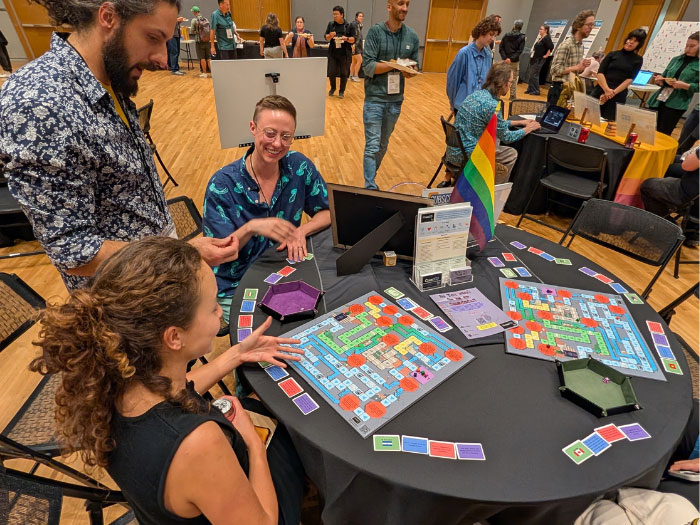
Japie Greeff is the Dean of Research and Postgraduate Studies at the Belgium Campus of iTversity in Pretoria, South Africa. It’s a long plane ride from Pittsburgh, but Greef says the chance to explore his interest in transformational play at the2026 Meaningful Playconference made it worth the trip. “I found it really interesting to see the differences between the North American and South African emphasis in the serious play target market,” Greef said. “In South Africa, a lot of the serious games I come across are focused on post-secondary education. But here there’s a focus on K-12 education, as well as the use of a lot of analog materials, which is an intriguing approach given how attached children are to digital devices.” Greeff’s discovery-based experience is exactly the kind of environment organizers of the biennial conference say they want to foster. Meaningful Play began atMichigan State University(MSU) in 2008 and was jointly hosted this year by MSU andThe Center for Transformational Play(CTP) atCarnegie Mellon University(CMU). The conference brings together scholars, designers, educators, and other playful practitioners who believe in the power of games to entertain, educate, and transform. The 2026 conference marked the second time CMU has served as the host venue. This year’s hybrid event welcomed more than 300 participants from around the world, including in-person and online attendees from 16 different countries. Jessica Hammer is the CTP’s director and is jointly appointed to theHuman Computer Interaction Instituteand theEntertainment Technology Centerat CMU. She says that events that bring together different areas of transformational play research and practice are extremely valuable for this area of study. “Game research can be very siloed at times. It happens across different departments with different kinds of scholarship, and there are many kinds of approaches from the technical to the transformational,” Hammer said. “One important thing that Meaningful Play does is bring people together in a way that’s agnostic about their intellectual tradition. The conference doesn’t just provide a space for interdisciplinary discussions for academics, but one where game designers, researchers, community leaders, educators and students can work together as peers to make the future a playful one.” In addition to welcoming research papers, microtalks, and game submissions, the conference also offers specialty workshops and hosted sessions concerning topics of interest in the transformational play community. Presenters from organizations likeFred Rogers ProductionsandSesame Workshop’s Joan Ganz Cooney Centerexplored topics like teaching through game design and bringing students into the design process. Other sessions explored topics such as how games and play create spaces for people in marginalized communities and how games can support social-emotional learning. Schell Gamesproduct manager Erin Sawyer was one of the presenters for a discussion on the game studio’s approach to bridging the gap between entertainment and impact. She says the experience captured exactly why the conference matters to creators working at the intersection of engagement and motivation. "Meaningful Play 2026 completely embodied the spirit of playfulness and purpose, creating an incredibly welcoming space to share knowledge across disciplines,” Sawyer said. “Engaging with such an insightful variety of games, workshops, and people was incredibly energizing." Another unique aspect of the conference was the inclusion of some 30 high school students from three regional high schools who attended a special introduction to transformational play workshop hosted by theLIGHT Education Initiative. CTP Lead Game Designer Elaine Fath facilitated a “game jam” design session with the students. She says that inviting young people into spaces where educational games are developed yielded a powerful reminder of how much creativity and insight emerges when new voices are welcomed into the process. “Something that struck me about working with this group of students in particular is how game they were to try new things. We were using exercises that I typically use with college students, and I saw them coming up with ideas and solutions that I’ve never seen before.” Fath said. “It was a very profound reminder about something we say a lot at the CTP, that everyone has something to teach and everyone has something to learn.” The chance to learn more and to share her own research is what brought Darusha Baskaran to the conference. Baskaran is a fourth-year Ph.D. student at the University of Santa Cruz. In addition to submitting a paper was one of the dozens of volunteers who helped make Meaningful Play run smoothly. She says that the opportunity to be surrounded by a diversity of transformational game design practitioners pushes her to think bigger and refine her own approach. “I had a chance to go to the Sesame Workshop session, and that was really cool to see what a big organization like that is doing within the industry,” Baskaran said. “It was very insightful to see how they’re approaching co-design, as well as comparing it with what I’ve done with my own co-design work with youth. There’s a lot of overlap and I’ve got some new perspectives. Now I think there’s some homework for me to do.” Meaningful Play returns to Michigan State University in the Fall of 2028. For More InformationMaila Rible | 412-268-2242 | mrible@cmu.edu Inaddition to the regular conference programming, Meaningful Play 2026 included a Games Exhbition where designers and enthusiasts could playtest new work.