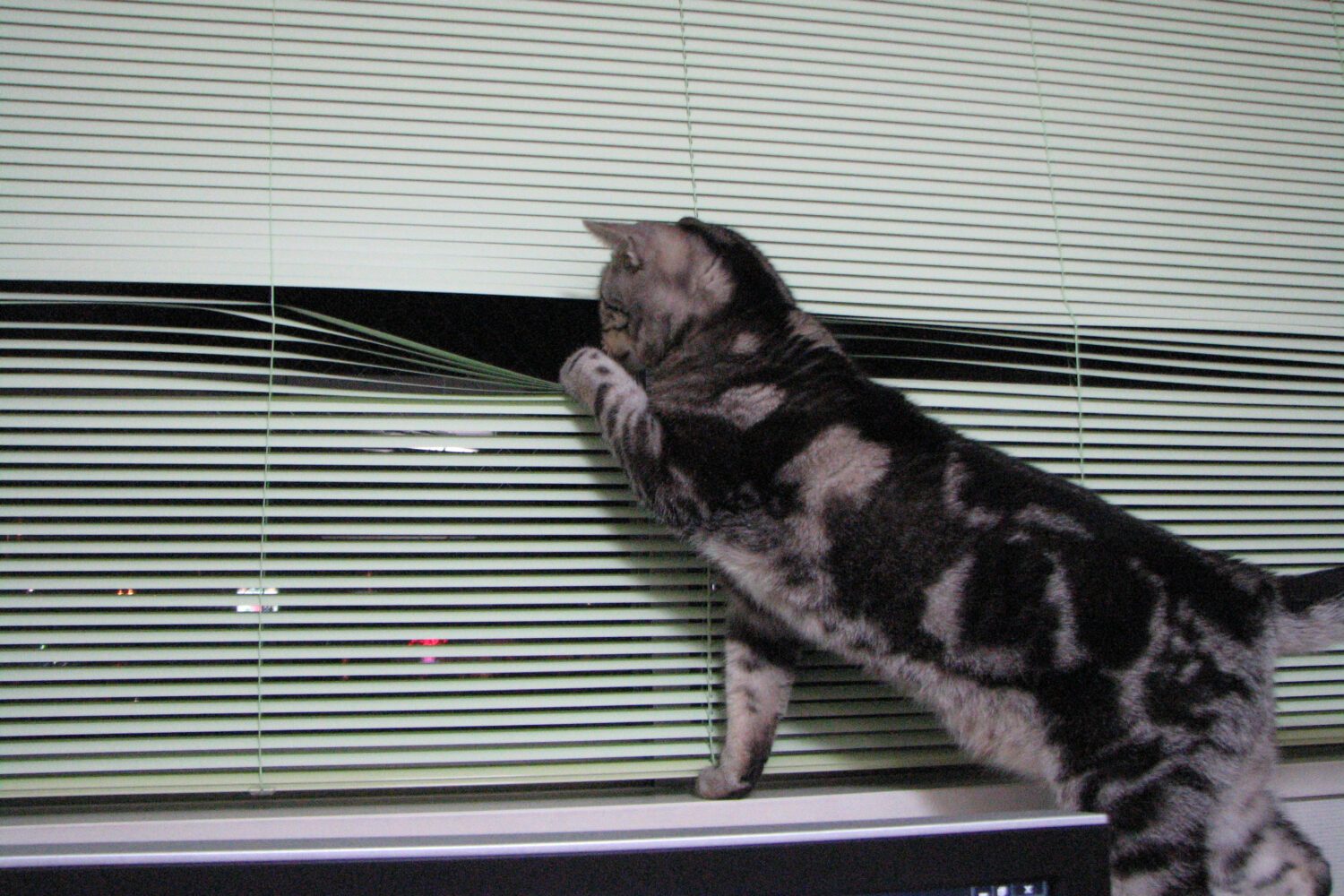
Cold War spies came in all shapes and sizes, including on four paws.
Cold War spies came in all shapes and sizes, including on four paws. More like the spy who came in from the cold, then asked to be let out again, and then asked to come in again During the 1960s, a time ofCold Warone-upmanship and paranoia, when American and Soviet rockets and spies battled for supremacy, there seemed to be no bad idea to gain the advantage. Case in point: the Central Intelligence Agency (CIA) thought they could hardwire and train a cat for espionage. The research programme, dubbed Project Acoustic Kitty, involved taking a living cat, surgically installing listening and recording equipment, and sending it out into the field to linger around enemy agents and pick up their conversations. While cruel, the idea did have an element of rationale. Cats are small, quiet and agile; they won’t immediately make their target nervous (unless they have an allergy, of course), and they are famously curious. There’s even a saying about that, which will become important later. Project Acoustic Kitty did, however, raised a number of challenges, the first being how to keep the quasi-mechanical moggy looking normal enough after the operations not to rouse suspicion. Technology in the 1960s was not exactly at the micro-level, but anything too bulky would be easily spotted and cause too much discomfort to the cat. (Not that the CIA was overly concerned with the cat’s comfort; they just didn’t want the animal to give the game away by scratching too much.) Working with contractors, the CIA developed a transmitter just a couple of centimetres long that could be attached to the cat’s skull. The microphone went in the ear canal with the power pack sewed into the abdomen and antenna woven into the fur along the body and up the tail. Size limitations meant that the batteries could only be so big, which hindered how long a mission could last. That meant the feline agent had to be well-drilled in its duties. That’s where the second challenge became apparent: training. The CIA hoped that with a few basic audio cues from its (literal) handlers, the cat would go wherever it was needed. In reality, it showed little to no interest in obeying instructions and would wander off when bored or hungry. Further surgeries were performed to try and quell the cat’s natural instincts. Five years and – according to former CIA officer Victor Marchetti – roughly $20 million in today’s money later, Project Acoustic Kitty was ready for its first mission. The target would be two Soviet officials sitting on a park bench outside their embassy in Washington DC. The whole thing, however, lasted only a few seconds. As soon as the cat was released from the reconnaissance van, it walked into the street and was hit by a taxi. Records are patchy over whether the poor creature survived, but likely not. Remember that saying about what curiosity did to the cat? With that risible failure, the project was scrapped in 1967. It could well have been lost in the CIA archives for good, were it not for a Freedom of Information request that brought Acoustic Kitty to light in the early 21st century. A brief yet heavily redacted memo titled ‘Views on Trained Cats’, declassified in 2001, summed up that the idea “would not lend itself in a practical way to our highly specialized needs”; a conclusion that would come as no surprise to any cat owners. Jonny Wilkes is a former staff writer for BBC History Revealed, and he continues to write for both the magazine and HistoryExtra. He has BA in History from the University of York.