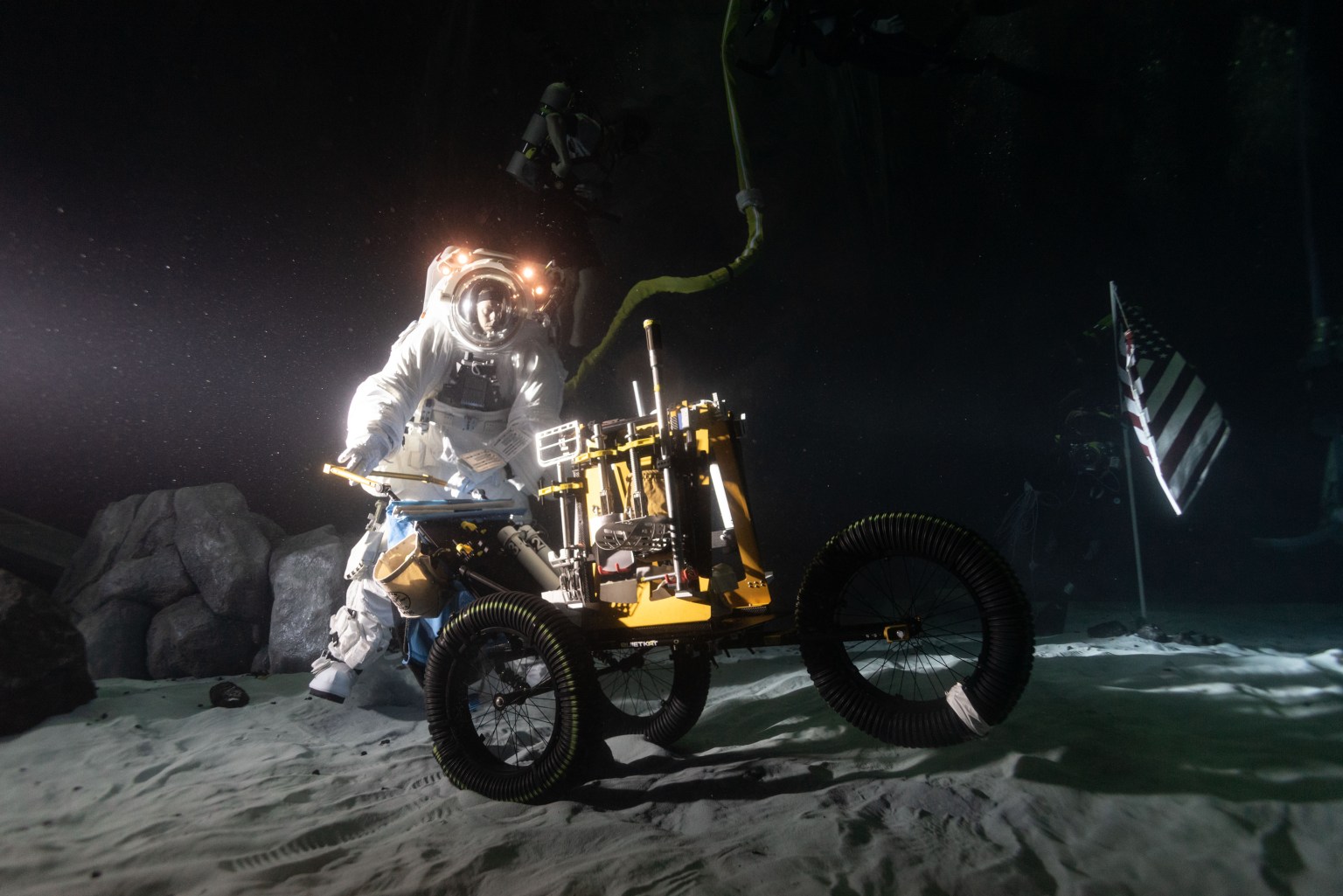
Scott Wray traces his first “spacewalks” to a childhood bedroom.
Scott Wray traces his first “spacewalks” to a childhood bedroom. At around six years old, he turned a tent into a make-believe lunar lander, rehearsing launch countdowns while lying on his back with his feet braced on a pillow. When the imagined spacecraft “landed,” he would step into the dark room and bounce around, copying the low-gravity movements he had watched in Apollo footage.
That early fascination hardened into a lifelong pull toward engineering. Wray spent years building with LEGO sets and airplane models and devouring books on aircraft design. A pivotal moment came during a week-long camp at Space Center Houston, where he toured key facilities at NASA’s Johnson Space Center and heard from legendary former flight director Gene Kranz. The combination of hardware, history, and people left him determined to return—not as a visitor, but as part of the workforce.
Wray began carving out that path while studying aerospace engineering at Embry‑Riddle Aeronautical University. Through NASA’s Contractor Co‑op Program with United Space Alliance, he cycled through multiple assignments at Johnson during a period when astronauts were preparing for spacewalks—formally known as extravehicular activities, or EVAs—for both the Space Shuttle and the International Space Station.
One co‑op tour proved especially formative. Working with the shuttle’s In‑Flight Maintenance Team, Wray watched maintenance specialists and EVA experts partner with the STS‑117 crew on a real problem: a thermal blanket that had peeled back on space shuttle Atlantis’s Orbital Maneuvering System pod. He helped develop the procedures astronauts would practice inside the orbiter to prepare for the on-orbit fix—using surgical staples and pins to secure the blanket. For Wray, the episode was a master class in improvisation under pressure, and it focused his ambitions on EVA work.
That taste for expedition-style problem solving also drew on an unlikely earlier job: serving as a dog mushing guide in Alaska. Living at a remote glacier camp and helping care for 250 Alaskan Huskies, he learned to repair equipment far from help and to work with whatever tools were on hand—skills he sees echoed in the realities of space operations. In EVA training and support, he notes, some of the most important breakthroughs come when hardware or vehicles fail and teams must invent practical solutions on the spot. To Wray, that scrappiness is not a flaw; it is part of what makes human spaceflight distinctly human.
After graduation, Wray joined Johnson’s EVA community full time under a series of contracts, becoming a civil servant in 2021. He began as an EVA instructor, specializing in tools and hardware and teaching astronauts how to execute maintenance and repair tasks. As the astronaut corps expanded to include more varied professional backgrounds and body types, he worked on developing techniques, tools, and training approaches that could support any crew member—building lessons that leverage individual strengths while emphasizing teamwork and resilience.
Wray’s work has also extended to mission operations. He served as a flight controller supporting shuttle and station EVAs, including a dramatic moment in July 2013 in Mission Control, when an ISS spacewalk was cut short after water began accumulating inside European Space Agency astronaut Luca Parmitano’s helmet. With the source unknown and the flow not stoppable in real time, the event underscored a sobering lesson: even with decades of experience operating spacesuits, unanticipated failure modes remain. For Wray, it is a reminder that EVA demands constant vigilance, adaptability, and ongoing learning—because the stakes, ultimately, are measured in lives.