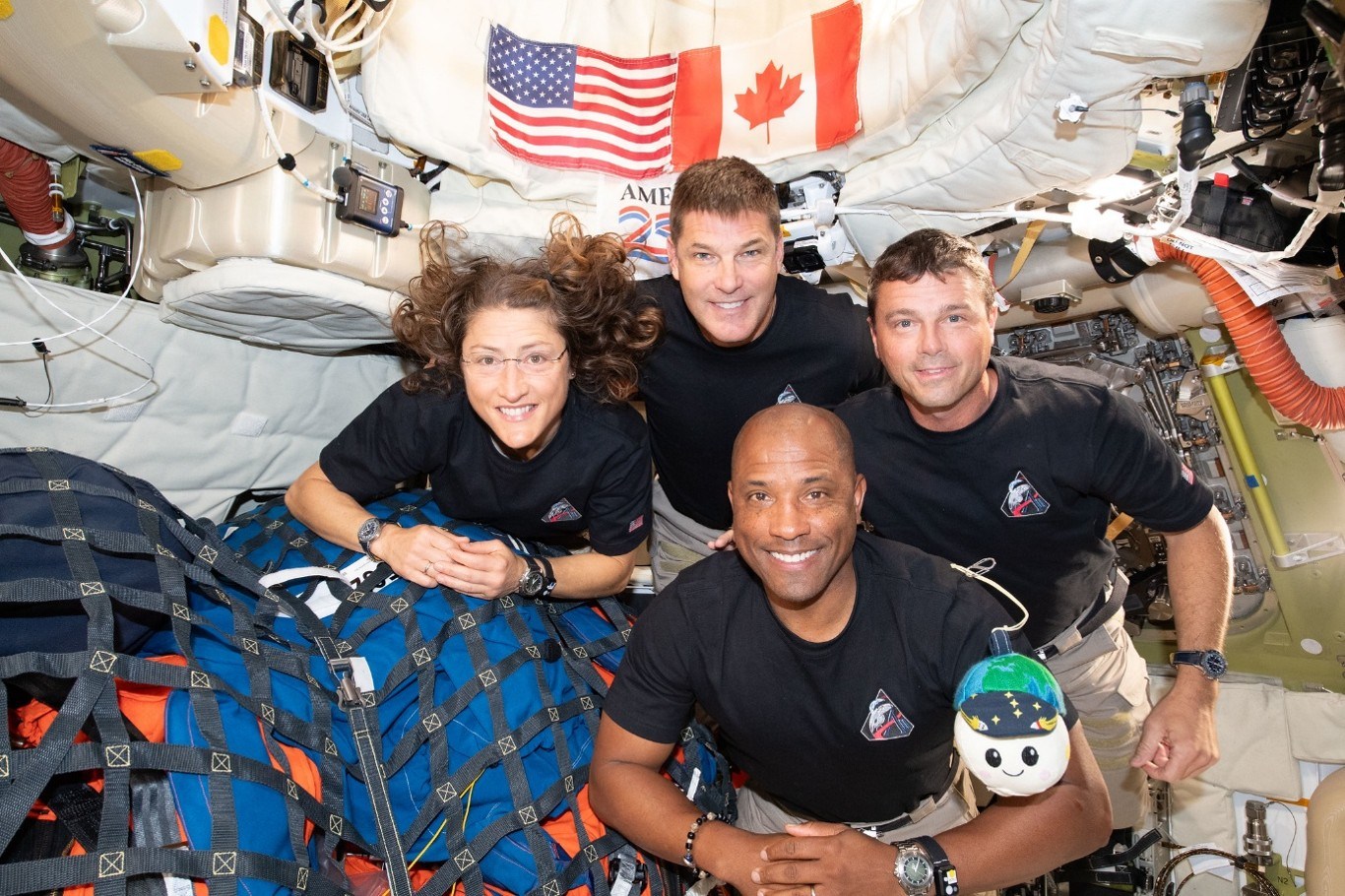
NASA’s four-person Artemis II crew is heading to the University of Houston for a public appearance that will give spaceflight fans a close-up look at the agency’s latest journey around the Moon.
NASA’s four-person Artemis II crew is heading to the University of Houston for a public appearance that will give spaceflight fans a close-up look at the agency’s latest journey around the Moon.
NASA astronauts Reid Wiseman, Victor Glover, and Christina Koch, joined by Canadian Space Agency astronaut Jeremy Hansen, will speak about their mission aboard the Orion spacecraft during a free event scheduled for 7 p.m. CDT on Wednesday, Sept. 30, at the Fertitta Center. Organizers say the program—hosted with support from industry and community partners—will be the crew’s first public engagement in Houston since returning from their lunar flight earlier this year, and it will serve as the final stop in their post-mission outreach campaign.
The evening will also include formal recognition of a milestone set during Artemis II. The National Aeronautic Association plans to honor the crew for achieving the greatest distance from Earth ever reached by humans, surpassing the long-standing record established by Apollo 13 in 1970. During Artemis II, the astronauts traveled as far as 252,756 miles from Earth.
For journalists, NASA is offering a short question-and-answer opportunity with the astronauts ahead of the public program. That media availability is slated for 5:45 p.m. on Sept. 30. Members of the press who want to attend must confirm in advance, with RSVPs due by noon on Sept. 30. Requests should be sent to Kenna Pell at kenna.m.pell@nasa.gov.
Artemis II launched April 1 and concluded with a Pacific Ocean splashdown on April 10. The mission marked the first time astronauts flew on NASA’s Space Launch System, the agency’s new heavy-lift rocket, with the crew traveling in the Orion spacecraft.
NASA positions Artemis II as a major step in a broader campaign of lunar exploration. Under the Artemis program, the agency aims to carry out progressively more complex missions to expand scientific research on and around the Moon, create economic opportunities, and establish a sustained human presence on the lunar surface. Those efforts are also intended to mature the technologies and operational experience NASA says it will need for future crewed expeditions to Mars.