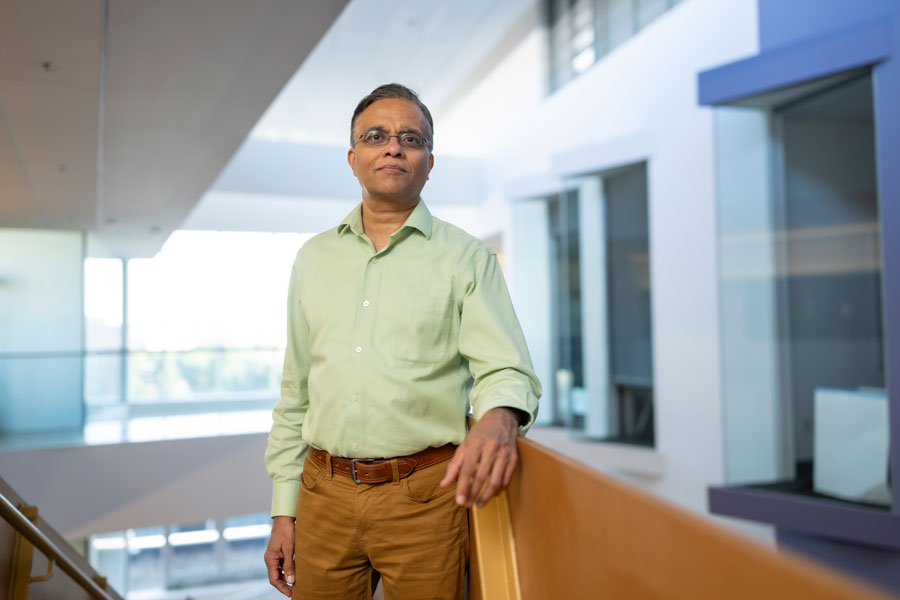
Carnegie Mellon named computer scientist and entrepreneur Jignesh Patel founding dean and vice president for CMU Miami, tapping him to shape the new campus’s academic and research mission.
Carnegie Mellon University has selected computer scientist and entrepreneur Jignesh Patel to take a leading role in launching CMU Miami, the university’s newly announced campus. Patel will serve as the campus’s founding dean and as a vice president of the university, positions that place him at the center of building the academic and research identity of the expansion.
CMU Miami was unveiled Sept. 30 by Carnegie Mellon President Farnam Jahanian. The campus is being established with support from a major philanthropic commitment from Ken Griffin, founder and CEO of Citadel and founder of Griffin Catalyst. University leaders framed the new site as a strategic bet on the role research universities can play amid rapidly evolving technological and societal needs.
Jahanian described Patel as a leader who combines scholarship, teaching, and an ability to translate research into practical outcomes—qualities the university sees as critical for a campus designed to move quickly from discovery to deployment. According to Jahanian, Patel has been involved from the earliest planning stages, helping shape CMU Miami’s academic direction, core research areas, and a “grand challenge” approach focused on problem-solving at scale. Jahanian said Patel’s leadership will help ensure the campus reflects Carnegie Mellon’s emphasis on interdisciplinary rigor, entrepreneurship, and impact-oriented innovation.
Griffin echoed that assessment, calling Patel a proven researcher and entrepreneur with experience turning ideas into results. He said Patel’s appointment should speed CMU Miami’s development into a destination for top-tier talent and a research engine for Miami and beyond.
Patel is a faculty member in Carnegie Mellon’s Kenneth C. Griffin School of Computer Science and has served as interim head of the Computer Science Department since 2025. He joined CMU in 2023 after holding academic appointments at the University of Wisconsin–Madison and the University of Michigan. In the run-up to the Miami campus announcement, Patel played a key role in defining its early blueprint, including its research portfolio, educational model, and societal priorities—work that, university officials said, helped consolidate support across senior leadership.
Provost and Chief Academic Officer James H. Garrett Jr. said Patel represents Carnegie Mellon’s culture of combining ambitious educational design with high-impact research and commercialization. Garrett pointed to Patel’s record of aligning academic strengths with real-world needs as a reason he is well positioned to guide a new campus from the ground up.
Patel said the Miami initiative offers a chance to organize a campus around urgent challenges and then build the capabilities needed to address them at the pace modern innovation demands. He emphasized a continuum from foundational research to real-world implementation as central to both Carnegie Mellon’s identity and CMU Miami’s goals.
Over his career, Patel has worked on updating computing education, strengthening industry and public-sector partnerships, and helping move research toward market adoption. At Carnegie Mellon, he has contributed to revisions in the undergraduate computing curriculum aimed at reinforcing core problem-solving and encouraging responsible use of artificial intelligence—an area he said is increasingly essential as technologies advance quickly and expectations for graduates change.
In his new role, Patel will oversee efforts to recruit faculty and students, develop collaborations across sectors, and position CMU Miami as a hub where new ideas can be tested, built, and scaled.
Why it matters
A new CMU campus in Miami could reshape regional research capacity, talent pipelines, and startup formation—especially in computing and AI-related fields. Patel’s appointment signals an emphasis on speed from lab discovery to adoption, with a “grand challenge” framing that could influence what research gets prioritized. The next milestones to watch will be faculty hiring, partnership announcements, and details on the campus’s initial academic programs.