NASA engineers have cleared a major prelaunch hurdle for a technology demonstration that could streamline how small spacecraft maneuver in orbit.
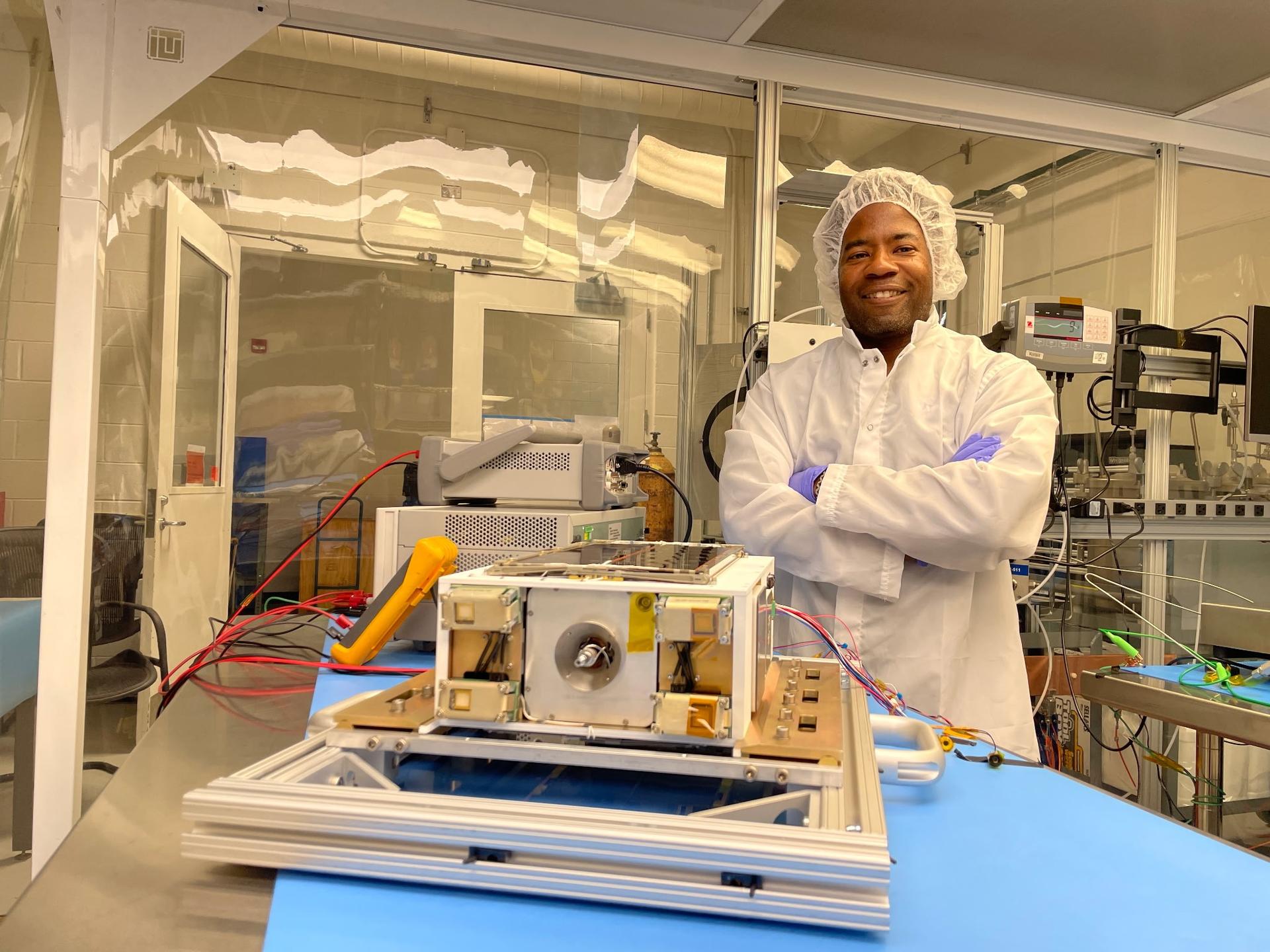
NASA engineers have cleared a major prelaunch hurdle for a technology demonstration that could streamline how small spacecraft maneuver in orbit. At the agency’s Marshall Space Flight Center in Huntsville, Alabama, teams have finished a demanding round of environmental and physical tests on a shoebox-sized CubeSat built to prove a new “dual mode” propulsion concept using a single fuel supply.
The mission, known as ASCENT (Advanced Spacecraft Energetic Non-Toxic) Propulsion Dual Mode, is aimed at replacing a long-standing design compromise in spacecraft propulsion. Traditionally, satellites rely on two distinct systems to do different jobs: chemical thrusters that deliver high thrust for quick, forceful maneuvers—such as major orbit changes—and electric propulsion that produces a much gentler push but does so with high efficiency over longer periods, making it well suited for station-keeping and fine adjustments. Carrying both typically means duplicate tanks, feed lines, valves, and associated hardware, all of which consume mass and volume—two of the scarcest resources on small satellites.
ASCENT’s approach is to integrate both modes around a shared propellant. The CubeSat carries a single non-toxic fuel called ASCENT, stored in one central tank that feeds two propulsion types: a high-thrust combustion engine and low-thrust electrospray thrusters. By consolidating what are normally separate architectures into one, the spacecraft can free up room and reduce weight—benefits that could translate into larger science payloads or the ability to fly on smaller, lower-cost launch vehicles on future missions.
Getting that integrated system ready for space has required coordinated work across multiple organizations. NASA Marshall is managing the mission, while the electrospray thrusters were developed by the Massachusetts Institute of Technology. Plasma Processes produced the chemical propulsion module, and the spacecraft bus was integrated by the Georgia Institute of Technology. Project manager Nehemiah Williams of NASA Marshall underscored the complexity of pulling these pieces together, noting that the mission’s success hinges on maintaining propulsion system performance across contributions from different teams.
Over recent months, Marshall’s engineers exercised the flight hardware in the center’s Small Spacecraft Servicing and Integration Lab, focusing on whether the unified propulsion system can withstand the realities of low Earth orbit. A key milestone was verifying the integrity of the propellant plumbing. Because both thruster types draw from the same tank, any leakage or seal failure could jeopardize safety and mission objectives. To validate the system, the team performed a pressurized helium leak test with the spacecraft inside a vacuum chamber, confirming that seals and joints held as designed.
The CubeSat also underwent thermal vacuum testing, which reproduces two defining features of space: the absence of air and large temperature swings. Inside the chamber, engineers checked that electronics, thrusters, and mechanical components continue operating normally under conditions similar to those the spacecraft will face on orbit.
Finally, the team conducted a spin test to measure the satellite’s balance and mass properties, including its center of gravity. Those measurements help ensure the spacecraft can maintain stable attitude control—critical for pointing antennas toward Earth for communications and orienting solar panels to capture sunlight.
With test campaigns complete, the mission is now moving through final preparations. Teams will finish system checkouts, attach the solar arrays, and ship the spacecraft to its launch site. The ASCENT Propulsion Dual Mode CubeSat is manifested to fly no earlier than October 1 as a SpaceX payload.