NASA’s Transiting Exoplanet Survey Satellite, or TESS, has chalked up an exoplanet discovery in a way it was never primarily built to do: by helping scientists decode a…
NASA’s Transiting Exoplanet Survey Satellite, or TESS, has chalked up an exoplanet discovery in a way it was never primarily built to do: by helping scientists decode a brief distortion of light caused by gravity itself. The finding marks the first time the mission has identified a planet through gravitational microlensing—an effect predicted by Einstein in which mass warps space-time and bends the path of light.
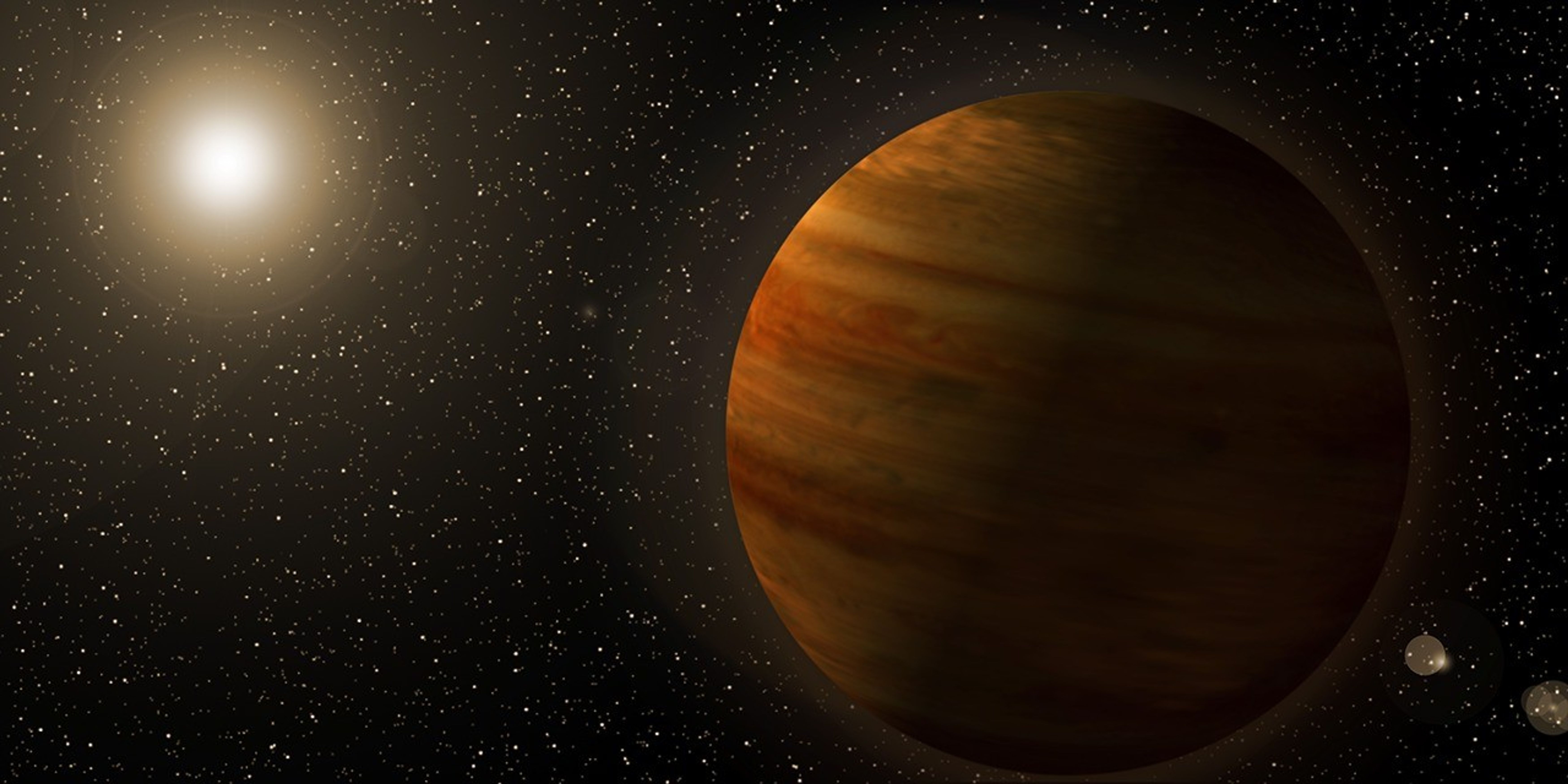
The planet, named Gaia23bra b, is not the sort of tight-orbiting world that typically turns up in TESS data. Instead, it is a “super-Jupiter” roughly 1.6 times the mass of Jupiter and orbiting at a comparable distance from its star as Jupiter does from the Sun. That configuration makes it a poor fit for the transit technique that dominates TESS’s catalog, in which astronomers search for the regular, repeating dimming of starlight when a planet crosses its star’s face.
“When TESS launched, no one expected it to ever be capable of finding this kind of planet,” said Diana Dragomir of the University of New Mexico, a co-author of the study. She added that the result suggests more microlensing signatures may be hidden in the mission’s archives, simply overlooked because researchers were not expecting TESS to contribute to that style of detection.
The first clue arrived in 2023 from the European Space Agency’s Gaia spacecraft, now retired. Gaia’s alert system flagged a star that suddenly brightened—an important telltale for microlensing, which occurs when a closer “foreground” star passes almost directly in front of a more distant “background” star as seen from Earth. When the alignment is close enough, the foreground star’s gravity acts like a lens, magnifying the background star’s light and producing a sharp rise in brightness.
But Gaia’s sampling of the event was limited. “Gaia’s observations were too sparse to pick up on the planet,” said Mallory Harris, a University of New Mexico Ph.D. candidate who led the work. Researchers then combed through archived TESS observations and found that, by chance, the spacecraft had been staring at the same patch of sky during the brightening. TESS’s more continuous coverage revealed additional structure in the light curve—subtle features consistent with a planet around the lensing star adding its own gravitational “blip” to the magnification pattern.
The team reports that Gaia23bra b orbits an orange dwarf star about 80% the mass of the Sun. The system lies nearly 40,000 light-years from Earth—far beyond TESS’s usual hunting ground, which is roughly within 150 light-years. The results were published July 1 in The Astrophysical Journal Letters.
The discovery highlights the different kinds of planetary systems each technique tends to uncover. Of the more than 6,000 exoplanets known so far, about three-quarters have been found via transits, a method especially sensitive to big planets packed close to their stars. Microlensing accounts for less than 5% of known exoplanets, yet it excels at revealing planets more like those in our own solar system—worlds on wider orbits that are otherwise hard to detect.
“Transits and microlensing are complementary,” Dragomir said, noting that transits primarily provide planet sizes (and, with follow-up methods, masses and densities), while microlensing can directly constrain masses and orbital separations for distant systems that would be invisible to transit surveys. The catch is that microlensing events are fleeting, making detailed follow-up difficult—though the method remains a powerful way to measure the overall demographics of planets across the galaxy.