Pacific nations are taking a unified agenda to COP31, urging firm commitment to the 1.5°C limit, simpler climate finance access and recognition of the ocean’s central role.
Thousands of participants gathered recently in Fiji and Tuvalu ahead of COP31 in Antalya, Turkey, for the Vale ni Vanua Knowledge Exchange, a pre-summit program designed to connect Indigenous and community expertise with scientific research and policy planning. From that meeting, Pacific governments and stakeholders delivered a blunt set of priorities for the negotiations: keep the 1.5°C temperature limit within reach, make climate finance easier to access, and treat the ocean as essential to planetary health.
Pacific COP31 envoys say they are now working to carry that agenda into Antalya, where Turkey will preside over the conference and Australia will lead negotiations. A central vehicle is the COP31 Pacific Partnership between Australia and Pacific nations—an arrangement the envoys describe as crucial as the region pushes for outcomes that match the scale of the crisis.
Pacific island states have long been among the first to experience climate impacts, including sea-level rise, stronger storms, and intensifying drought. But the envoys argue the “frontline” is expanding. They point to worsening impacts worldwide, including lethal flooding in Nepal and severe heat waves across Europe and North America, as evidence that what once seemed geographically distant is now broadly shared.
That early exposure has also forced Pacific countries to innovate quickly. Governments have drafted national strategies and built investment pipelines, while communities have moved ahead with practical solutions. In the Marshall Islands, the national power utility is rolling out solar installations and grid improvements expected to reduce fossil-fuel consumption on outer atolls by nearly 90%. Nearby island nations are also pursuing large-scale ocean protection by connecting marine areas into the Melanesian Ocean Corridor of Reserves, envisioned to span at least six million square kilometers (2.3 million square miles). Meanwhile, local adaptation and disaster-readiness projects are receiving support through the Pacific Resilience Facility, which is designed to fund community priorities and preparedness efforts.
Even with those initiatives, the envoys warn that progress hinges on broader action beyond the Pacific. At COP31, they say they are seeking three major outcomes.
The first is political and practical recommitment to the 1.5°C goal as the guiding benchmark for global action—what they call the “North Star.” That target, they argue, keeps attention on the central requirement of the Paris Agreement era: phasing down and moving away from fossil fuels. They contend that renewable energy is now economically compelling, and that this year’s oil crisis has highlighted the risks and instability of dependence on hydrocarbons.
The envoys say the world is currently on a path that would exceed the 1.5°C threshold, and they reject the notion that overshoot should be accepted as inevitable. Instead, they want governments to adopt stronger, 1.5°C-aligned nationally determined contributions (NDCs), follow through on existing promises, and publish clear roadmaps for transitioning away from fossil fuels. They emphasize that the G20—home to the largest emitters—must take primary responsibility for driving these shifts.
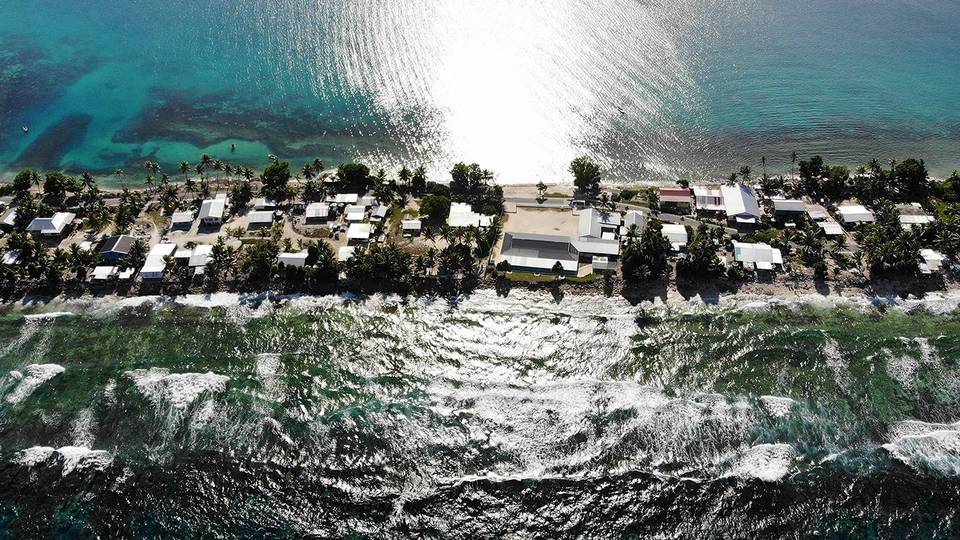
Pacific countries have championed the 1.5°C limit for years because small increments of sea-level rise can produce outsized harm for low-lying atolls such as the Marshall Islands, Tuvalu, and Kiribati, as well as other vulnerable islands like the Maldives. Coastal flooding can contaminate soils with salt and damage ecosystems, undermining livelihoods and long-term habitability.
Another priority is to ensure that climate finance commitments become real-world delivery, especially at the community level. The envoys argue that today’s climate-finance system was not built for small and highly vulnerable states, leaving them disadvantaged when trying to access funds intended for adaptation and resilience. They note that only four Pacific island countries have accredited national entities with the Green Climate Fund or the Adaptation Fund—an obstacle that can slow or block support where it is needed most.
Why it matters
Pacific island nations contribute little to global emissions but face some of the most immediate and severe consequences of warming oceans and rising seas. Their demands at COP31 spotlight two pressure points for the wider world: whether major emitters will align plans with 1.5°C, and whether climate finance will reach vulnerable communities fast enough to matter. The decisions taken in Antalya will shape not only emissions trajectories, but also which countries can realistically protect lives, infrastructure, and ecosystems in the near term.