July offers skywatchers a string of pre-dawn planet pairings, a visiting periodic comet, some of the year’s best Milky Way viewing, and an evolving perspective on…
July offers skywatchers a string of pre-dawn planet pairings, a visiting periodic comet, some of the year’s best Milky Way viewing, and an evolving perspective on Saturn’s rings as their tilt continues to change.
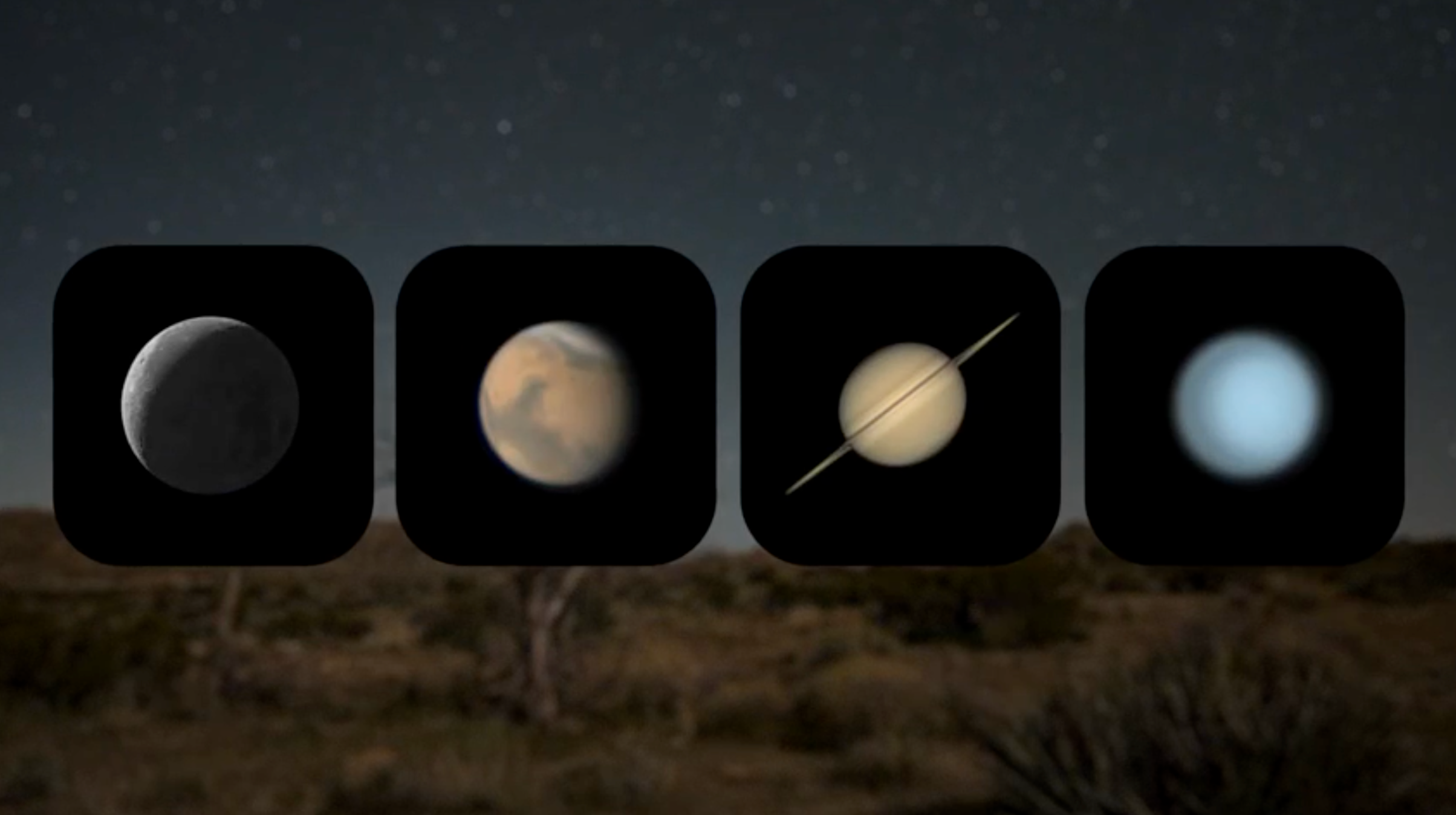
Early risers get the first highlight. Before sunrise on July 11 and 12, the eastern sky hosts a neat lineup featuring the waning crescent Moon alongside Mars and Saturn. The Moon serves as a natural guidepost: Mars appears as a modest, reddish point, while Saturn shines more strongly and is easier to pick out. Uranus also occupies the same general region of sky, but it is far dimmer than the other worlds. Spotting it typically requires binoculars or a telescope. With the Moon in the mix, however, locating the scene becomes much simpler—an accessible mini “meetup” for anyone willing to step outside in the early morning.
Midmonth brings a different kind of target as the Moon leaves the evening sky. Around the July 14 New Moon, Comet 10P/Tempel 2 makes a pass through the inner solar system. Tempel 2 is a short-period comet, returning on a regular schedule of about 5.5 years. It won’t be the kind of dramatic comet visible at a glance, but observers equipped with binoculars or a small telescope may be able to track it down as a small, diffuse patch of light. NASA’s viewing guidance points to the constellation Capricornus as a useful starting reference, with the comet expected nearby. Under good conditions, observers might notice a brighter central condensation and possibly a short, broad tail with a fan-like shape.
Dark skies are crucial for both the comet and another July standout: the Milky Way. The nights closest to New Moon are also the month’s prime window for seeing our galaxy’s hazy band stretching across the summer sky. Away from city lights, the Milky Way can appear as a pale, cloudlike swath—its brighter, thicker section indicating the direction of the galactic center. That region looks so luminous and crowded because we are peering toward one of the densest parts of the Milky Way, where enormous numbers of stars shine through and around lanes of obscuring interstellar dust.
To find that bright zone, look later in the evening toward the low southern sky. The constellation Scorpius is a helpful landmark, recognizable by a long curve of stars resembling a hook or scorpion’s tail. Nearby sits Sagittarius, and close to it lies the Milky Way’s most prominent summer glow. For the best view, observers should travel to a truly dark site, allow their eyes time to adapt, and avoid bright phone screens that quickly erase night vision.
As July continues, Saturn becomes an especially satisfying telescopic subject. From Earth, its rings are currently tipped at a very shallow angle, making them appear unusually thin. The rings themselves are not vanishing; rather, our viewing geometry is shifting as the planets move along their orbits. It’s a subtle but striking example of how even familiar solar system sights can change over time with perspective.