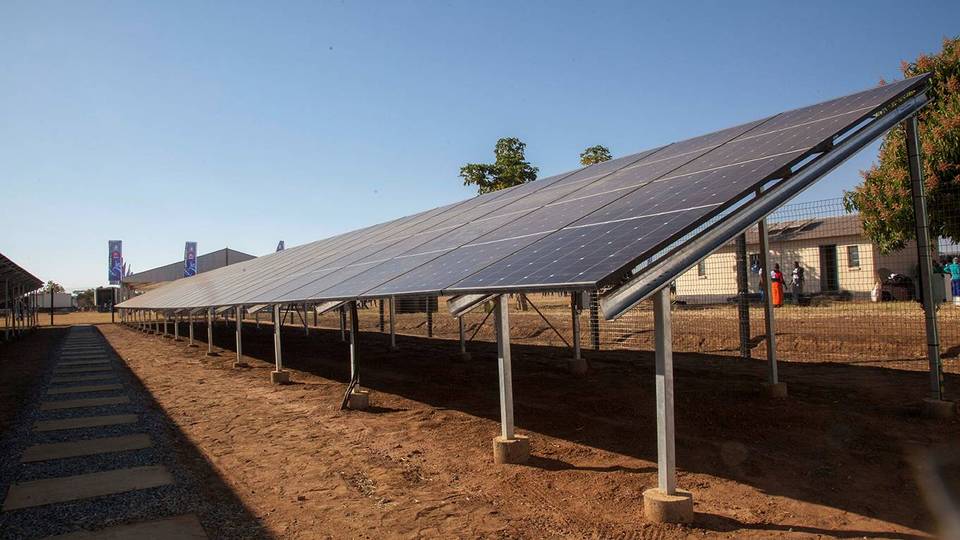
Climate finance to Sub-Saharan Africa rose to $55bn in 2024, but CPI warns it’s concentrated in few countries and increasingly debt-funded, often at market rates.
Climate-finance debates tend to revolve around one headline number: how big the gap is, and how much money donors and institutions have promised to mobilize. In Africa, however, the structure of that money can be just as consequential as the total amount.
New figures from the Climate Policy Initiative (CPI) show that climate-finance flows to Sub-Saharan Africa climbed to about $55 billion in 2024, more than twice the level recorded in 2019. That rise signals real momentum. Yet CPI’s Landscape of Climate Finance in Africa 2024 underscores how uneven—and how costly—much of this financing remains.
One problem is concentration. The report finds that ten countries received half of all climate finance reaching Africa, while the continent’s ten most climate-exposed countries captured only 10%. The skew is even sharper for private capital: 76% of private climate finance goes to just ten countries, leaving many of the most vulnerable states with little access to investment.
Another shortfall involves the sources that are designed to be most supportive. Multilateral climate funds operating under the UN Framework Convention on Climate Change (UNFCCC)—vehicles intended to provide more concessional support—make up only 2% of Africa’s climate finance, according to the CPI data.
The most striking finding, though, is the heavy reliance on borrowing. CPI estimates that as much as 51% of climate finance flowing to Africa comes as debt, split roughly evenly between concessional loans and market-rate lending. That is far higher than in other regions: debt accounts for 18% of climate finance in East Asia and the Pacific and 20% in Latin America and the Caribbean.
Who is providing the market-rate loans also raises uncomfortable questions. CPI reports that 82% of Africa’s debt-based climate finance priced at market rates originates from official sources—primarily multilateral and bilateral development-finance institutions. These lenders were created to back projects the private sector often avoids and to promote development outcomes such as jobs, growth, and improved social indicators. Yet in practice, they are extending commercial-rate financing to countries already stretched thin.
This pattern is often justified by the scale of need. Africa’s climate-finance requirements are estimated at just under $2 trillion through 2030, and only 23% of that demand is currently being met. But the data suggest that meeting the gap by piling on more debt—especially expensive debt—can shrink the very fiscal capacity governments need to invest in resilience and clean growth.
A separate warning comes from ActionAid, which argues that debt burdens are already crowding out green spending. In 2026, the 54 most climate-vulnerable countries—many of them African—are projected to spend 12.3 billion on climate action—a disparity of nearly 25 to 1. Even if much of that borrowing was not taken on for climate projects, the repayment bill still limits policy options: debt service absorbs 65% of these countries’ combined national revenue, the report finds.
The squeeze shows up in national climate plans, or nationally determined contributions (NDCs). ActionAid reports that the vulnerable countries assessed have funded only one-quarter of their combined unconditional NDC costs. Individual cases illustrate the constraint: Tanzania has allocated 0.9% of its unconditional NDC cost, Malawi 10.3%, and Zambia has set aside just 0.32% of its budget for climate policies.
Together, these findings point to a central conclusion: expanding climate finance to Africa is necessary, but changing the instruments—away from debt-heavy, market-priced lending and toward support that preserves fiscal space—is just as critical.
Why it matters
If climate funding arrives mainly as loans, countries facing the greatest climate risks can end up paying more to service debt than to protect people and infrastructure. The data suggest that official development lenders play a major role in this dynamic by providing large volumes of market-rate finance. What happens next—especially whether financiers shift toward more concessional, grant-based, or risk-sharing tools—will shape how quickly African governments can deliver their climate plans without deepening debt distress.