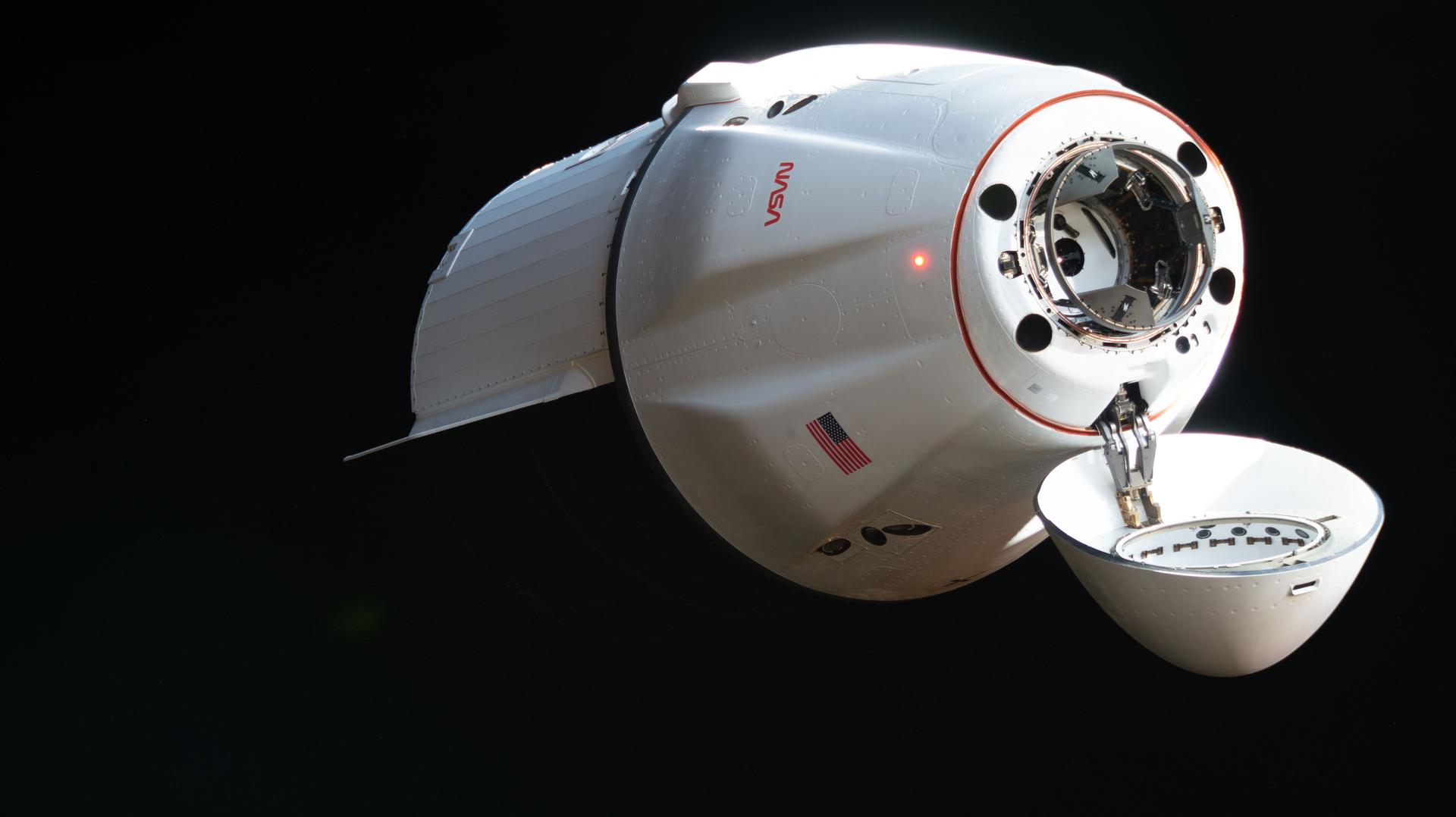
NASA is preparing to bring home a fresh haul of research samples and station hardware as a SpaceX Dragon cargo spacecraft readies to leave the International Space…
NASA is preparing to bring home a fresh haul of research samples and station hardware as a SpaceX Dragon cargo spacecraft readies to leave the International Space Station on Tuesday, June 16, concluding the company’s 34th resupply mission.
The agency will provide live coverage of Dragon’s undocking starting at 11:45 a.m. EDT on NASA+, Amazon Prime, and NASA’s YouTube channel. The spacecraft is expected to separate from the forward-facing port of the station’s Harmony module at about 12:05 p.m. EDT, after SpaceX ground teams send the departure command. Once free of the docking interface, Dragon will conduct a series of thruster firings to back away and depart the vicinity of the orbital complex.
After leaving the station on June 16, Dragon will begin its return to Earth with a planned atmospheric reentry on Wednesday, June 17. The capsule is slated to splash down in the Pacific Ocean off the coast of California at roughly 5:08 a.m. PDT. NASA does not plan to broadcast the splashdown live, but will provide status reports and updates through its space station blog.
On board for the trip home is thousands of pounds of cargo, including scientific investigations that could influence both future spaceflight and medical advances on the ground. Among the returning studies are samples of bioprinted tissue designed to mimic organ and cartilage structures, work that could inform regenerative medicine and long-term health support for crews. Also coming back are results tied to improving cryogenic propellant storage—an area crucial for future deep-space missions that rely on super-cold fuels. In addition, Dragon is carrying DNA-inspired materials research aimed at enabling new approaches to cancer treatment.
The spacecraft is also bringing back several pieces of station equipment. These include an ocular imaging device used to track astronauts’ eye health, an absorbent bed designed to remove trace contaminants from the station’s cabin air, and a separator pump from the waste and hygiene compartment.
Dragon arrived at the International Space Station on May 17, two days after launching atop a Falcon 9 rocket from Space Launch Complex 40 at Cape Canaveral Space Force Station in Florida. The vehicle delivered nearly 6,500 pounds of crew supplies and scientific experiments, reinforcing the steady flow of cargo that supports the station’s research program and daily operations.
The upcoming return underscores the continuing role of the orbiting laboratory, where humans have lived and worked continuously for more than 25 years. NASA says the International Space Station remains central to refining the technologies and operational practices needed for human spaceflight, while also expanding commercial activity in low Earth orbit. The work conducted there feeds into preparations for longer missions beyond Earth orbit, including future Artemis expeditions to the Moon and, ultimately, crewed journeys to Mars.