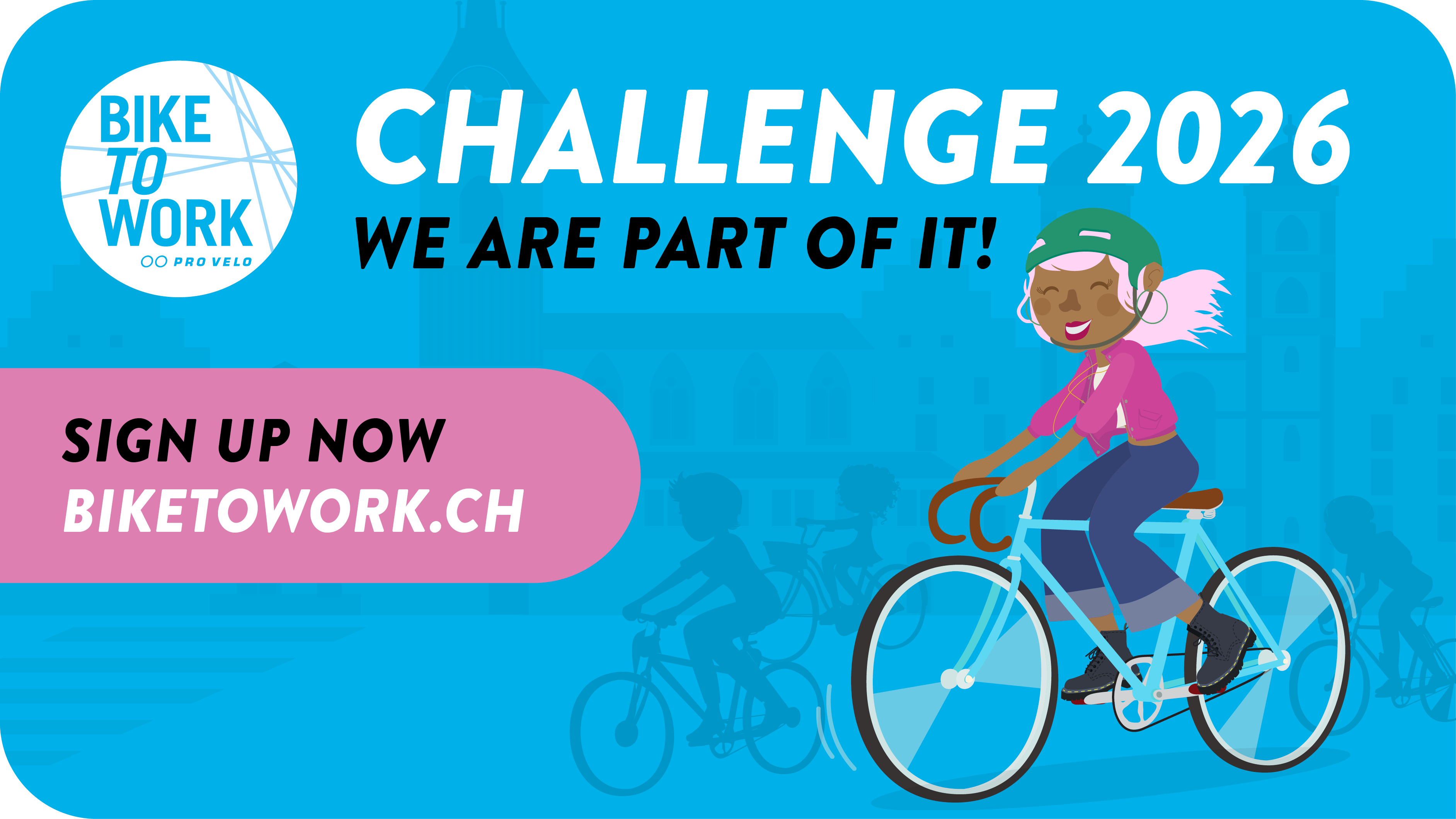
CERN is relaunching its “Bike to Work” campaign, inviting staff to swap car journeys for cycling or walking as a way to support healthier routines and lower-emission commuting.
CERN is relaunching its “Bike to Work” campaign, inviting staff to swap car journeys for cycling or walking as a way to support healthier routines and lower-emission commuting. Running throughout May and June, the initiative targets both regular riders and newcomers, urging anyone who already cycles to keep up the habit while giving first-time participants a structured push to get started.
Participation is organised around small groups: employees are asked to form teams of four colleagues, with the option for one member to take part on foot rather than by bicycle. Together, teams commit to a straightforward target for the duration of the campaign: using active travel for the commute on a regular basis, at least every other day.
The emphasis is deliberately placed on consistency rather than distance. Organisers are not measuring success by kilometres logged, but by whether participants manage to integrate cycling or walking into everyday life often enough to build sustainable, long-term behaviour. The message is that a short ride or walk counts just as much as a longer one if it replaces a car trip and helps establish a routine.
CERN highlights several motivations behind the programme. On an individual level, active commuting is promoted as a way to improve well-being. Socially, the team format is intended to create mutual encouragement and strengthen connections among colleagues as they work toward a shared goal. Environmentally, each commute completed without a car is framed as a practical step toward reducing personal impact.
Employees who want to take part can register via the Bike to Work website. The sign-up platform also allows individuals to join teams that are not yet complete, making it easier to participate even without an existing group of four.
With its mix of friendly competition and habit-building, the campaign is designed to make active travel a normal part of the working day at CERN—at least for the next two months, and ideally beyond.